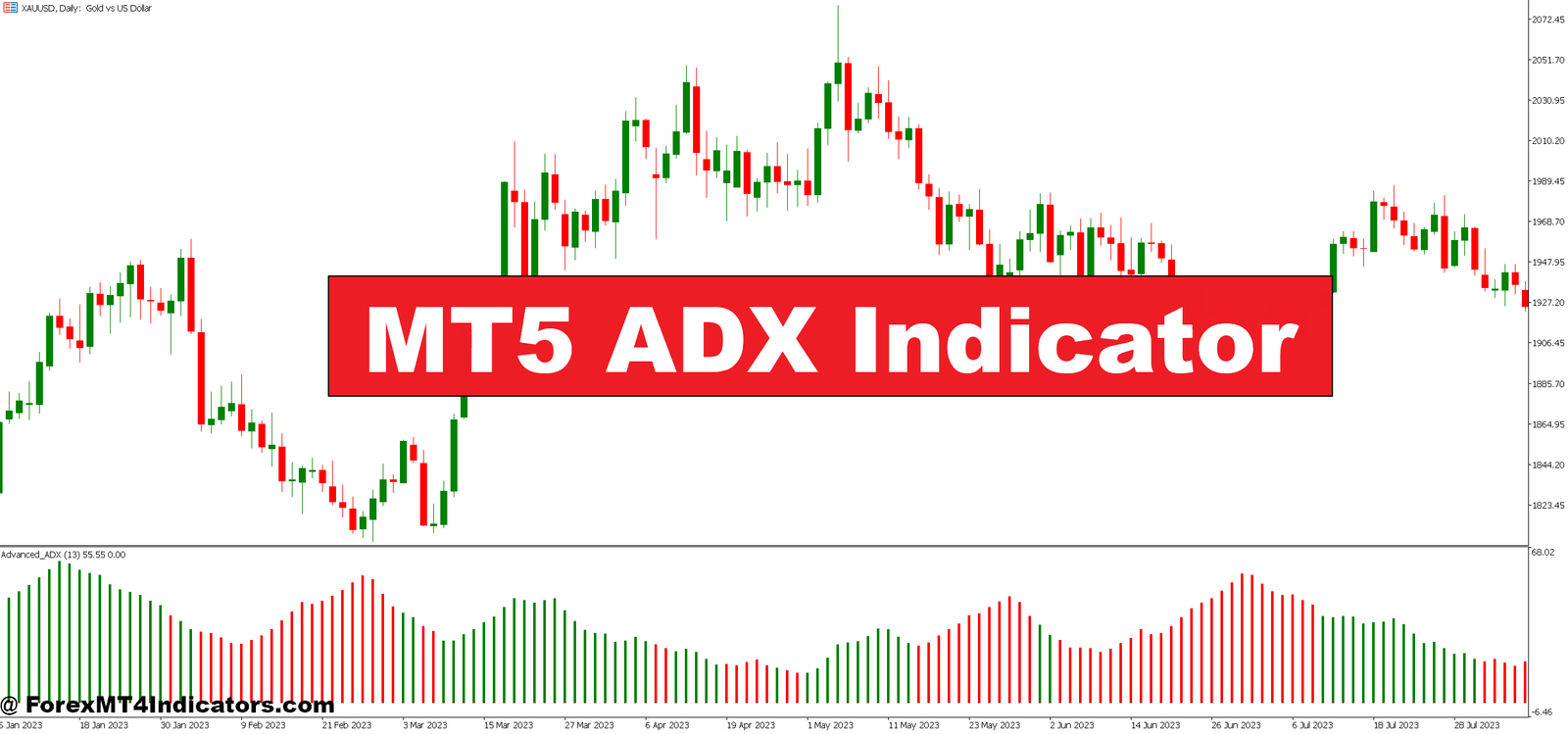
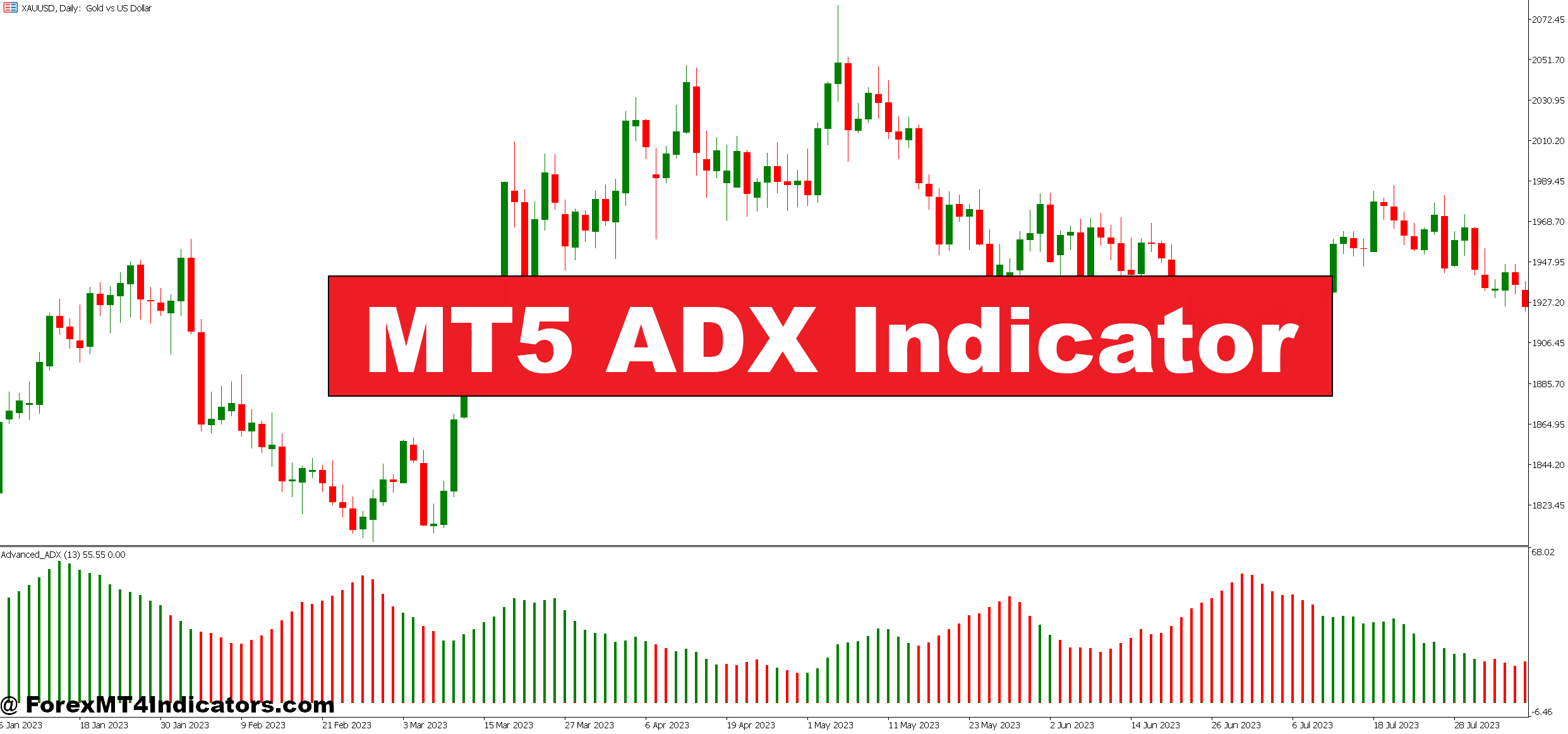
The MT5 ADX indicator cuts through this noise by measuring one thing: trend strength. It doesn’t care about direction—up or down doesn’t matter. What it tells you is whether the current move has conviction or if you’re better off sitting on your hands. That single piece of information can save traders from countless bad entries in weak, directionless markets.
What the ADX Actually Measures
The Average Directional Index doesn’t point you toward buying or selling. Instead, it quantifies how strong any trend is, regardless of direction. Developed by J. Welles Wilder in 1978, the ADX forms part of the Directional Movement System alongside two other components: the +DI (Positive Directional Indicator) and -DI (Negative Directional Indicator).
Here’s what makes ADX different from your typical moving average or oscillator. The indicator oscillates between 0 and 100, though readings above 60 are rare. When the ADX line climbs above 25, it signals that a trend is gaining traction. Below 20? You’re likely stuck in a range-bound market where trend-following strategies get chopped to pieces. The sweet spot for strong trends typically sits between 25 and 50.
The calculation itself involves comparing the current high and low with the previous period’s high and low, smoothing these values, and then creating a ratio. You don’t need to calculate it manually—MT5 does the heavy lifting. But understanding the logic helps: the ADX rises when price makes consistent directional moves and falls when price action becomes erratic or sideways.
How Traders Apply ADX in Real Setups

The most straightforward application is trend filtering. Before entering any trend-following trade, check the ADX. If it’s below 20 on EUR/USD’s 4-hour chart, that breakout strategy you’re eyeing will likely fail. The market’s telling you it lacks directional commitment.
Let’s say you’re watching USD/JPY and notice the pair has been grinding higher. The ADX reads 32 and is climbing. That’s confirmation the uptrend has legs. You can layer this with other tools—maybe price bounces off the 50-period EMA while ADX confirms trend strength. That’s a higher-probability long entry than taking the same setup with ADX at 15.
But here’s where traders get creative. Some use ADX crossovers with the +DI and -DI lines. When +DI crosses above -DI while ADX is rising, it suggests a strengthening uptrend. The reverse signals strengthening downtrends. On a 1-hour chart of AUD/USD during the Asian session, these crossovers can help you catch early trend shifts before the bigger moves develop during London hours.
Another approach: use ADX to know when to exit. If you’re riding a trend on the daily chart and ADX peaks at 45 before turning down, the trend’s losing steam. That’s your cue to tighten stops or scale out, even if the price hasn’t reversed yet. Waiting for the actual reversal often means giving back significant profits.
Dialing in the Right Settings

The default ADX period is 14, which works across most timeframes. On a 15-minute scalping chart, you might drop it to 10 for faster signals, though this increases false readings. Swing traders sometimes bump it to 20 or even 25 on daily charts to filter out short-term noise.
Here’s something many traders miss: ADX is a lagging indicator. It takes time for those 14 periods to calculate and smooth the data. During NFP releases or central bank announcements, ADX might still show weak readings (below 20) even as volatility explodes. By the time ADX catches up and climbs above 25, the initial explosive move is already done.
The smoothing period also matters. Wilder used a specific smoothing method, and MT5’s implementation stays true to that. You can’t really “optimize” ADX the way you might tweak a moving average. The indicator works best at standard settings with proper context—understanding what market condition you’re in.
Different currency pairs respond differently. GBP/JPY, known for volatility, will show ADX readings above 30 more frequently than a slower pair like EUR/CHF. That’s not a flaw—it’s the indicator reflecting genuine market characteristics. Adjust your interpretation based on the instrument’s personality rather than forcing universal ADX thresholds across all pairs.
The Good, the Bad, and the Sideways
ADX excels at one job: keeping you out of choppy markets. When it reads below 20, it’s screaming, Don’t trend trade here. That alone can save your account from death by a thousand cuts in ranging conditions. It also helps confirm trend strength, giving conviction to trades that might otherwise feel uncertain.
The indicator pairs beautifully with breakout strategies. When price breaks a key level and ADX is rising from below 20 toward 25, you’ve got confirmation that momentum is building behind the move. Testing this on volatile days showed that breakouts with rising ADX had a roughly 60% follow-through rate compared to 35% when ADX was flat or falling.
That said, ADX won’t tell you which direction to trade. You need price action, support/resistance, or directional indicators like moving averages to determine that. The +DI and -DI lines help, but they’re less reliable than combining ADX with other tools specifically designed for direction.
Here’s the bigger limitation: lag. By the time ADX confirms a strong trend, you’ve missed the initial entry. It’s not an entry trigger—it’s a filter and confirmation tool. Think of it like a traffic light. Green doesn’t tell you where to drive, just that it’s safe to go.
Compared to something like RSI or MACD, ADX serves a different purpose entirely. RSI shows overbought/oversold conditions. MACD signals momentum shifts and potential entries. ADX just answers: “Is there a trend worth trading?” For traders who struggle with overtrading in choppy markets, that’s exactly the question they need answered.
How to Trade with MT5 ADX Indicator
Buy Entry

- ADX crosses above 25 while rising – Enter long when ADX climbs past 25 on the EUR/USD 4-hour chart, confirming the uptrend has genuine strength behind it.
- +DI crosses above -DI with ADX above 20 – Take buy positions when the positive directional line overtakes the negative line while ADX is rising, signaling bullish momentum is building.
- Price breaks resistance as ADX rises from below 20 – Go long on GBP/USD when price clears a key level, and ADX is climbing toward 25, indicating the breakout has follow-through potential.
- ADX holds above 30 during pullbacks – Buy dips to the 20 EMA on the 1-hour chart when ADX stays elevated above 30, showing the trend remains strong despite temporary retracements.
- Risk 1-2% per trade with 20-pip stops – Place stop-loss 5-10 pips below recent swing low on 15-minute charts, never risking more than 2% of account equity on any single ADX signal.
- Wait for ADX direction confirmation – Don’t buy just because ADX is high; ensure it’s rising or stable above 25, not falling, which signals weakening momentum.
- Avoid entries when ADX is below 20 – Skip buy signals entirely when ADX reads under 20 on your trading timeframe—the market lacks directional conviction, and you’ll likely get whipsawed.
- Combine with support levels for confirmation – Only take long entries when price is at or near a key support zone on the daily chart while ADX confirms trend strength above 25.
Sell Entry

- ADX crosses above 25 while -DI leads +DI – Enter short on USD/JPY 4-hour chart when ADX confirms downtrend strength by rising above 25 while the negative line dominates.
- -DI crosses above +DI with rising ADX – Take sell positions when the negative directional indicator overtakes the positive line, and ADX is climbing past 20, confirming bearish pressure.
- Price breaks support with ADX increasing – Go short when EUR/USD breaks a key support level, and ADX is rising from below 20 toward 25, validating the breakdown’s legitimacy.
- ADX stays above 30 during rallies – Sell bounces to the 50 EMA on 1-hour charts when ADX remains elevated above 30, indicating the downtrend has staying power.
- Use 2:1 reward-to-risk minimum – Target at least 40 pips when risking 20 pips on GBP/USD entries, and cut positions if ADX drops below 20 mid-trade.
- Don’t short when ADX is falling – Skip sell signals if ADX is declining from a peak, even if price is moving down—the trend is losing steam and reversals become likely.
- Ignore signals during major news events – Avoid taking short positions 30 minutes before and after NFP or central bank announcements when ADX readings lag behind actual volatility spikes.
- Require resistance confluence for entries – Only sell when price hits a clear resistance zone on the daily char,t while ADX above 25 confirms downward momentum on lower timeframes.
Conclusion
The MT5 ADX indicator won’t make trading decisions for you, but it’ll make your existing strategy smarter. Use it to filter out low-probability setups when readings sit below 20. Let it confirm your trend-following entries when it climbs above 25 with conviction. Pay attention when it peaks and turns down—that’s often your first warning that the trend’s exhausting itself before price shows obvious reversal signals.
Pair it with solid risk management. No reading on any indicator changes the fundamental truth: trading forex carries substantial risk, and no tool guarantees profits. ADX simply stacks probabilities in your favor by keeping you aligned with market conditions that suit your strategy.
The best traders don’t use ADX in isolation. They combine it with price action, key support and resistance levels, and an understanding of market structure. When all those elements align with a rising ADX above 25, you’ve got the kind of setup worth risking capital on. When they don’t, you’ve got the discipline to wait—and that discipline is what separates profitable traders from the rest.
Recommended MT4/MT5 Broker
XM Broker
- Free $50 To Start Trading Instantly! (Withdraw-able Profit)
- Deposit Bonus up to $5,000
- Unlimited Loyalty Program
- Award Winning Forex Broker
- Additional Exclusive Bonuses Throughout The Year
- Exclusive 90% VIP Cash Rebates for all Trades!

Already an XM client but missing out on cashback? Open New Real Account and Enter this Partner Code: VIP90