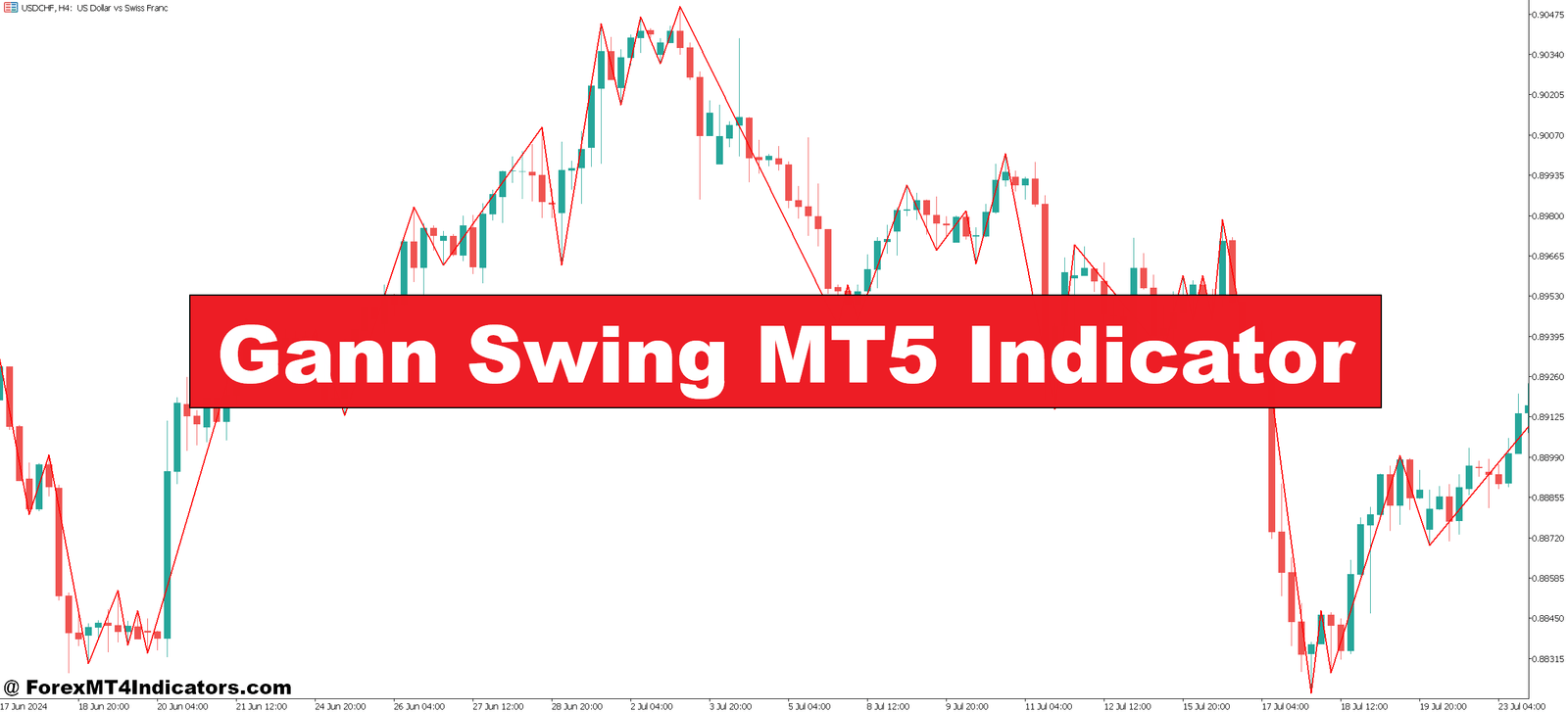
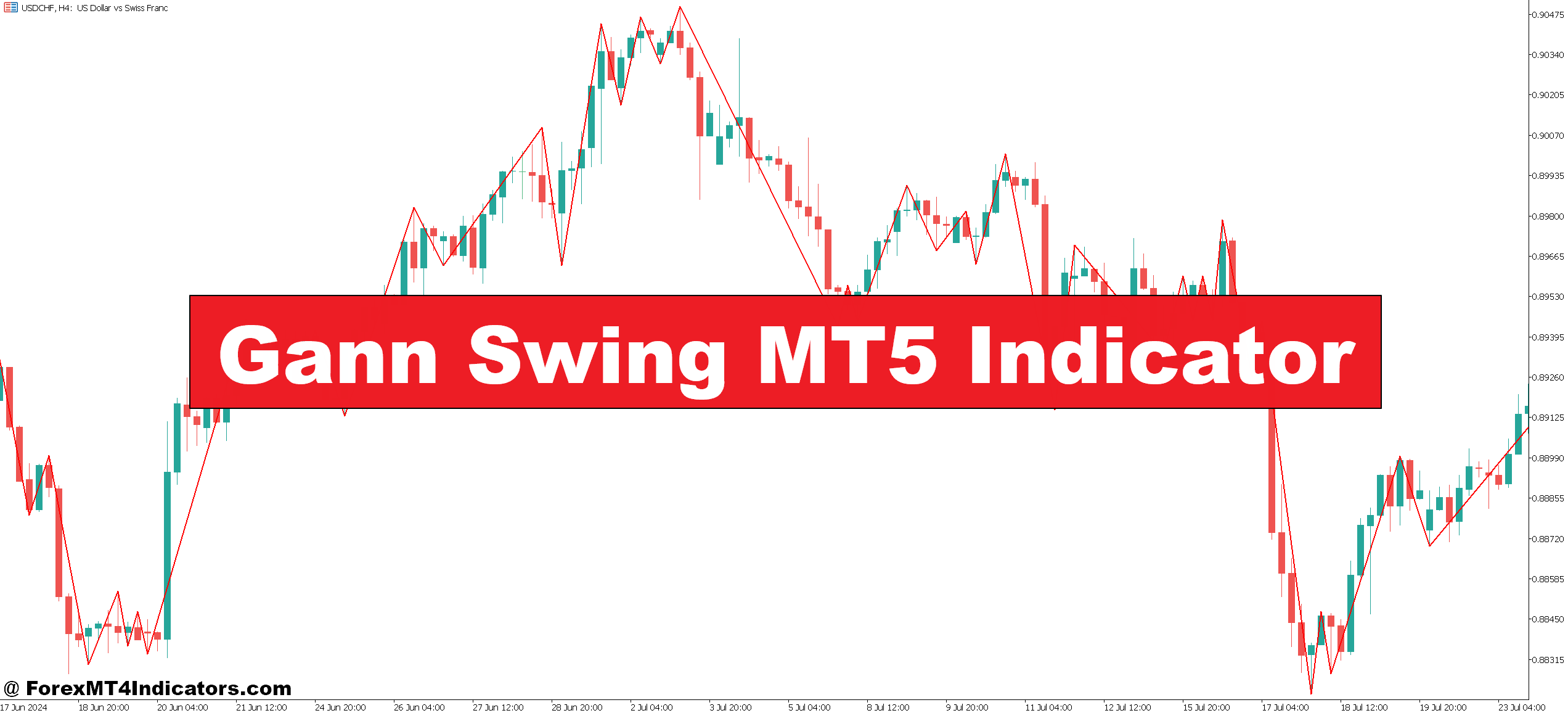
The Gann Swing MT5 indicator tackles this problem head-on. Developed from W.D. Gann’s classical swing trading methodology, this tool identifies validated swing highs and lows based on objective price action rules. Instead of guessing where trends might pivot, traders get clear visual markers showing where the market structure has actually shifted. It won’t predict the future, but it’ll show you what the market is doing right now with far more clarity than eyeballing charts alone.
What Makes Gann Swing Different from Standard Indicators
Most oscillators and moving averages lag price action. They’re calculating averages or momentum readings based on what already happened, which means they’re inherently behind the curve. The Gann Swing indicator takes a different approach—it marks swing points based on strict price relationship rules.
A swing high forms when a bar’s high exceeds both the prior bar’s high and the following bar’s high. That sounds simple, but here’s where it gets practical: the indicator won’t mark that swing high until the confirmation bar prints. This means you’re not dealing with repainting issues that plague many indicators. What you see is what happened, not what might change on the next tick.
Swing lows work the same way in reverse. A bar’s low must be lower than both adjacent bars’ lows before the indicator tags it. These points become your roadmap for market structure. When price breaks above a recent swing high during an uptrend, that’s trend continuation. When it breaks a swing low, you’ve got a potential trend change brewing.
Reading the Market Through Swing Points

Here’s where theory meets screen time. On a GBP/JPY 4-hour chart during the September 2024 carry trade unwind, the Gann Swing indicator flagged a critical swing low at 178.50. For two weeks prior, every swing low had been higher than the previous one—classic uptrend structure. But when price violated that 178.50 level and printed a lower swing low at 176.80, the trend structure broke.
Traders watching those swing points had objective evidence the uptrend was compromised. That shift happened three days before popular moving average crossovers signaled anything wrong. By the time the 50-period EMA crossed below the 200-period, the pair had already dropped another 400 pips.
The indicator doesn’t work in isolation, though. Smart traders combine swing point analysis with support and resistance zones. When a swing high forms right at a key resistance level, that’s confluence. The market tried to push higher, failed, and left a structural marker at a significant price zone. Those setups carry more weight than random swing points in the middle of nowhere.
Customization for Different Trading Approaches
The MT5 version offers adjustable parameters that change how sensitive the indicator is to price swings. The default setting typically uses a 1-bar lookback on each side, meaning it needs one bar higher/lower on both sides to validate a swing point. Increasing this to 2 or 3 bars makes the indicator less sensitive—it’ll mark fewer swings, but the ones it does mark represent more significant structural points.
Scalpers working 5-minute charts might keep the default 1-bar setting. They need to see every micro-swing to catch quick reversals in fast-moving pairs like EUR/JPY during London open. But position traders analyzing daily charts often bump the lookback to 2 or 3 bars. They don’t want noise; they want swing points that matter for trend analysis over days and weeks.
Some traders adjust the visual markers too. Default zigzag lines connecting swing points work fine, but switching to arrows or dots at each swing can reduce chart clutter. The key is making the swing points visible without overwhelming your price action view.
Where This Tool Excels and Where It Doesn’t

The Gann Swing indicator shines in trending markets with clear directional bias. During strong moves, it maps out the stepwise progression of higher highs and higher lows (or lower lows and lower highs). You get an objective framework for trailing stops—many traders place stops below the most recent swing low in uptrends, adjusting as new swing lows form at higher levels.
It also helps identify potential breakout zones. When price has been making equal swing highs for several attempts, traders watch for that moment when a bar finally exceeds the previous swing high with authority. That validated swing high above resistance often signals a breakout worth trading.
But range-bound markets expose this indicator’s limitations. When EUR/USD chops between 1.0850 and 1.0950 for three weeks, you’ll get swing highs and lows all over the place with no clear directional story. The indicator is doing its job—marking valid swing points—but those points don’t lead anywhere useful. They’re just noise in a directionless market.
Trading forex carries substantial risk. No indicator guarantees profits. The Gann Swing indicator identifies structural price points, but it doesn’t predict what happens next. A validated swing high doesn’t mean price will definitely reverse; it just means the market tried going higher and failed at that moment. Price can consolidate and eventually break through.
Practical Integration with Trading Systems
Smart integration means combining swing analysis with other context. Traders often overlay the Gann Swing with volume indicators. When a swing high forms on diminishing volume, that divergence suggests weakening buying pressure. The structural pivot confirmed by Gann Swing plus the volume clue creates a higher-probability reversal setup.
Others use it for confirming support and resistance breaks. Let’s say horizontal resistance sits at 1.2650 on GBP/USD. Price tests it three times over two days, forming swing highs near that level each time. On the fourth attempt, price finally closes above 1.2650 and the Gann Swing marks a new swing high above the resistance zone. That’s not just a breakout; it’s a structural shift confirmed by swing point analysis.
The indicator also helps with risk management decisions. If you’re long EUR/USD at 1.0820 and watching price climb, each new swing low that forms at a higher level tells you the uptrend structure remains intact. You can trail your stop loss to just below the most recent swing low, protecting profits while giving the trade room to breathe.
Real-World Application Notes
Testing this on volatile NFP days reveals interesting behavior. The immediate post-announcement price whipsaw often creates multiple swing points in rapid succession as the market digests the data. These early swing points tend to be less reliable for trend analysis. But after 30-45 minutes when volatility settles and a directional bias emerges, the swing points start mapping out clearer structure.
Asian session trading shows different characteristics. Lower volatility means swing points form more slowly, but they often hold more significance because fewer participants are moving the market. A swing high that forms during Tokyo hours and holds through London open can become an important reference point for the entire day’s trading.
How to Trade with Gann Swing MT5 Indicator
Buy Entry

- Higher swing low confirmation – Enter long when price forms a swing low above the previous swing low on EUR/USD 4-hour chart, confirming uptrend structure remains intact with at least 30-pip separation between lows.
- Swing high breakout – Go long when price closes above the most recent swing high by 10+ pips on GBP/USD 1-hour chart, but skip this signal if the breakout occurs during low-volume Asian session hours.
- Double bottom at swing low – Buy when price returns to test a previous swing low within 5-10 pips and bounces, placing stop loss 15 pips below the swing low level.
- Swing low holds key support – Take buy positions when a new swing low forms directly at major support zones like 1.0800 on EUR/USD daily chart, confirming buyers defended that level.
- Three consecutive higher swing lows – Enter after the third higher swing low prints on 4-hour timeframe, risking 1-2% per trade with stops below the most recent swing low.
- Swing point bounce with volume – Buy when price rejects a swing low with increased volume confirmation, but avoid this setup if the previous 3-4 candles show declining volume trends.
- Post-pullback swing formation – Go long when price pulls back 40-60 pips from highs, forms a swing low, then breaks back above the pullback’s midpoint on EUR/USD or GBP/USD pairs.
Sell Entry

- Lower swing high confirmation – Enter short when price creates a swing high below the previous swing high on 4-hour charts, signaling downtrend structure with minimum 25-pip separation.
- Swing low breakdown – Sell when price closes below the most recent swing low by 10+ pips, but avoid this during major news releases like NFP or central bank decisions.
- Failed swing high at resistance – Short when price forms a swing high within 10 pips of key resistance like 1.1000 on EUR/USD and reverses, placing stops 20 pips above the swing high.
- Double top at swing high – Take sell positions when price tests a previous swing high twice and fails, with second rejection showing smaller-bodied candles or long upper wicks.
- Three consecutive lower swing highs – Enter short after the third lower swing high forms on daily or 4-hour timeframe, risking maximum 2% account equity per trade.
- Swing high rejection with divergence – Sell when a new swing high forms but RSI or MACD shows lower highs, confirming momentum weakness—skip if price is within 15 pips of major support.
- Breakdown retest failure – Go short when price breaks a swing low, rallies back to retest it from below on GBP/USD 1-hour chart, and forms a new swing high below the broken level.
Final Perspective on Swing-Based Analysis
The Gann Swing MT5 indicator gives traders what they actually need: objective markers showing where market structure shifted. It won’t tell you when to enter or exit—that’s still your decision based on your system and risk tolerance. What it does is remove the subjectivity from identifying swing points.
Three key takeaways stand out. First, swing points work best in trending markets where each new swing high or low tells a directional story. Second, combining swing analysis with support/resistance zones and volume creates higher-probability setups than using swing points alone. Third, adjust the lookback parameter based on your timeframe and trading style—scalpers need sensitivity, position traders need significance.
The bottom line? Swing point analysis isn’t sexy or complicated, but it forms the foundation of how markets actually move. Price doesn’t glide in smooth lines; it swings up and down while making progress in one direction. The Gann Swing indicator simply makes those swings visible and objective. Whether that matters for your trading depends on whether you value structural clarity over predictive promises.
Recommended MT4/MT5 Broker
XM Broker
- Free $50 To Start Trading Instantly! (Withdraw-able Profit)
- Deposit Bonus up to $5,000
- Unlimited Loyalty Program
- Award Winning Forex Broker
- Additional Exclusive Bonuses Throughout The Year
- Exclusive 90% VIP Cash Rebates for all Trades!

Already an XM client but missing out on cashback? Open New Real Account and Enter this Partner Code: VIP90