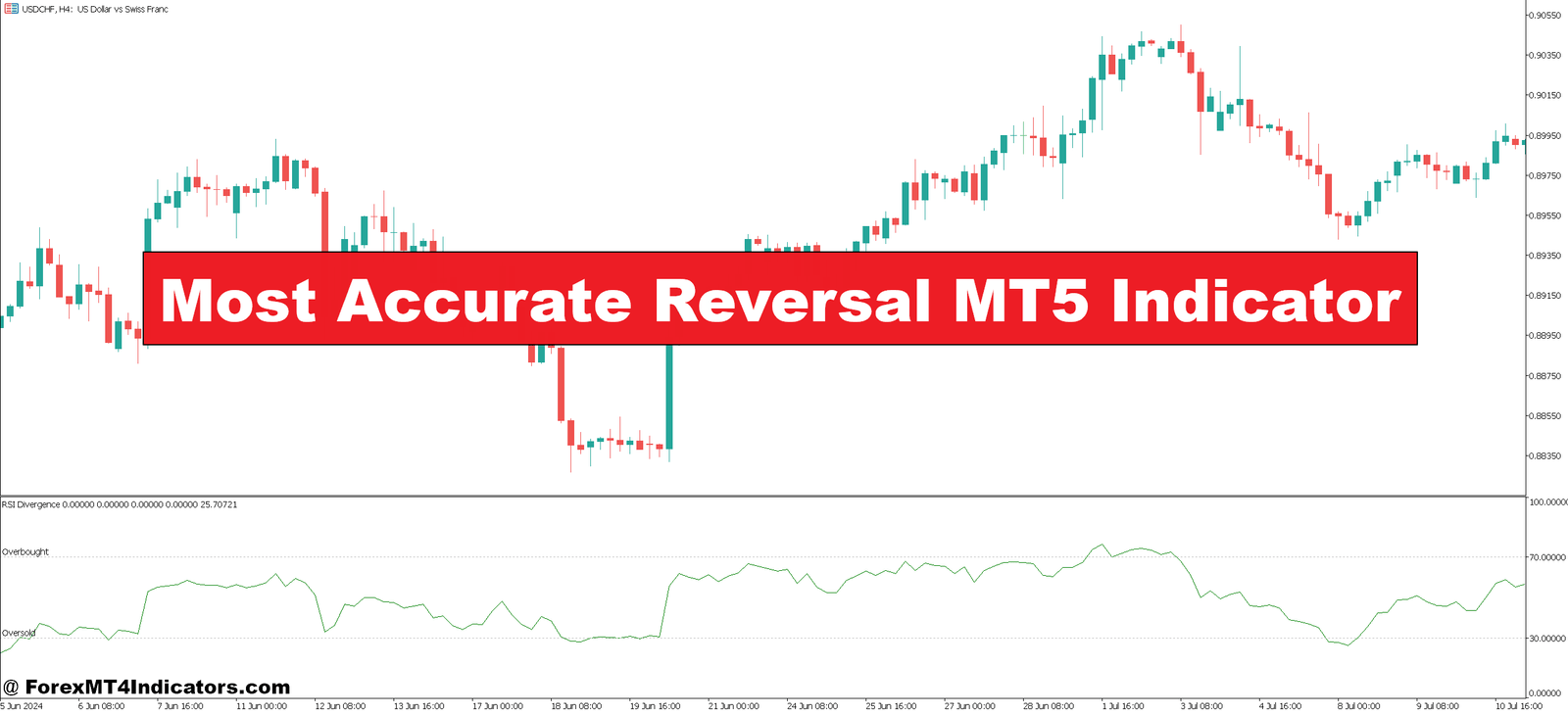
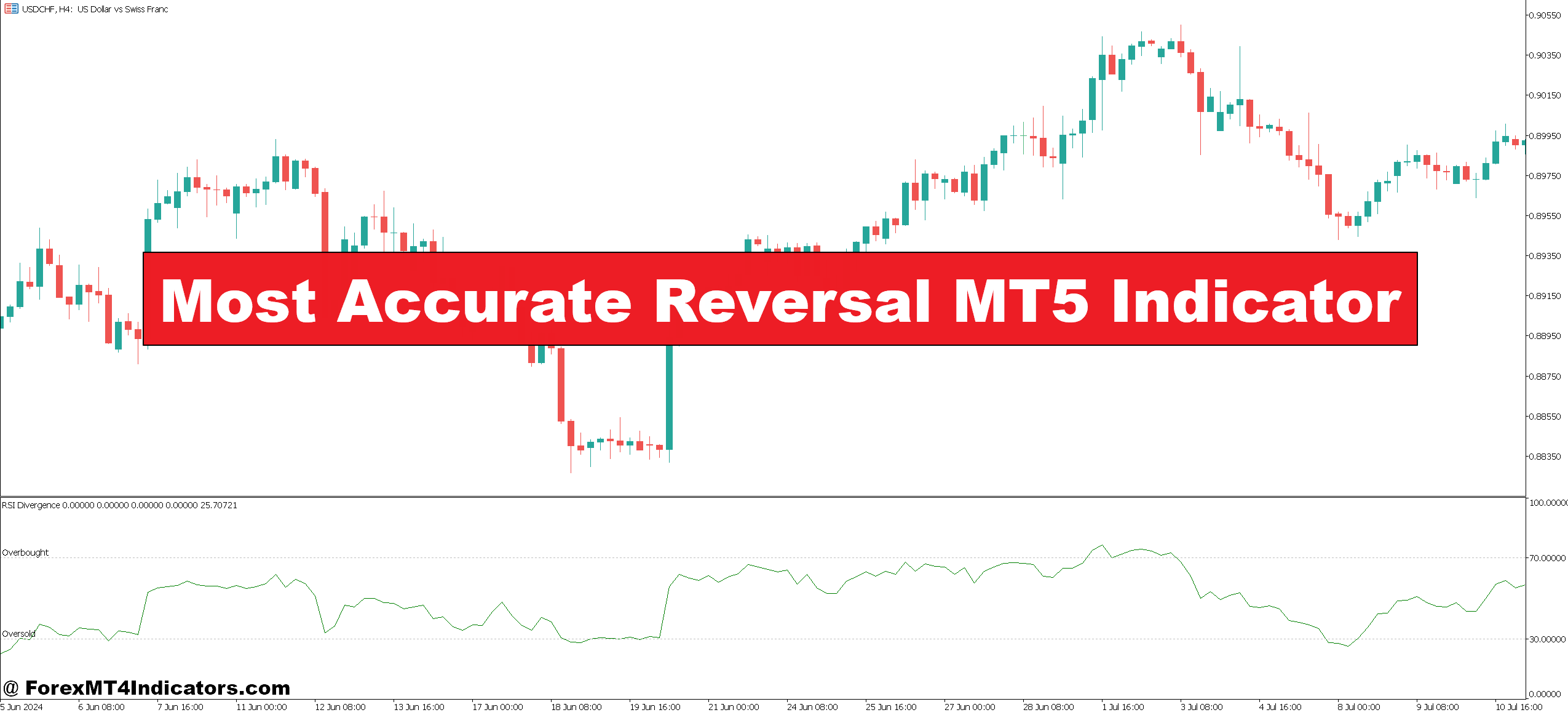
The Most Accurate Reversal MT5 Indicator operates on a simple but effective principle: it monitors both price movement and the 14-period RSI simultaneously, looking for divergences. When GBP/JPY pushes to a new high at 184.50 but the RSI reading comes in lower than the previous peak, that’s bearish divergence. The indicator flags this automatically with arrows or alert notifications right on your chart.
What makes this different from manually watching RSI is the automation and accuracy. Most traders eyeball divergences and miss subtle ones or draw their trendlines inconsistently. This indicator eliminates that human error by using algorithmic comparison of swing points. It checks whether the most recent price extreme (high or low) aligns with the corresponding RSI extreme, and when they don’t match, it signals a potential reversal.
The RSI component uses standard calculation—comparing average gains to average losses over 14 periods—but the indicator’s real power comes from how it interprets RSI behavior against price. When USD/CAD drops to 1.3420 (a new low) but RSI only falls to 32 instead of breaching the previous low of 28, that’s bullish divergence. Price is making lower lows, but the selling pressure is actually weakening. Smart money often steps in at these exact moments.
The indicator typically marks these setups with colored arrows: red pointing down for bearish divergence at highs, green pointing up for bullish divergence at lows. Some versions include alert functions that ping you when divergence forms, so you don’t have to stare at charts all day waiting for setups.
Real Trading Applications Across Different Markets
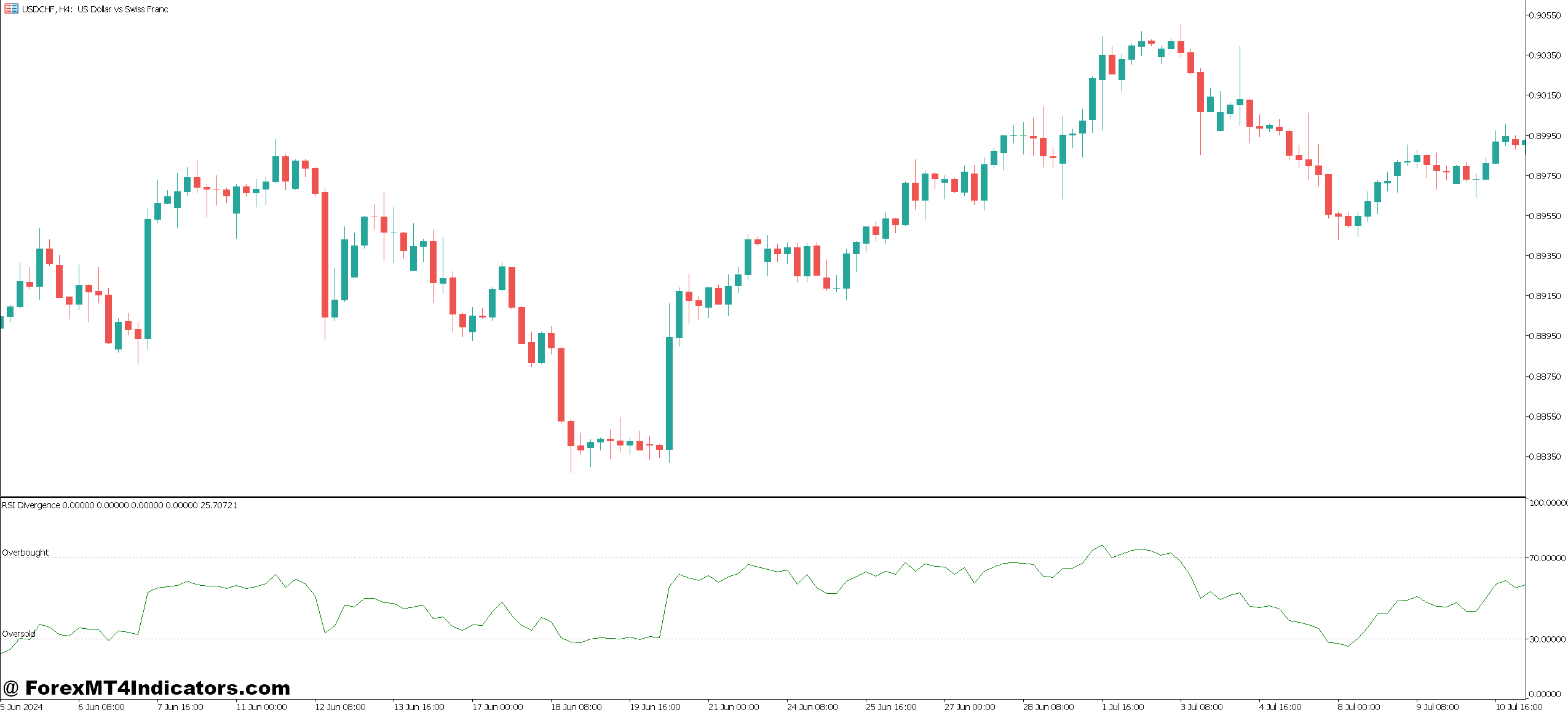
Let’s talk specifics. You’re trading AUD/USD on the daily chart. Price rallies from 0.6250 to 0.6385 over eight trading days. On day six, the Most Accurate Reversal MT5 Indicator flashes a bearish divergence signal at 0.6370—price made a higher high, but RSI topped out at 68 compared to 74 on the previous peak.
Here’s what professional traders do with this information: they don’t immediately slam the sell button. They watch for confirmation. Maybe they wait for price to break below the recent swing low at 0.6340, or they look for a bearish engulfing candlestick pattern at the divergence high. Entry might come at 0.6355 with a stop at 0.6390 (just above the high) and a target at the 0.6280 support zone. That’s a 35-pip risk for a potential 75-pip gain.
The indicator performs best on 4-hour and daily timeframes. These higher periods filter out the random noise that plagues lower timeframes. That said, day traders do use it on 1-hour charts during major session overlaps—London open or New York morning—where volume is strong enough to produce reliable reversals. Running it on 5-minute or 15-minute charts generates too many false signals unless you’re in extremely trending conditions.
One crucial detail: divergence works better near key levels. When EUR/GBP shows bullish divergence at 0.8450 and that level happens to be a major support zone tested three times previously, your odds jump significantly. But divergence in the middle of nowhere—no support, no resistance, no psychological level—often fails. The indicator finds the divergence, but traders need to add the context.
Customizing RSI Settings for Your Trading Style
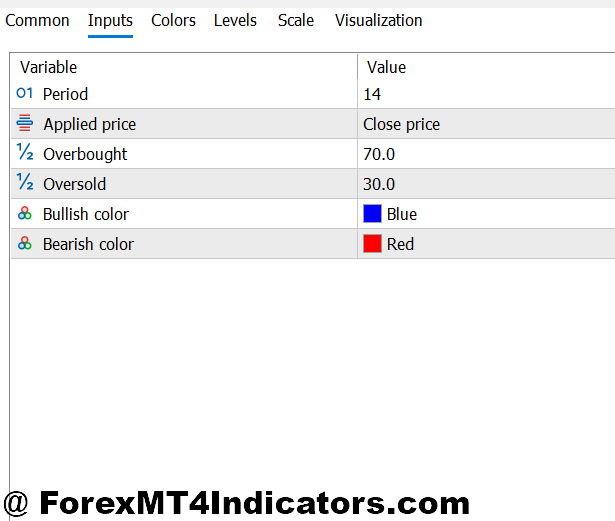
The default 14-period RSI suits most traders, but there’s room for adjustment. Swing traders holding positions for days or weeks sometimes extend it to 21 periods. This smooths out the oscillator and reduces sensitivity, meaning fewer divergence signals but potentially higher quality ones. When testing this on volatile NFP days, the 21-period setting helped avoid getting chopped up by intraday whipsaws.
Scalpers and aggressive day traders might drop the RSI period to 9 for faster signals. On USD/JPY during Tokyo session, a 9-period RSI catches smaller divergences that can lead to quick 20-30 pip reversals. The tradeoff? More false signals. You’ll see divergence every few hours instead of every few days, and many won’t pan out.
The indicator also lets you adjust divergence sensitivity through lookback periods—how many bars it examines when comparing swing points. Setting this to 5 bars (default) works fine for most situations. Bump it to 8-10 on daily charts if you want to catch only major structural shifts. Drop it to 3 on hourly charts for more frequent signals, though expect lower accuracy.
Overbought and oversold levels matter too. Standard RSI uses 70/30, but some traders prefer 80/20 for stronger divergence signals. When NZD/USD shows bearish divergence with RSI above 80, that’s often more reliable than divergence with RSI at 65. The extreme reading adds conviction that the move is truly overextended.
Visual settings shouldn’t be overlooked. When scanning multiple pairs during London session chaos, having bold, contrasting arrow colors helps spot setups instantly. Some traders use custom alerts—email or push notifications—so the indicator does the heavy lifting of finding divergences while they focus on execution.
The Honest Truth About Limitations
No indicator nails every reversal, and the Most Accurate Reversal MT5 Indicator has its blind spots. Strong trending markets are its kryptonite. When USD/CHF is ripping 150 pips on Swiss National Bank news, you might see two or three bearish divergences that all fail as price just keeps launching higher. Divergence signals momentum exhaustion, but momentum can fade slowly while price grinds much further than seems logical.
Choppy, range-bound markets create another headache. Picture AUD/JPY stuck between 96.00 and 96.80 for a full week. The indicator will flash divergence signals at both boundaries repeatedly, but most won’t produce meaningful moves—just more back-and-forth frustration. It can’t distinguish between “reversal forming” and “going nowhere fast.”
Compared to other reversal tools like Stochastic divergence or MACD histogram divergence, RSI-based signals tend to trigger earlier. That’s a double-edged sword. You get better entry prices but higher failure rates. MACD divergence often appears after the reversal already started, giving worse entries but more confirmation. Pick your poison based on whether you prioritize catching exact tops and bottoms or higher win rates.
The indicator also can’t account for fundamental shocks. When Bank of England unexpectedly hikes rates by 50 basis points, any bearish divergence on GBP pairs becomes instantly irrelevant as price explodes higher. Technical analysis works until it doesn’t, and news events are the great equalizer.
How to Trade with Most Accurate Reversal MT5 Indicator
Buy Entry

- Wait for bullish divergence confirmation – Don’t enter when the bullish divergence first appears; wait for price to break above the most recent swing high by at least 10-15 pips on EUR/USD to confirm the reversal is actually happening.
- Check RSI is below 30 – The strongest bullish divergence setups occur when RSI dips into oversold territory (below 30) while price makes lower lows, signaling exhausted selling pressure ready to reverse.
- Use 4-hour or daily charts – Avoid the 15-minute timeframe noise; stick to 4-hour and daily charts where divergence signals produce cleaner reversals with 60-80 pip potential instead of 10-pip fakeouts.
- Enter on the retest – After price breaks the swing high, wait for a pullback to that broken level (now support) before entering long; this improves your risk-reward from 1:1.5 to potentially 1:3.
- Place stops 20-30 pips below divergence low – On GBP/USD, position your stop loss beneath the actual low where divergence formed, not the entry candle, giving the trade room to breathe without getting stopped prematurely.
- Skip ranging markets entirely – If the pair is trapped in a 50-pip range for multiple days, ignore all divergence signals; they’ll produce multiple false reversals that chop up your account.
- Combine with support zones – Only take bullish divergence when it forms at a key support level tested at least twice before; divergence at random price levels fails 60% of the time.
- Target previous resistance – Set your take profit at the nearest resistance zone or previous swing high, typically 50-100 pips away on major pairs, rather than hoping for extended runs.
Sell Entry

- Confirm bearish divergence with structure break – When the bearish divergence appears, wait for price to break below the recent swing low by 10-15 pips before shorting; immediate entries get trapped in continued upward momentum.
- Verify RSI is above 70 – The most reliable bearish divergence happens when RSI pushes into overbought territory (above 70) while price climbs higher, showing buying exhaustion at extremes.
- Focus on higher timeframes only – Trade bearish divergence on 4-hour and daily charts where signals are less frequent but more accurate; 1-hour divergence on USD/JPY produces too many failed reversals.
- Wait for rejection candles – Look for a bearish engulfing or shooting star candlestick at the divergence high before entering; this adds 20-30% more probability to your setup.
- Set stops 25-35 pips above the high – Place your stop loss above the actual divergence high plus a buffer for spread and volatility, especially on GBP pairs that can spike 15-20 pips on normal news.
- Avoid trending markets – If EUR/USD has made six consecutive higher highs over three days, skip the bearish divergence signal; strong trends can produce 3-4 failed divergences before finally reversing.
- Match with resistance levels – Only short when bearish divergence forms at established resistance that’s held twice before; random divergence in uptrends rarely produces more than 30-pip moves.
- Don’t trade before major news – Skip any divergence signal within 2 hours of NFP, Fed announcements, or ECB decisions; fundamental shocks override all technical setups and can blow past your stops instantly.
Building a Complete Trading Strategy Around It
Successful traders use the Most Accurate Reversal MT5 Indicator as a scanning tool, not a standalone system. They run it across multiple pairs during their morning routine, note where divergences are forming, then wait for additional confirmation before entering. That confirmation might be a break of structure, a rejection candlestick, or confluence with Fibonacci retracement levels.
Risk management becomes critical because reversals are inherently trickier than trading with the trend. Trading forex carries substantial risk, and no indicator guarantees profits. Consider reducing position size by 30-50% on divergence setups compared to your trend-following trades. Or keep normal size but widen stops to accommodate potential false breakouts before the actual reversal kicks in.
Multi-timeframe analysis amplifies effectiveness. Spot divergence on the daily chart for direction, then drop to 4-hour or 1-hour for precise timing. When both timeframes show divergence—say, bearish divergence on daily EUR/USD at 1.1050 and the 4-hour chart confirms it with its own divergence signal—that’s when conviction should be highest.
Here’s something most traders overlook: failed divergences are trade signals themselves. If CAD/JPY shows bearish divergence at 108.50 but then explodes higher anyway, that failed reversal often precedes massive trend continuation moves. Trapped shorts scramble to cover, fueling additional upside. The indicator reveals not just potential reversals but also false reversals that validate powerful trends.
Smart traders also combine this with basic support and resistance. Divergence at resistance levels that have held three times in the past month carries more weight than divergence at random price points. The technical confluence multiplies probability.
The indicator works best when traders stay patient, filter aggressively for quality setups, and manage risk like reversals might fail—because sometimes they do. Used correctly, it cuts through the noise and highlights those genuine momentum shifts where the big money is starting to position for the turn.
Recommended MT4/MT5 Broker
XM Broker
- Free $50 To Start Trading Instantly! (Withdraw-able Profit)
- Deposit Bonus up to $5,000
- Unlimited Loyalty Program
- Award Winning Forex Broker
- Additional Exclusive Bonuses Throughout The Year
- Exclusive 90% VIP Cash Rebates for all Trades!

Already an XM client but missing out on cashback? Open New Real Account and Enter this Partner Code: VIP90