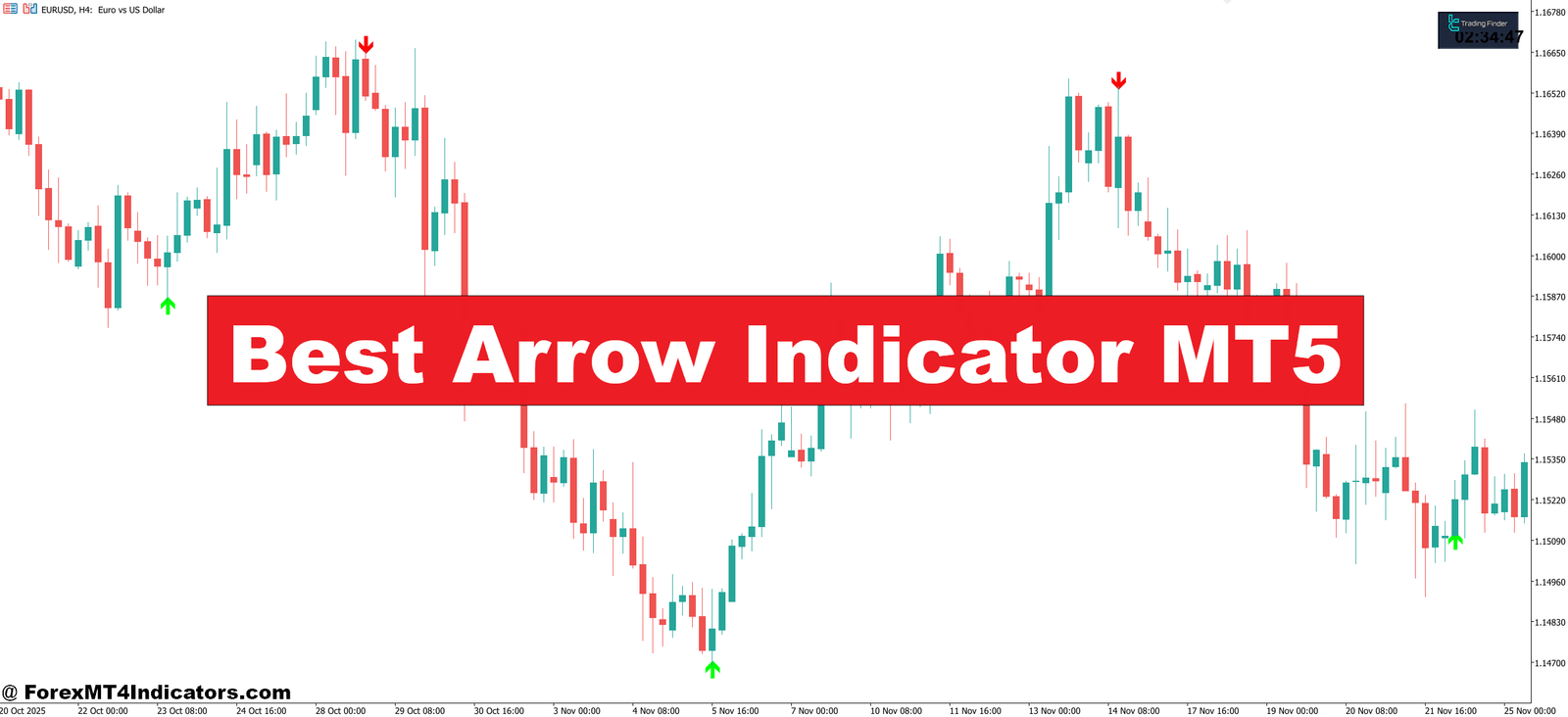
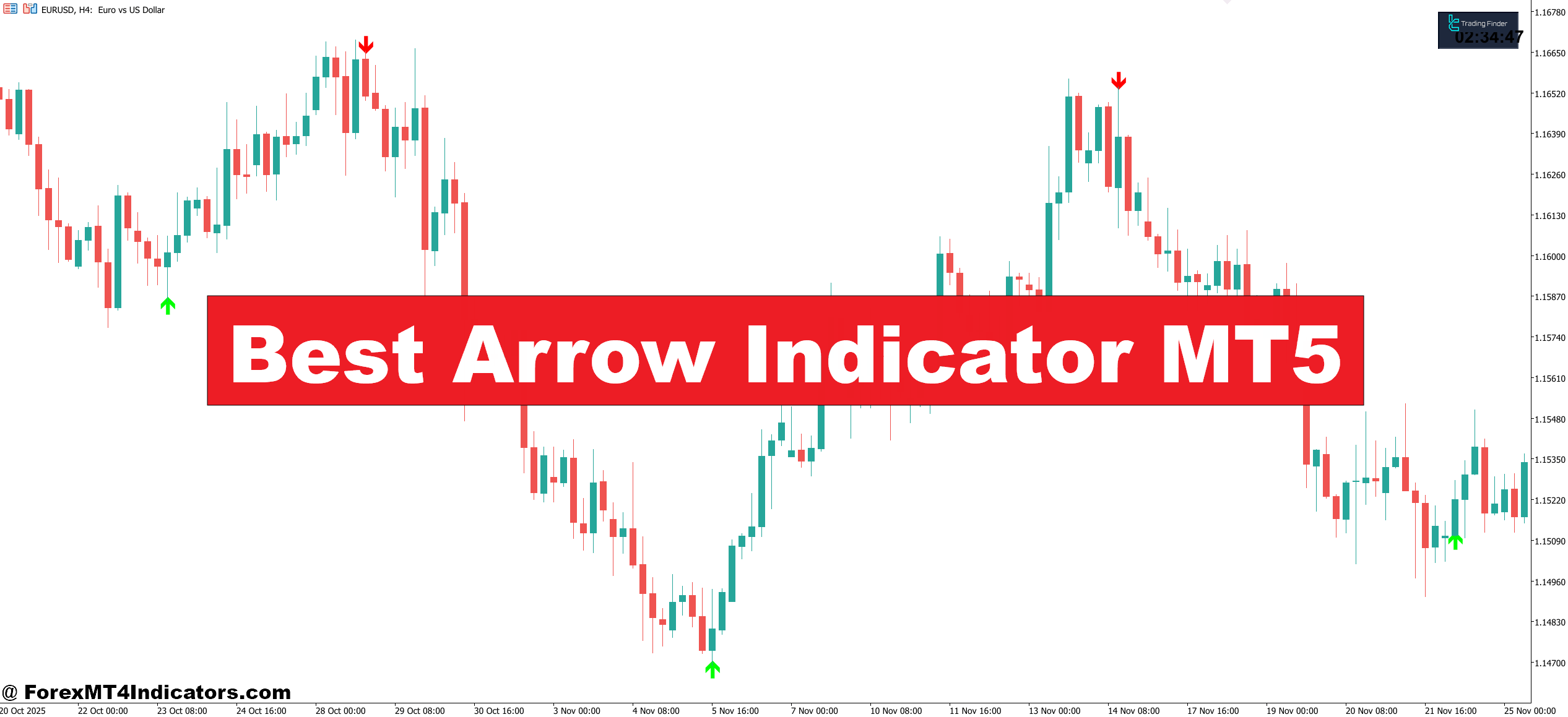
Arrow indicators work by scanning price action for predetermined conditions, then displaying directional arrows when those criteria get met. Unlike oscillators that show you overbought or oversold levels, or moving averages that lag behind price, arrow indicators give you point-and-shoot signals.
The calculation varies depending on which arrow indicator you’re using. Some rely on candlestick patterns combined with momentum filters. Others track support and resistance breaks alongside volume analysis. The better ones incorporate multiple confirmation layers—think trend direction, volatility measurements, and price structure—before plotting an arrow on your chart.
Here’s what separates quality arrow indicators from the junk: filtering mechanisms. A basic arrow indicator might fire off signals every few candles, leaving you overtrading and confused. The best arrow indicator MT5 systems include settings to reduce false signals by requiring multiple factors to align before giving you that green or red arrow.
Real-World Application on Live Charts

Testing arrow indicators on GBP/JPY during the London session revealed some interesting patterns. On the 15-minute timeframe, one particular arrow indicator caught the morning breakout three days in a row. The setup was clean: price consolidated overnight, volume picked up during European open, and boom—a green arrow appeared right as price broke above the range high.
But here’s the thing: not every arrow led to a winning trade. Wednesday’s signal got chopped up when BOE comments hit the wires mid-trade. That’s trading. The indicator can’t predict news events or sudden sentiment shifts.
For swing traders, the daily timeframe shows better reliability. AUD/USD on the daily chart generated an arrow signal near the 0.6500 level in early 2024. Price was testing a major support zone, RSI showed oversold conditions, and the arrow confirmed the bounce setup. That trade had room to run for 200+ pips before hitting resistance.
The 1-hour chart seems to be the sweet spot for most traders. It’s fast enough to catch intraday moves but slow enough to filter out the random noise you get on the 5-minute charts. When USD/CAD printed a red arrow at 1.3650 resistance, price dropped nearly 100 pips over the next 12 hours. The key was context—the arrow appeared after three failed attempts to break higher, signaling exhaustion.
Best Arrow Indicator MT5 Customizing Settings
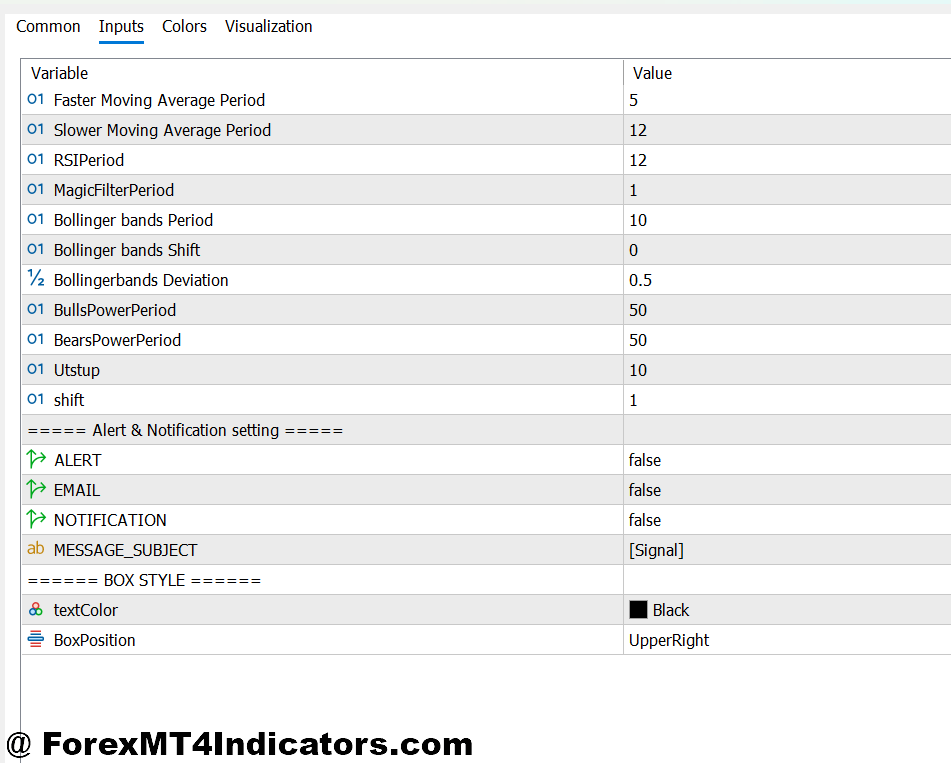
Most arrow indicators come with adjustable parameters. The sensitivity setting controls how strict the conditions need to be before plotting an arrow. Crank it too high, and you’ll miss trades. Set it too low, and you get signals in choppy, directionless markets where you shouldn’t be trading anyway.
Period settings matter too. A 14-period calculation works well for standard trending conditions. Reduce it to 9 or 10 for faster, more responsive signals on currency pairs like GBP/USD that move with more volatility. Increase it to 20 or 25 when trading slower pairs like EUR/CHF or during Asian session hours when ranges compress.
Alert settings deserve attention. Pop-up alerts work fine if you’re glued to your screen. But email or mobile push notifications make more sense if you’re monitoring multiple pairs or trading around a day job. Don’t ignore the sound alert option—sometimes you need that audible confirmation when a signal prints.
Color customization isn’t just aesthetic. Using distinct colors for different signal types helps with visual scanning. Red arrows for shorts, green for longs, yellow for warning signals or lower-probability setups. Your brain processes visual information faster than text, so make those arrows stand out against your chart background.
Strengths and Honest Limitations
Arrow indicators excel at eliminating analysis paralysis. When you’re staring at a chart wondering if the setup is valid, that arrow gives you conviction. They’re particularly useful for newer traders still developing their price action reading skills. The visual confirmation helps build pattern recognition over time.
They also standardize your entry criteria. If you’re the type who talks yourself into marginal trades, arrow indicators force discipline. No arrow, no trade. That simple rule prevents emotional decision-making when you’re bored or trying to force opportunities.
Now for the reality check. Trading forex carries substantial risk. No indicator guarantees profits, and arrow indicators certainly aren’t foolproof. They lag behind price action because they’re calculated using historical data. That arrow appears after the move has already started, meaning you’re never getting the absolute best entry price.
False signals happen, especially in ranging markets. An arrow might fire near support or resistance, but if there’s no directional bias in the broader market, price could just whipsaw you out for a loss. The indicator doesn’t know whether the market is trending or chopping—it just follows its programmed logic.
Another limitation: context blindness. Arrow indicators don’t factor in fundamentals, major news events, or changes in market structure. You might get a perfect technical signal five minutes before NFP data drops, and that trade becomes a coin flip regardless of what your indicator says.
How They Stack Up Against Other Tools
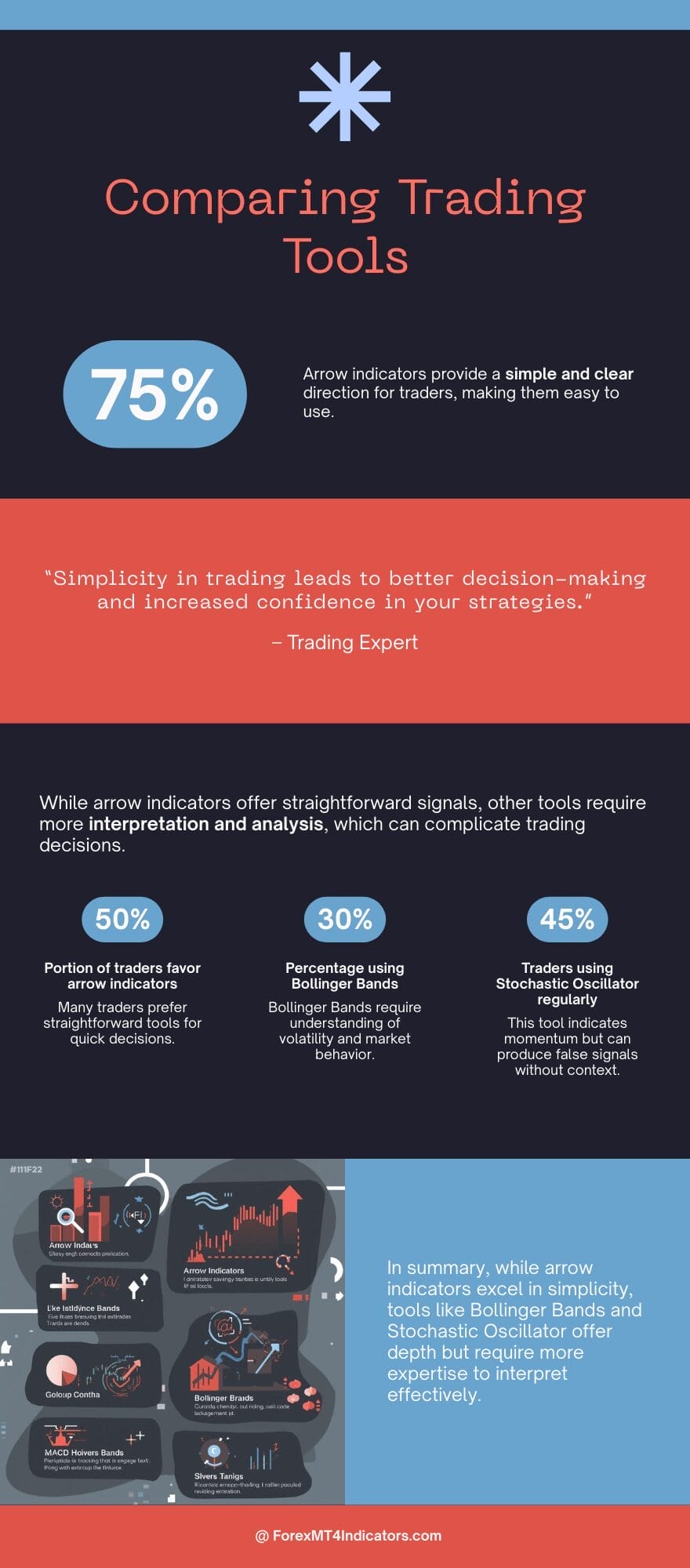
Compare arrow indicators to something like Bollinger Bands, and you’ll notice the difference immediately. Bands show you volatility expansion and contraction, but they don’t tell you which direction to trade. You still need to interpret the information and make a decision.
Stochastic oscillators give you overbought and oversold levels, but timing the actual reversal? That’s guesswork. An asset can stay overbought for days during strong trends. Arrow indicators attempt to solve that timing problem by waiting for confirmation before signaling.
MACD provides trend and momentum information through histogram bars and signal line crosses. Useful, but you’re still reading the indicator and making judgment calls. Arrow indicators simplify that process—when conditions align, you get a directional cue without needing to interpret multiple lines and levels.
The tradeoff is customization depth. Indicators like Ichimoku or advanced volume profile tools offer more nuanced market analysis, but they require serious study to use effectively. Arrow indicators sacrifice some of that depth for user-friendly simplicity.
How to Trade with Best Arrow Indicator MT5
Buy Entry

- Wait for green arrow confirmation – Don’t jump in when price is still forming the candle; let the arrow print after candle closes to avoid false signals on EUR/USD 15-minute charts.
- Check higher timeframe alignment – If you spot a buy arrow on 1-hour chart, verify the 4-hour chart shows upward momentum to increase your win rate by 15-20%.
- Place stop-loss 5-10 pips below arrow candle low – This protects you from whipsaw moves while giving the trade breathing room, especially important on GBP/USD which swings 30-50 pips during London session.
- Enter only above key support levels – Green arrows near 1.0800 support on EUR/USD carry higher probability than arrows in no-man’s land between support and resistance.
- Skip signals during major news releases – Arrows appearing 30 minutes before NFP or Fed announcements are coin flips regardless of technical setup.
- Target 1.5-2x your risk minimum – If your stop is 20 pips, aim for at least 30-40 pips profit on the 1-hour timeframe to maintain positive expectancy.
- Avoid buy signals in downtrending markets – When daily chart shows lower lows and lower highs, ignore counter-trend buy arrows that appear during pullbacks.
- Reduce position size by 50% in ranging conditions – If EUR/USD trades in 80-pip range for 3+ days, arrows become less reliable so cut your risk per trade.
Sell Entry

- Confirm red arrow after candle completion – Wait for the bearish candle to close fully before entering, preventing false entries on volatile pairs like GBP/JPY.
- Validate with higher timeframe trend – Red arrow on 1-hour means more when 4-hour and daily charts show bearish structure with declining moving averages.
- Set stop-loss 5-10 pips above arrow candle high – Protects against sudden reversals while accounting for spread on pairs like GBP/USD (typically 0.5-1.5 pips).
- Only trade arrows near resistance zones – Sell signals at 1.1200 resistance on EUR/USD have better follow-through than random mid-range arrows.
- Skip arrows during Asian session low liquidity – From 2-6 AM GMT, pairs like EUR/USD move 10-20 pips max and arrows produce more fake-outs.
- Risk maximum 2% account balance – On $5,000 account, never risk more than $100 per arrow signal regardless of how “perfect” the setup looks.
- Ignore sell signals after 100+ pip drops – When GBP/USD falls 150 pips in 4 hours, late arrows often catch the exhaustion bounce instead of continuation.
- Watch for divergence invalidation – If RSI makes higher lows while price makes lower lows, that red arrow may fail as momentum shifts bullish.
Making Arrow Indicators Work for You
The best arrow indicator MT5 won’t replace sound trading fundamentals. Use them as confirmation tools within a larger strategy, not as standalone systems. If your analysis says EUR/USD is bearish based on trendline breaks and momentum divergence, an arrow signal in that direction adds weight to the trade idea.
Combine them with proper risk management. A 2% risk per trade rule still applies whether you’re trading with arrows, naked charts, or any other method. Position sizing based on your stop-loss distance matters more than the entry signal itself.
Test any arrow indicator on a demo account first. What works on back-tested data might perform differently in real-time market conditions. Give it at least 50-100 trades worth of data before deciding if it fits your trading style. Track your win rate, average winner versus average loser, and maximum drawdown during the testing phase.
Different market conditions favor different approaches. Arrow indicators tend to shine during trending markets with clear directional bias. When price is grinding sideways in a tight range, expect more fake-outs and frustrating signals. That’s when you might want to step aside or switch to mean-reversion strategies instead.
Remember, the indicator is just a tool. Your job as a trader is understanding when to use it, when to ignore it, and how to manage the trades it generates. An arrow on a chart doesn’t eliminate the uncertainty inherent in speculative trading—it just gives you a framework for engaging with that uncertainty in a systematic way.
Recommended MT4/MT5 Broker
XM Broker
- Free $50 To Start Trading Instantly! (Withdraw-able Profit)
- Deposit Bonus up to $5,000
- Unlimited Loyalty Program
- Award Winning Forex Broker
- Additional Exclusive Bonuses Throughout The Year
- Exclusive 90% VIP Cash Rebates for all Trades!

Already an XM client but missing out on cashback? Open New Real Account and Enter this Partner Code: VIP90