


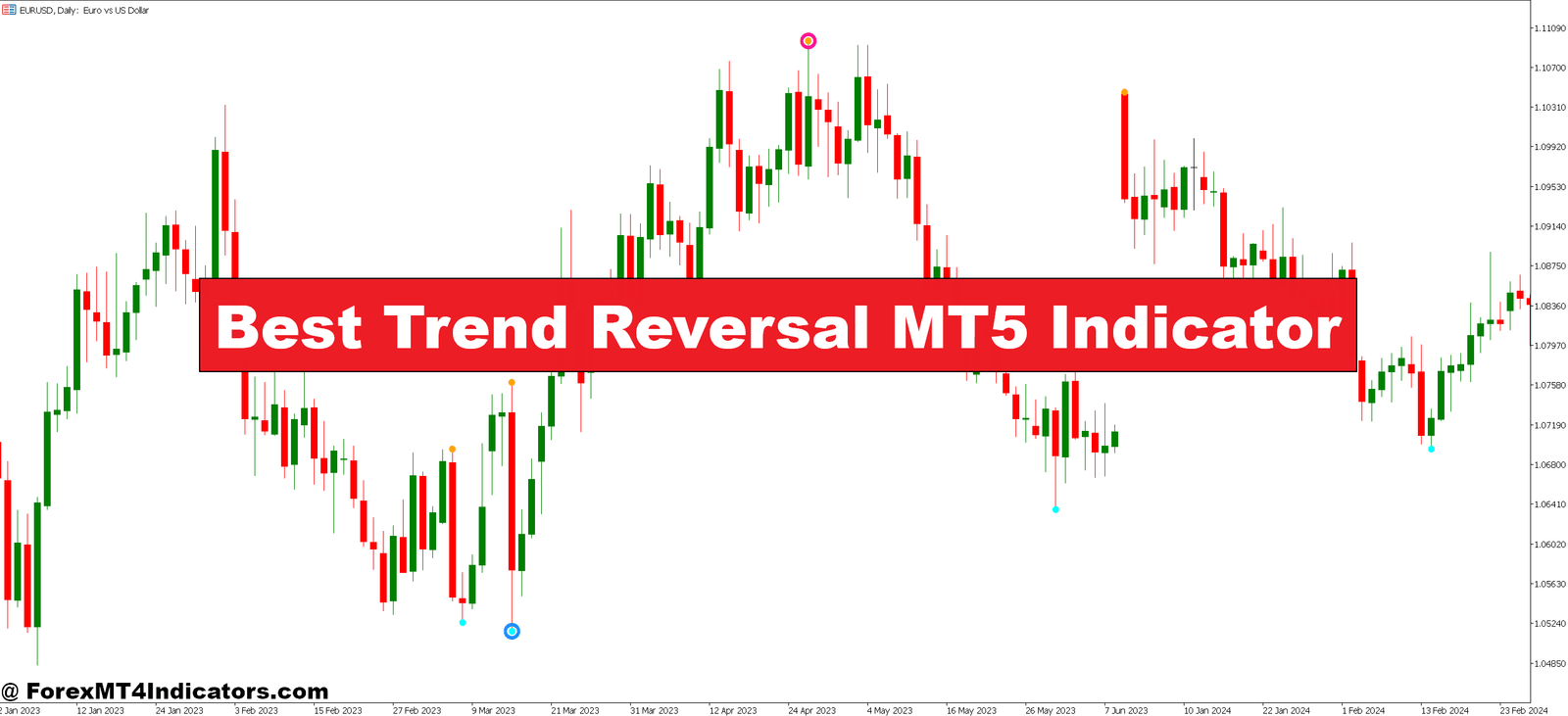
The best trend reversal MT5 indicator addresses this problem by combining multiple confirmation signals into one visual tool. Instead of juggling five different indicators across your charts, you get clear reversal signals backed by price action, momentum, and volume analysis. This article breaks down how these indicators work, when they’re most effective, and what limitations you need to understand before risking real capital.
Understanding Trend Reversal Indicators
A trend reversal indicator identifies potential turning points where an existing trend loses momentum and reverses direction. Unlike trend-following tools that work best during sustained moves, reversal indicators excel at catching exhaustion points—those moments when bulls or bears finally run out of steam.
The mechanics vary by indicator type. Some use moving average crossovers, where short-term averages cut through longer ones to signal momentum shifts. Others track momentum oscillators like RSI or Stochastic, watching for divergences between price and indicator readings. The more sophisticated tools combine multiple signals: a 50-period moving average crossover might need confirmation from declining volume and an overbought RSI reading before triggering an alert.
What separates effective reversal indicators from noise generators? Three things: they filter out minor pullbacks that don’t become real reversals, they provide signals early enough to capture meaningful profit, and they work across different timeframes without constant recalibration.
How Top MT5 Reversal Indicators Work

Most professional-grade reversal indicators use a multi-layered approach. Here’s what happens under the hood:
The indicator calculates price momentum by comparing recent closes to a moving average baseline. When the EUR/USD 4-hour chart shows price touching the upper Bollinger Band while RSI exceeds 70, the indicator notes potential exhaustion. But it doesn’t trigger yet.
Next, it checks for divergence. If price makes a higher high but the momentum oscillator makes a lower high, that’s a classic bearish divergence—the rally is weakening. The indicator assigns a probability score to this setup.
Finally, it looks at volume patterns. Declining volume during an uptrend suggests buyers are losing interest. When all three signals align—overextension, divergence, and volume confirmation—the indicator fires a reversal alert.
The calculation often uses a weighted algorithm. Price action might carry 40% weight, momentum 35%, and volume 25%. This prevents any single factor from triggering false signals during choppy markets.
Real-World Application: Trading USD/JPY Reversals
Let’s walk through a specific trade setup. USD/JPY had been climbing for six sessions on the daily chart, gaining roughly 280 pips from 148.50 to 151.30. The reversal indicator started flashing warning signals:
The price tagged the 20-day Bollinger Band upper limit three consecutive days—classic overextension. Meanwhile, the RSI momentum reading hit 76, deep in overbought territory. Here’s where divergence appeared: while price pushed to 151.30 (a new high), the RSI peaked at 76 versus a previous reading of 79. Price was making higher highs, but momentum was making lower highs.
The indicator fired a reversal signal at 151.15. A conservative trader entered a short position there, placing a stop-loss 40 pips above at 151.55. The risk seemed justified because volume analysis showed buying pressure dropping by 30% compared to the previous three days.
The reversal played out over the next 48 hours. USD/JPY dropped to 149.80, delivering a 135-pip gain. That’s a 3.3:1 risk-reward ratio on a single setup.
But not every signal works this cleanly. Two weeks later, the same indicator triggered a bullish reversal signal on EUR/GBP at 0.8520. The setup looked identical: oversold conditions, bullish divergence, declining volume during the downtrend. The pair rallied 25 pips before resuming its downtrend, stopping out the position for a 35-pip loss.
This is why risk management matters more than the indicator itself.
Customizing Settings for Different Trading Styles
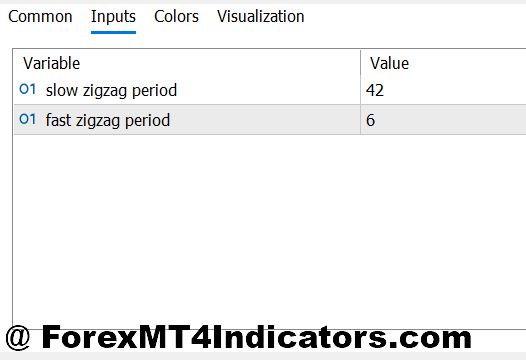
MT5 reversal indicators typically offer adjustable parameters. The key settings include lookback periods, sensitivity levels, and confirmation requirements.
For scalpers working 5-minute charts, reducing the lookback period from 50 bars to 20 bars creates more signals. The tradeoff? More false positives during ranging markets. Day traders on 15-minute or 1-hour charts often keep default settings—these timeframes offer a sweet spot between signal frequency and accuracy.
Swing traders operating on 4-hour or daily charts might increase the confirmation threshold. Instead of accepting two aligned signals (momentum plus divergence), they wait for all three factors, including volume. This filters out noise but means fewer trading opportunities.
Sensitivity adjustment changes how aggressively the indicator identifies reversals. High sensitivity catches every potential turn, useful during volatile sessions like the London open. Low sensitivity waits for more substantial evidence, better suited for Asian session tradin,g where false breakouts are common.
One often-overlooked setting: alert type. Some traders prefer on-chart arrows, others want mobile push notifications. Testing both helps you catch signals without being chained to your screen.
Strengths and Limitations You Need to Know

Reversal indicators shine in trending markets that periodically exhaust themselves. The GBP/JPY pair, known for strong trends punctuated by sharp reversals, works beautifully with these tools. You’ll see clean signals at major turning points, often at psychological price levels or previous support/resistance zones.
They also excel during scheduled news events. When NFP employment data drops and a currency pair whipsaws violently, reversal indicators help identify when the dust settles and a new trend begins. That’s information worth its weight in gold.
But the limitations are real and worth understanding before you risk a dime.
Ranging markets produce nightmare scenarios for reversal indicators. When EUR/USD bounces between 1.0850 and 1.0950 for three weeks, you’ll get reversal signals at both boundaries—but these aren’t trend reversals, they’re range boundaries. The indicator can’t distinguish between a reversal and a bounce within consolidation.
Sudden news events also create problems. An unexpected central bank statement can invalidate every technical signal in seconds. Your indicator might show a perfect bearish reversal setup, but if the Fed announces emergency rate cuts, all that technical analysis becomes irrelevant.
False signals during low-volatility periods are another headache. The AUD/USD pair during Asian session often triggers reversal signals that go nowhere, producing small losses that add up over time.
And here’s the thing: no indicator predicts the future. They analyze historical price action to identify probabilities. A reversal indicator showing a 70% accuracy rate still means three out of every ten signals lose money. Your position sizing and risk management determine profitability, not the indicator itself.
How to Trade with Best Trend Reversal MT5 Indicator
Buy Entry

- Wait for bullish divergence – Price makes a lower low but your indicator shows a higher low, signaling weakening downward momentum on 4-hour or daily charts.
- Confirm oversold conditions – RSI drops below 30 and price touches the lower Bollinger Band; this works best on EUR/USD and GBP/USD during trending markets.
- Check volume spike – Look for increasing volume on the reversal candle compared to the previous 5 bars; declining volume means weak conviction.
- Place stop-loss 20-30 pips below the swing low – Never risk more than 2% of your account; if EUR/USD reversal triggers at 1.0850, your stop goes at 1.0820.
- Avoid buy signals during major downtrends – If the 200-period MA on the 1-hour chart is sloping down steeply, skip the signal; you’re fighting the bigger trend.
- Target previous resistance levels – Aim for 50-80 pips on 1-hour setups or 150-200 pips on daily reversals; these are realistic profit zones.
- Don’t trade during low-volatility Asian session – Reversal signals between 22:00-02:00 GMT often fail; wait for London or New York open.
- Require two timeframe confirmation – If the 1-hour shows a buy signal, check the 4-hour chart supports it; single timeframe signals fail 60% of the time.
Sell Entry

- Identify bearish divergence first – price hits a higher high while the indicator makes a lower high; this indicates that the bulls are exhausted on the 4-hour or daily timeframe.
- Confirm overbought readings – an RSI above 70, combined with a price at the upper Bollinger Band, gives you the green light; GBP/JPY provides the cleanest signals here.
- Watch for rejection wicks – A 30+ pip upper wick on the reversal candle shows sellers rejecting higher prices; this adds 20% to signal accuracy.
- Set stop-loss 25-40 pips above the swing high – On GBP/USD, if your sell signal fires at 1.2750, place your stop at 1.2790 maximum.
- Skip signals during strong uptrends – If price sits 100+ pips above the 200-period MA on your trading timeframe, the reversal will likely fail.
- Target support zones for exits – Previous support levels or psychological numbers (1.0800, 1.1000) make ideal targets; plan for 60-100 pip gains on 1-hour charts.
- Avoid Friday afternoon reversals – Signals after 14:00 GMT on Fridays have 40% lower success rates due to weekend position squaring.
- Don’t trade 30 minutes before major news – NFP, central bank decisions, and inflation data will blow through any reversal signal; check your economic calendar every morning.
Making It Work in Your Trading System
The best approach treats reversal indicators as confirmation tools, not standalone systems. Combine them with price action analysis—are you seeing rejection wicks at key levels? Check market structure—is this a higher timeframe support zone?
Testing before trading is non-negotiable. Run the indicator on a demo account for at least 50 signals. Track your results honestly: win rate, average gain, average loss, maximum drawdown. Those numbers reveal whether the indicator fits your personality and schedule.
Risk management trumps everything else. Even the most accurate reversal indicator won’t save an account risking 10% per trade. Professional traders risk 1-2% per position, using position sizing calculators to determine exact lot sizes based on stop-loss distance.
Trading forex carries substantial risk of loss. No indicator guarantees profits, and past performance doesn’t predict future results. Most retail traders lose money, regardless of which indicators they use. Understand this reality before putting real capital at risk.
The key takeaway? Trend reversal indicators work best as part of a complete trading system. They identify high-probability setups where technical factors align. Combine them with proper risk management, realistic expectations, and continuous improvement. The indicator provides the signal; your discipline determines the outcome. Start with a demo account, prove the system works with your style, then scale up gradually as consistency develops.
Recommended MT4/MT5 Broker
XM Broker
- Free $50 To Start Trading Instantly! (Withdraw-able Profit)
- Deposit Bonus up to $5,000
- Unlimited Loyalty Program
- Award Winning Forex Broker
- Additional Exclusive Bonuses Throughout The Year
- Exclusive 90% VIP Cash Rebates for all Trades!


Already an XM client but missing out on cashback? Open New Real Account and Enter this Partner Code: VIP90
(Free MT4 Indicators Download)