Before the post starts, hat tip and big thanks to JC in the comments to this post.
—
Via Nikkei media, a significant piece if its accurate.
The Bank of Japan is considering raising its inflation
Inflation
Inflation is defined as a quantitative measure of the rate in which the average price level of goods and services in an economy or country increases over a period of time. It is the rise in the general level of prices where a given currency effectively buys less than it did in prior periods.In terms of assessing the strength or currencies, and by extension foreign exchange, inflation or measures of it are extremely influential. Inflation stems from the overall creation of money. This money is measured by the level of the total money supply of a specific currency, for example the US dollar, which is constantly increasing. However, an increase in the money supply does not necessarily mean that there is inflation. What leads to inflation is a faster increase in the money supply in relation to the wealth produced (measured with GDP). As such, this generates pressure of demand on a supply that does not increase at the same rate. The consumer price index then increases, generating inflation.How Does Inflation Affect Forex?The level of inflation has a direct impact on the exchange rate between two currencies on several levels.This includes purchasing power parity, which attempts to compare different purchasing powers of each country according to the general price level. In doing so, this makes it possible to determine the country with the most expensive cost of living.The currency with the higher inflation rate consequently loses value and depreciates, while the currency with the lower inflation rate appreciates on the forex market.Interest rates are also impacted. Inflation rates that are too high push interest rates up, which has the effect of depreciating the currency on foreign exchange. Conversely, inflation that is too low (or deflation) pushes interest rates down, which has the effect of appreciating the currency on the forex market.
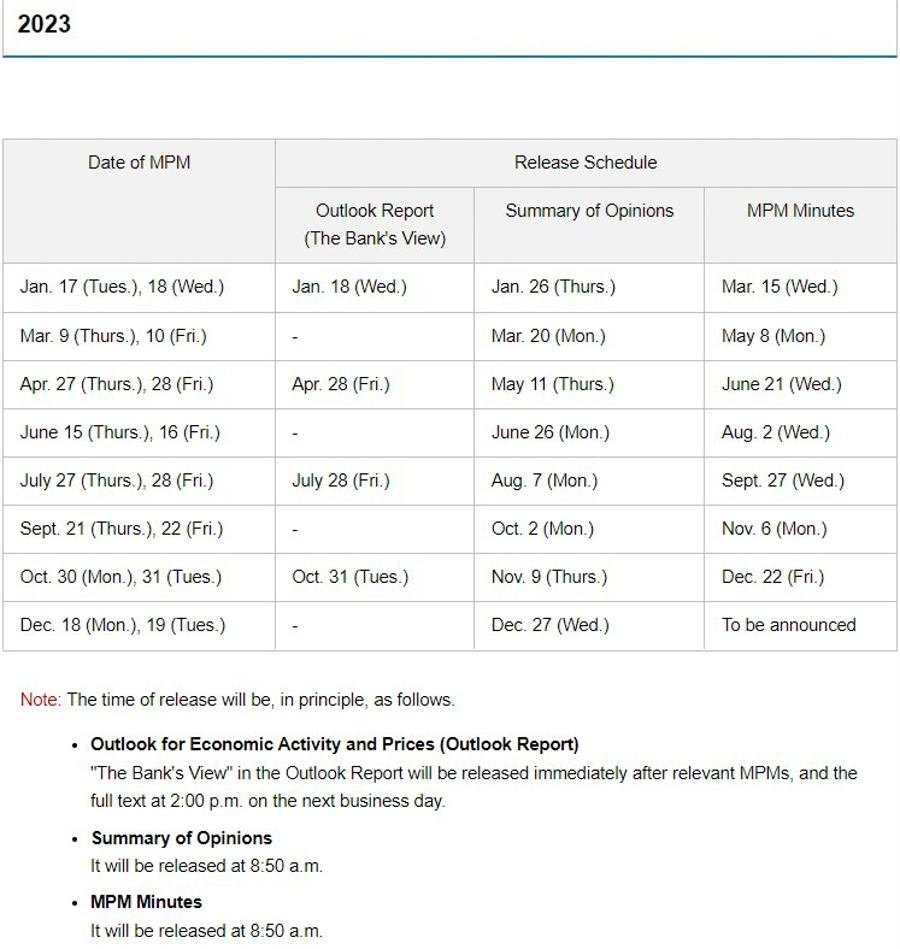
Read this Term forecasts in January. This would be via the Bank’s next quarterly economic outlook report due after its policy board meeting on January 17 and 18. New forecasts would show price growth close to its 2% target in fiscal 2024. Nikkei cite people familiar with discussions at the BOJ:
proposed changes would show the core consumer price index, or prices excluding fresh food, rising around 3% in fiscal 2022, at least 1.6% but less than 2% in fiscal 2023, and nearly 2% in fiscal 2024
The previous inflation forecasts released in October came in at around 2.9%, 1.6% and 1.6%, respectively
Raising the inflation forecast like this would provide the basis for “a pivot away from ultraloose monetary policy “.
—
Bank of Japan Governor Kuroda has been insistent that he expects inflation to fall from the middle of Japan’s next fiscal year. Japan’s fiscal year begins April 1.
A change to forecasts would be very significant and carries the implication of a policy pivot as the Nikkei says, and provide a tailwind to the yen.
ADVERTISEMENT – CONTINUE READING BELOW