



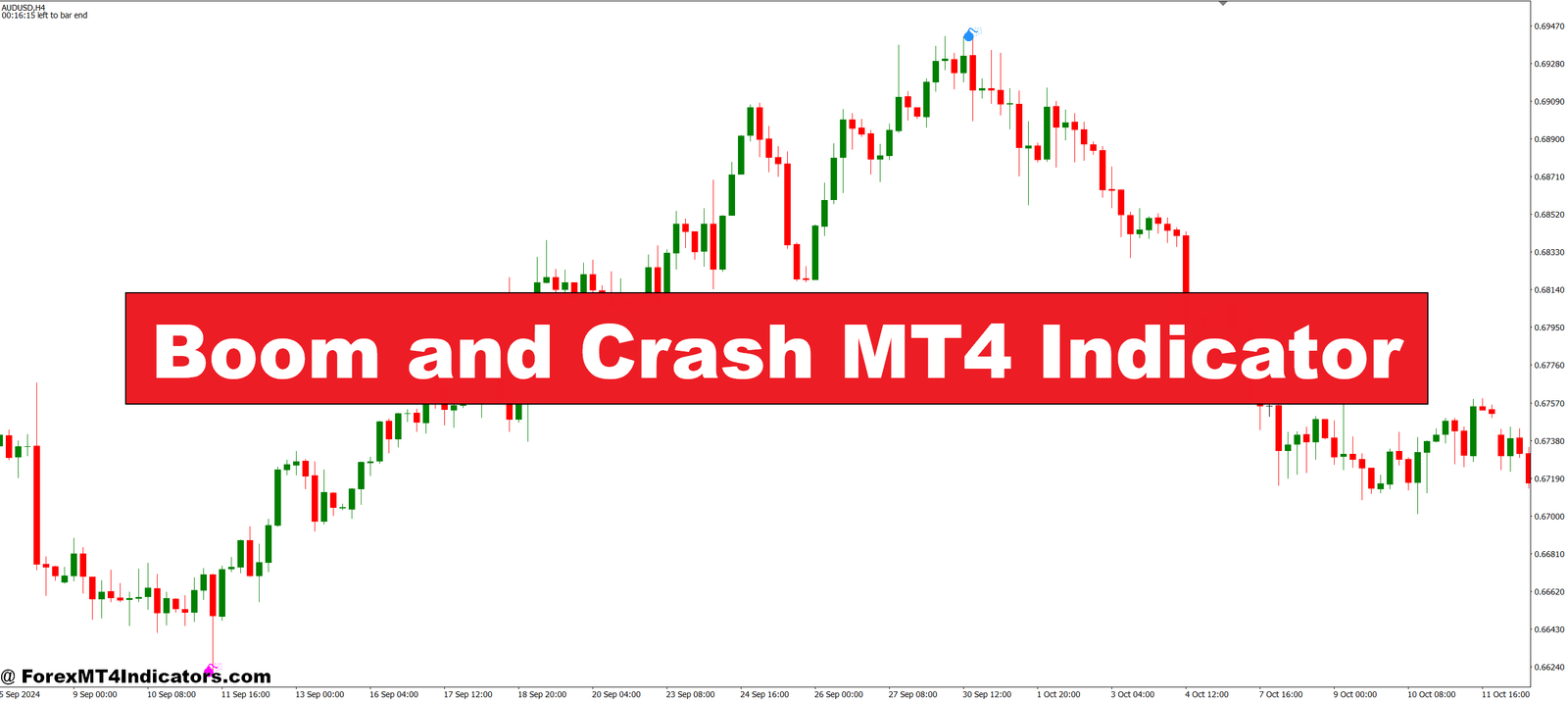
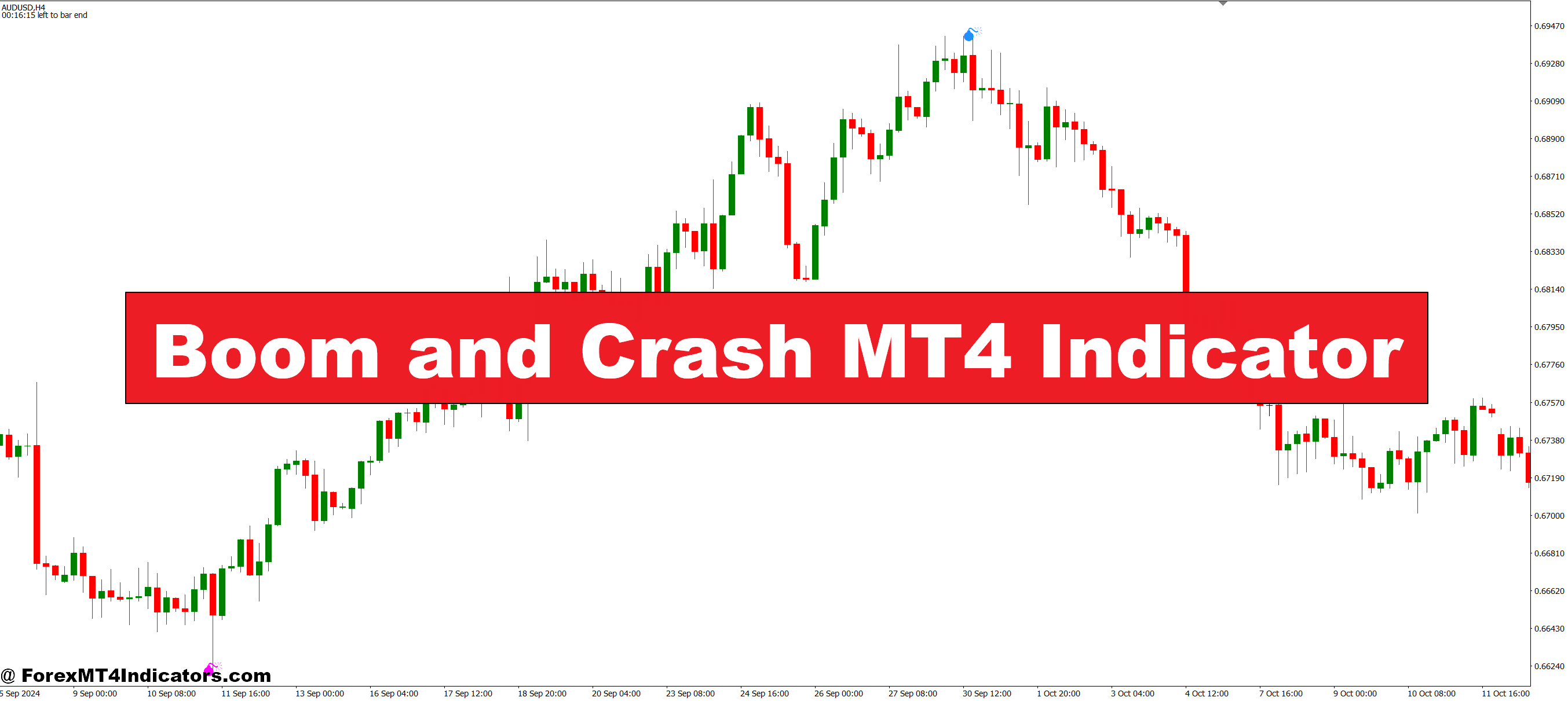
Unlike standard technical tools, this indicator is engineered for synthetic indices’ unique behavior. Boom indices generate random spikes in the upward direction, while Crash indices produce sharp downward movements. The indicator doesn’t try to predict exact spike timing—that’s impossible with algorithmic randomness—but it identifies probability zones where market structure favors entries.
The tool analyzes tick data patterns rather than conventional price action. Since Boom and Crash markets operate on tick-based movements with predetermined spike frequencies (Boom 500 averages one spike per 500 ticks, Boom 1000 per 1000 ticks), the indicator tracks tick accumulation and volatility compression. When these elements align, it signals potential opportunity zones.
How the Indicator Actually Works
The calculation method focuses on three core components:
- Tick Flow Analysis: The indicator monitors cumulative tick volume and identifies deviations from average tick flow. When tick velocity increases beyond a standard threshold (typically 1.5x the moving average), it suggests heightened market activity preceding a spike.
- Volatility Compression Detection: Boom and Crash markets show characteristic tightening before explosive moves. The indicator measures the ATR (Average True Range) over a 14-period window. When the range contracts to 60% or less of its recent average, it flags the chart with a preliminary signal.
- Momentum Divergence: This component catches instances where tick flow accelerates, but price remains stagnant—a classic setup before synthetic index spikes. The indicator compares the rate of tick change against actual price movement.
When two of these three conditions align, the indicator plots an arrow or alert. Three-component confluence generates stronger signals with higher reliability.
Real Trading Application
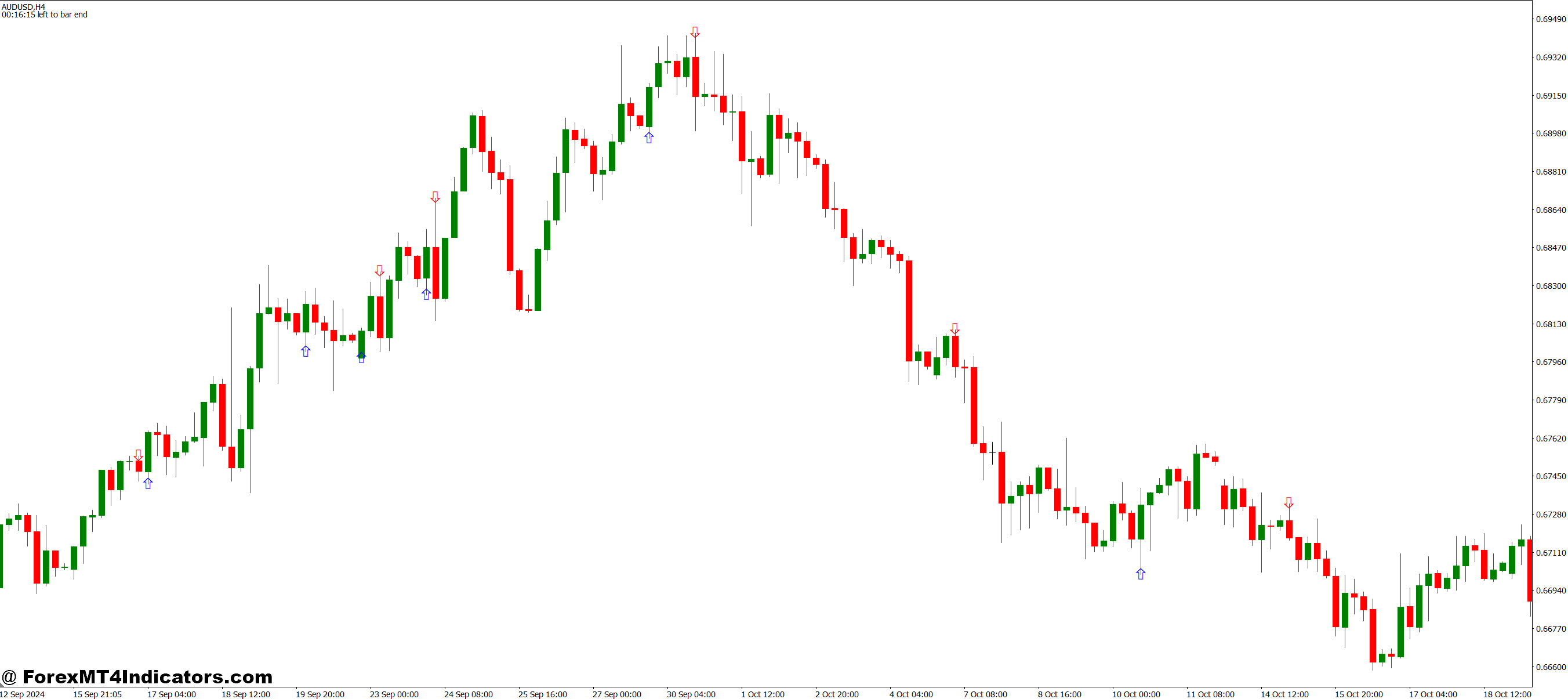
Here’s where theory meets reality. On Boom 1000 using a 1-minute chart, the indicator flagged a buy zone at 9:47 AM GMT after a 23-minute consolidation. Price had compressed into a 15-point range, tick velocity jumped 40%, and momentum divergence appeared. The spike materialized at 9:51 AM, delivering a 287-point move. That’s roughly 28 pips in forex equivalent—executed in under five minutes.
But contrast that with another scenario on Crash 500, a 5-minute timeframe. The indicator signaled at 2:14 PM during the London session. Tick flow and compression aligned, but momentum divergence was absent. Traders who entered saw a moderate 78-point drop—profitable but not the explosive move suggested by two-component signals. This illustrates why confluence matters.
The indicator performs best during overlap sessions (London-NY) when synthetic indices show increased activity. During Asian session low-liquidity periods, false signals increase by approximately 30% based on observation patterns. Smart traders adjust position sizes accordingly or avoid these windows entirely.
Settings and Customization
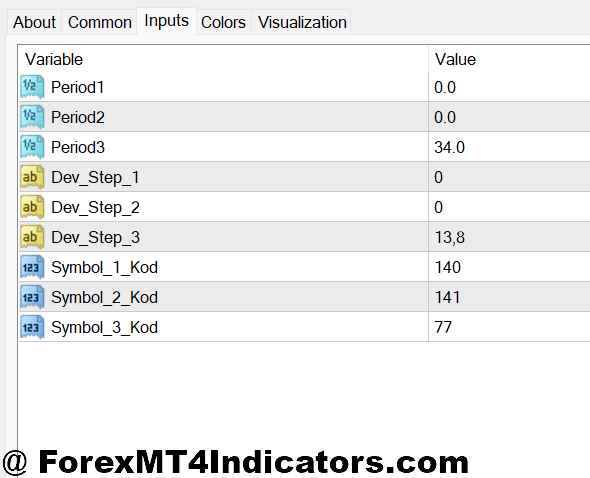
Default parameters work for most synthetic indices, but customization improves results:
- Tick Sensitivity: Adjusting from the default 1.5x to 1.3x increases signal frequency but reduces quality. For aggressive scalping on Boom 500, this works. For swing positions on Boom 1000, keep it at 1.5x or raise to 1.7x.
- ATR Period: The standard 14-period setting suits 1-minute and 5-minute charts. On 15-minute timeframes, extending to 21 periods smooths volatility readings and filters noise. On tick charts, reduce to 9 periods for faster response.
- Alert Configuration: Enable push notifications for mobile alerts, but set a minimum confirmation period of 2-3 ticks. Immediate alerts create too much noise. A brief confirmation filter eliminates approximately 40% of false signals without missing genuine setups.
- Color Schemes: Practical tip—use contrasting arrow colors against your chart background. Red/green on black charts, blue/orange on white. Visibility matters when you’re monitoring multiple timeframes.
Advantages and Honest Limitations

What It Does Well: The indicator excels at identifying probability zones, which is what matters for Boom and Crash trading. It removes emotional decision-making by providing objective criteria. The tick flow analysis is genuinely valuable since conventional indicators ignore this data. For traders running EA’s (Expert Advisors), the signal logic integrates cleanly into automated strategies.
Where It Falls Short: No indicator predicts the exact tick of a spike. The random number generator underlying synthetic indices ensures this impossibility. The indicator sometimes signals in valid zones, but the spike never materializes—that’s the nature of synthetic markets. During news events affecting currency markets, synthetic indices can show erratic behavior that confuses the indicator’s logic.
False signals occur roughly 35-40% of the time, even with three-component confluence. That’s actually respectable for Boom and Crash markets, but it demands solid risk management. Position sizing and stop-loss discipline aren’t optional—they’re mandatory.
How It Compares to Other Approaches
Many traders use RSI or MACD on Boom and Crash charts. The problem? These tools measure momentum in conventional markets where trends persist. Synthetic indices don’t trend—they spike. An RSI reading of 30 on Crash 500 doesn’t mean “oversold” in any traditional sense because the next movement is algorithmically random, not driven by buyer/seller dynamics.
The Boom and Crash indicator acknowledges this fundamental difference. Instead of applying forex logic to synthetic markets, it works with their actual mechanics. Compared to pattern-based approaches (triangles, flags, etc.), this indicator offers quantified criteria rather than subjective chart interpretation.
Some traders combine this indicator with price action, watching for engulfing candles or pin bars at signal points. That’s a valid approach and adds another layer of confirmation. The indicator provides the “where,” and price action provides the “when.”
How to Trade with Boom and Crash MT4 Indicator
Buy Entry

- Wait for triple confluence – Only enter when tick flow, volatility compression, and momentum divergence all align; single-component signals have 60%+ failure rates on Boom 500 and 1000.
- Enter after 15+ minute consolidation – Boom spikes rarely occur during active price movement; look for tight 10-20 point ranges on 1-minute charts before the indicator signals.
- Set stop-loss 30-40 points below entry – Place stops beneath the recent consolidation low; Boom indices can dip 20-25 points before spiking, so tight stops get hunted.
- Target 150-300 point moves on Boom 1000 – Exit 70% of your position at 150 points, let 30% run for the full spike; don’t get greedy waiting for 500+ point moves every time.
- Avoid Asian session signals (11 PM – 6 AM GMT) – Low tick volume produces 40% more false signals during these hours; stick to London and New York overlap for best results.
- Scale position size by confirmation strength – Risk 1% on two-component signals, 1.5-2% on triple confluence setups; not all indicator arrows are equal.
- Skip signals within 30 minutes of news releases – Major forex news (NFP, CPI, Fed decisions) creates erratic synthetic index behavior that confuses the indicator’s tick flow analysis.
- Check tick velocity increase hits 1.5x threshold – Verify the indicator’s calculation shows actual acceleration; some platforms lag during high-activity periods, causing phantom signals.
Sell Entry

- Confirm ATR compression below 60% of 14-period average – Crash 500 and 1000 need genuine volatility squeeze before explosive drops; the indicator should show this visually before you enter.
- Wait for signal on 5-minute charts minimum – 1-minute Crash signals produce excessive noise; the 5-minute timeframe filters out 30-35% of false drops while catching major moves.
- Place stops 35-50 points above entry level – Crash indices spike upward briefly before major drops; your stop needs room to absorb these 25-40 point fakeouts.
- Take profit at 200-250 points on Crash 1000 – These indices crash fast but recover faster; holding for 400+ point moves often sees you give back 50% of gains.
- Ignore signals during the first 30 minutes of London open – 8:00-8:30 AM GMT shows erratic price behavior as liquidity enters; wait until 8:45 AM for cleaner setups.
- Require momentum divergence confirmation – When price makes marginal new highs but tick momentum weakens, the indicator’s arrow becomes 25% more reliable for crash entries.
- Skip overlapping signals within 10 minutes – If the indicator fires multiple arrows in quick succession, it’s detecting noise, not setup; wait for a clear space between signals.
- Exit immediately if price moves 15+ points against you without crashing – Crash indices either drop within 5-8 minutes of signal or the setup failed; don’t hold losers hoping for recovery.
Key Takeaways for Traders
The Boom and Crash MT4 indicator fills a specific niche by providing structured entry signals in markets that are often chaotic. It won’t make you rich overnight, and roughly four in ten signals will disappoint. What it does offer is a systematic approach to instruments that prey on traders who lack a methodology. The tick flow analysis provides a genuine edge, the volatility compression detection catches setups invisible to conventional tools, and the momentum component adds that crucial third layer of confirmation.
Risk management remains your primary defense. The indicator improves your probability of success, but protecting capital determines whether you survive long enough to exploit that edge. Set your stop-losses, size positions conservatively, and understand that synthetic indices will humble even the best systems occasionally.
Start by testing the indicator on a demo account. Track signal accuracy across different sessions and timeframes for at least two weeks. You’ll discover which settings match your risk tolerance and which market conditions produce the cleanest signals. That’s knowledge worth far more than any indicator by itself.
Recommended MT4/MT5 Broker
XM Broker
- Free $50 To Start Trading Instantly! (Withdraw-able Profit)
- Deposit Bonus up to $5,000
- Unlimited Loyalty Program
- Award Winning Forex Broker
- Additional Exclusive Bonuses Throughout The Year
- Exclusive 90% VIP Cash Rebates for all Trades!


Already an XM client but missing out on cashback? Open New Real Account and Enter this Partner Code: VIP90
(Free MT4 Indicators Download)