




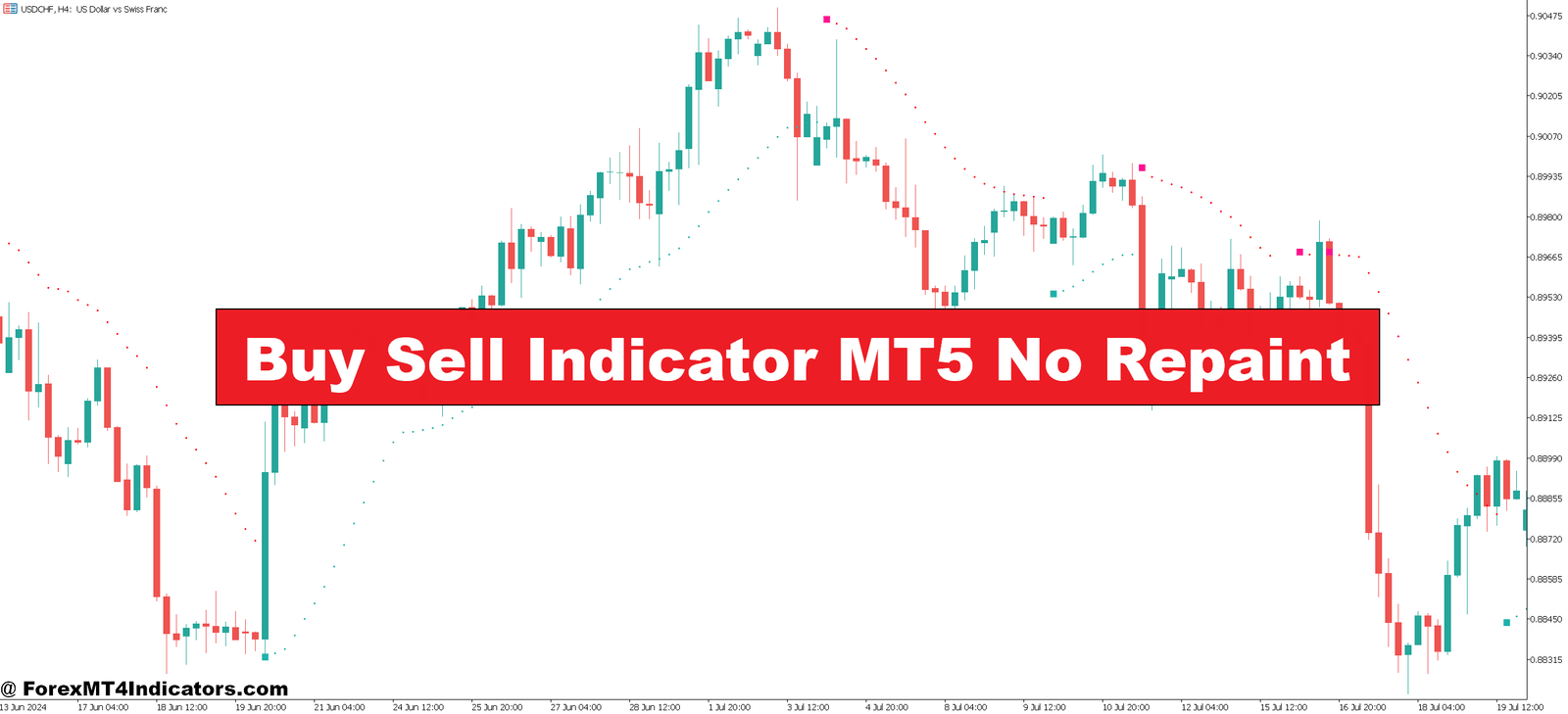
The Buy Sell Indicator MT5 No Repaint operates on a fixed signal principle. Once a candle closes and the indicator calculates its output, that arrow or signal marker becomes permanent. Most repainting indicators recalculate their values as new price data comes in, meaning what looked like a perfect setup at 9:00 AM might disappear by 9:05 AM.
This particular tool typically combines multiple confirmation filters—often including momentum oscillators, moving average crossovers, and trend strength measurements. The exact algorithm varies depending on the version, but the core concept remains the same. When all conditions align on a closed candle, the indicator places a visual marker (usually an arrow) that won’t move or disappear.
Here’s what happens in practice: On GBP/JPY’s 15-minute timeframe, price breaks above a consolidation zone. The indicator analyzes the completed candle, confirms momentum is strong enough, checks that the trend filter agrees, and only then generates a buy signal. Even if price reverses sharply in the next five candles, that arrow stays exactly where it appeared. You can backtest with confidence, knowing the signals you see today are the same ones you would have seen in real-time.
How Traders Actually Use It
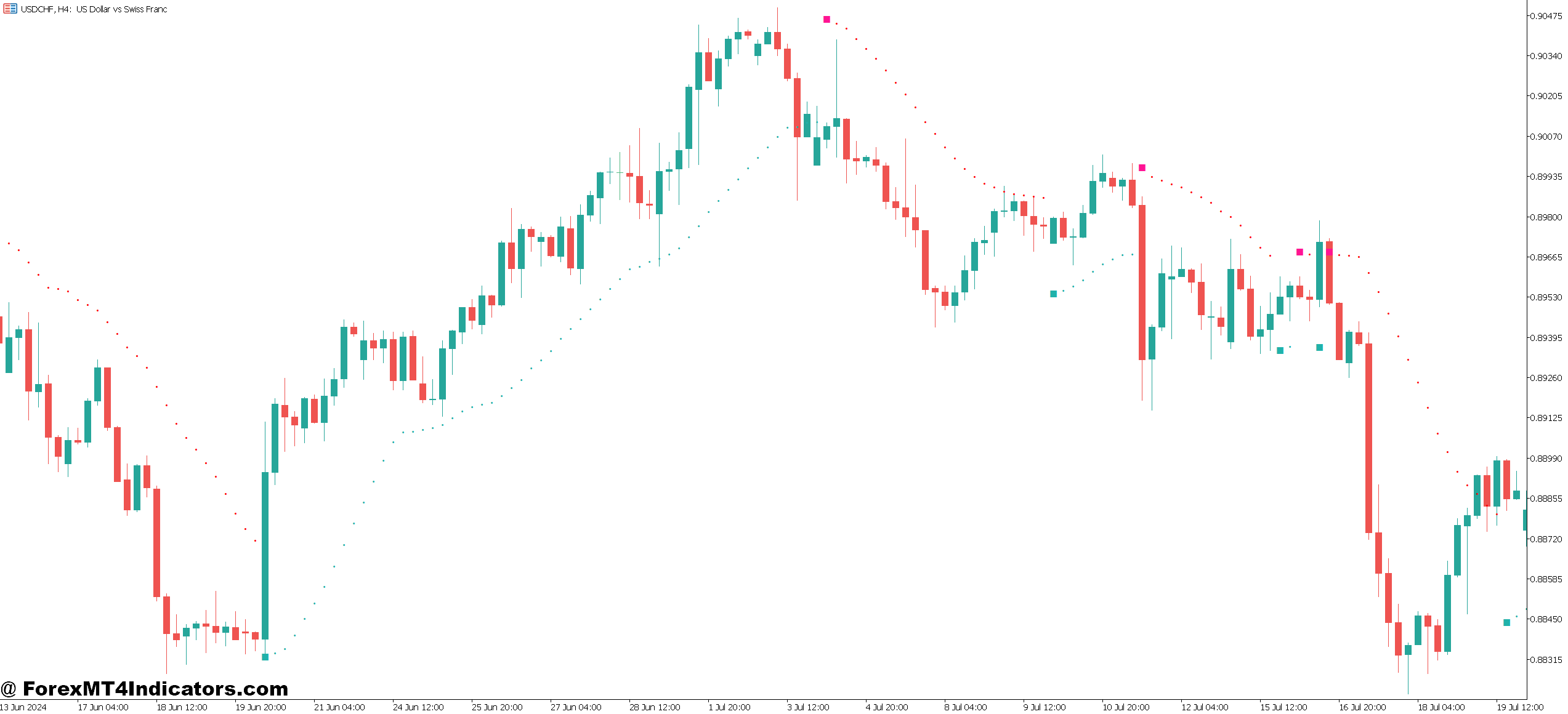
The most effective approach treats these signals as confirmation tools rather than standalone entry triggers. Say you’ve identified a support level on USD/CAD’s daily chart around 1.3450. Price bounces off this level on the 1-hour chart, but you want additional confirmation before risking capital.
When the Buy Sell Indicator fires a buy signal on that bounce candle, you’ve got multiple factors aligning: technical support, price action showing rejection, and indicator confirmation. That’s a higher-probability setup than taking the indicator signal blindly. Risk-aware traders typically place stops 5-10 pips below the signal candle’s low for short-term trades, or below the support structure for swing positions.
The indicator works across different trading styles. Scalpers might use it on 1-minute or 5-minute charts during the London session, looking for quick 5-8 pip moves on pairs like EUR/GBP. Swing traders prefer the 4-hour or daily timeframes, holding positions for days or weeks. The key difference lies in the parameter settings—faster periods for scalping, slower settings for position trades.
Settings That Actually Matter

Default parameters rarely suit every trading style or market condition. The typical Buy Sell Indicator includes adjustable inputs for period lengths, sensitivity thresholds, and filter strength. Decreasing the period setting (say, from 14 to 8) generates more frequent signals but increases false positives. This works during trending markets like we saw in 2022’s USD rally, but it’ll get you chopped up during sideways consolidation.
For currency pairs with higher volatility—think GBP/USD or exotic pairs—increasing the filter threshold helps eliminate noise. You’ll get fewer signals, but they tend to be cleaner. On quieter pairs like EUR/CHF, standard settings often work fine without adjustment. Some traders run two instances of the indicator simultaneously: one with aggressive settings for early entries, another with conservative parameters for confirmation.
The timeframe you choose matters just as much as the settings. A signal that works beautifully on the daily chart might be worthless on the 1-minute. Testing your specific combination of pair, timeframe, and settings is non-negotiable. That means opening a demo account, running the indicator for at least 50-100 signals, and tracking results honestly.
The Reality Check: Advantages and Limitations

The biggest advantage is obvious—you get reliable signals that don’t change after the fact. This makes backtesting meaningful. You can review six months of historical data and trust that the signals you see match what would have appeared in real-time. That’s impossible with repainting indicators that retrospectively look amazing but fail forward testing.
The fixed-signal approach also helps with trading psychology. No more questioning whether that entry signal was real or a mirage. You develop trust in your system because the tool behaves consistently. When a trade goes south, you can review the actual signal conditions rather than chasing ghosts.
But here’s the thing—no indicator predicts the future. The Buy Sell Indicator reacts to completed price action, which means you’re always entering after a move has started. During choppy, range-bound markets (common during Asian sessions or summer months), you’ll get whipsawed. The indicator might flash a buy signal at the top of a range, only for price to reverse and trigger a sell signal at the bottom. Both signals are “valid” technically, but both trades lose money.
Fast-moving news events create another challenge. When NFP data drops or central banks surprise markets, price can gap through your entry and stop in seconds. The indicator can’t account for fundamental shocks. And while it doesn’t repaint, it can generate late signals—sometimes you’ll see an arrow appear just as a move is exhausting.
Trading forex carries substantial risk. No indicator guarantees profits, and past performance doesn’t predict future results. Position sizing and risk management matter more than any technical tool.
How It Stacks Up Against Alternatives
Compared to popular options like SuperTrend or Parabolic SAR, the Buy Sell Indicator typically offers more filtering options. SuperTrend is simpler but can be overly reactive in volatile conditions. Parabolic SAR excels in trending markets but struggles during consolidation—similar to this indicator, actually.
The main difference versus standard moving average crossovers is the multi-factor confirmation. A simple 20/50 EMA cross generates signals based solely on price averages. The Buy Sell Indicator (depending on its build) might require momentum confirmation, volatility checks, and trend alignment before firing a signal. You get fewer trades, but theoretically higher quality.
Stochastic or RSI-based systems focus on overbought/oversold conditions. They work well for mean-reversion strategies but often signal too early in strong trends. The Buy Sell Indicator tends to be more trend-following in nature, keeping you in winning trades longer but sometimes entering after the best move is already done.
How to Trade with Buy Sell Indicator MT5 No Repaint
Buy Entry

- Wait for candle close – Never enter on a forming candle; the signal only becomes valid after the current bar closes completely to ensure it won’t repaint.
- Confirm the trend direction – Check that price is above the 50-period moving average on EUR/USD 1-hour chart before taking buy signals to avoid counter-trend whipsaws.
- Set stop-loss 10-15 pips below signal – Place your stop just beneath the signal candle’s low, or 20 pips for GBP/USD which has wider spreads and volatility.
- Target 1.5:1 minimum risk-reward – If risking 15 pips, aim for at least 22-25 pip profit to maintain positive expectancy over multiple trades.
- Skip signals during major news – Avoid buy arrows that appear 15 minutes before or after NFP, interest rate decisions, or GDP releases when price behavior becomes unpredictable.
- Look for support confluence – Take buy signals that occur at previous support levels, round numbers like 1.1000 on EUR/USD, or daily pivot points for higher probability.
- Use proper position sizing – Risk only 1-2% of account balance per trade; a $5,000 account should risk $50-100 maximum regardless of how strong the signal appears.
- Avoid range-bound markets – Skip buy signals when price is chopping between clear support and resistance on the 4-hour chart with no directional bias.
Sell Entry

- Verify indicator arrow placement – Ensure the sell signal appears at the close of the candle, not during its formation, to confirm it’s a non-repainting signal.
- Check trend alignment – Only take sell signals when price trades below the 50-period moving average on GBP/USD 4-hour timeframe to stay with the dominant trend.
- Position stop-loss 10-15 pips above – Place stops above the signal candle’s high, adding 5 extra pips on volatile pairs like GBP/JPY to avoid premature stop-outs.
- Aim for 2:1 reward-to-risk – With a 12-pip stop, target 24 pips minimum; this allows you to win only 40% of trades and still profit overall.
- Ignore signals in sideways consolidation – Don’t sell when price has been ranging for 6+ hours on the 1-hour EUR/USD chart; wait for clear directional movement.
- Confirm with resistance levels – Prioritize sell signals that trigger at previous resistance, trendline rejections, or psychological levels like 1.2500 on GBP/USD.
- Risk 1% maximum per trade – Calculate lot size based on stop distance; never risk more than 1% of capital hoping a “strong signal” will compensate for poor risk management.
- Avoid thin liquidity periods – Skip sell arrows during Asian session hours (especially Sunday evening) when spreads widen and price action becomes erratic.
Final Thoughts
The Buy Sell Indicator MT5 No Repaint solves one critical problem: signal reliability. You won’t waste time and capital chasing entries that vanish from your charts. For traders who’ve struggled with repainting tools, that alone makes it worth testing. The ability to backtest accurately and trust your historical analysis adds significant value.
That said, success still requires proper risk management, realistic expectations, and understanding that no tool wins every trade. The indicator works best as part of a broader strategy that includes support and resistance analysis, trend identification, and disciplined position sizing. Test it thoroughly on demo before risking real capital. Adjust settings for your specific pairs and timeframes. And always remember that consistent profitability comes from managing losses well, not just catching winning trades.
The forex market doesn’t reward blind faith in any single tool. But for traders seeking reliable, non-repainting signals to build a systematic approach around, this indicator provides a solid foundation to work from.
Recommended MT4/MT5 Broker
XM Broker
- Free $50 To Start Trading Instantly! (Withdraw-able Profit)
- Deposit Bonus up to $5,000
- Unlimited Loyalty Program
- Award Winning Forex Broker
- Additional Exclusive Bonuses Throughout The Year
- Exclusive 90% VIP Cash Rebates for all Trades!


Already an XM client but missing out on cashback? Open New Real Account and Enter this Partner Code: VIP90
(Free MT4 Indicators Download)