







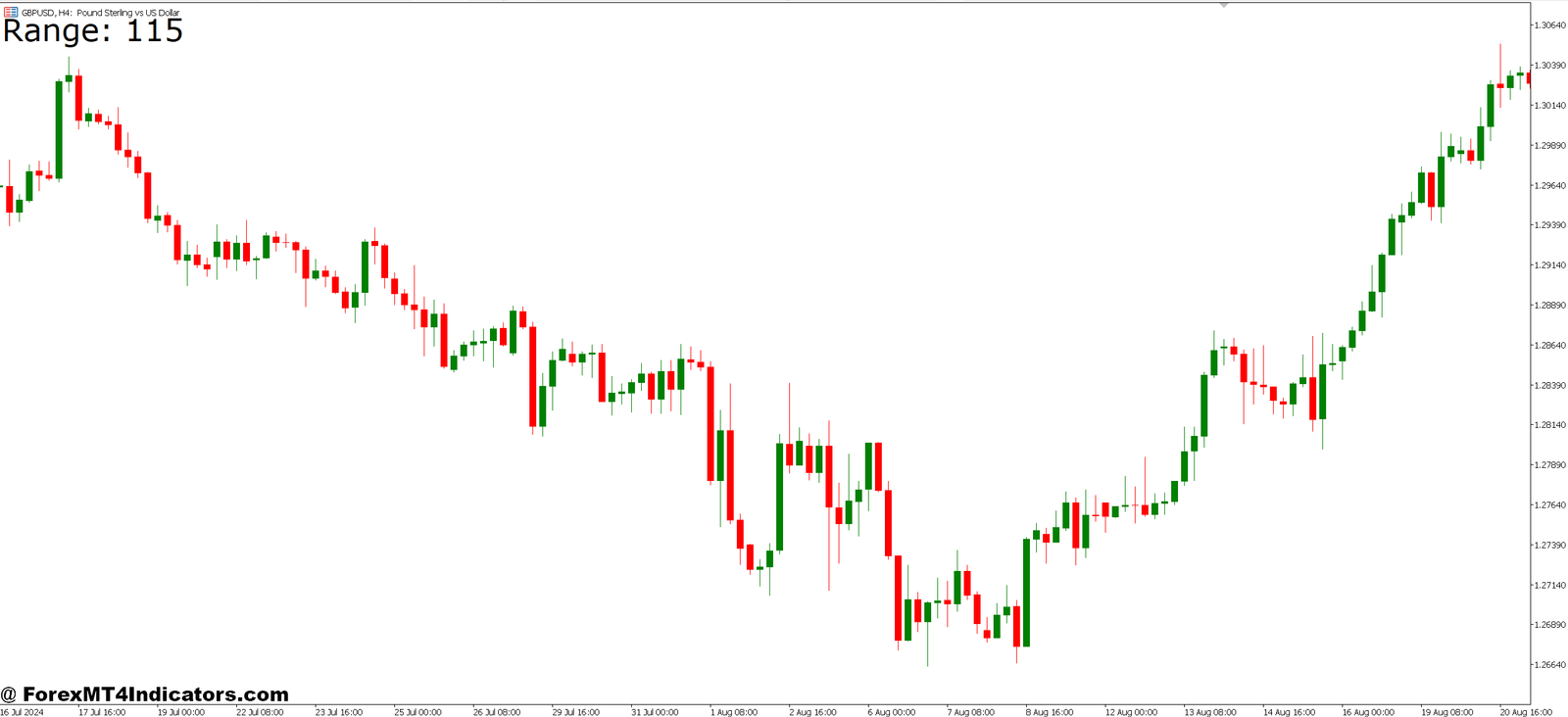
The CRT Indicator MT5 addresses this challenge by combining channel range analysis with trend-strength measurement, giving traders a clearer picture of when price action warrants attention versus when it’s just noise. This technical tool helps identify potential reversals and continuation setups by measuring how price behaves within defined ranges relative to recent momentum. Let’s examine how it works and whether it deserves space on your charts.
What the CRT Indicator Actually Measures
The CRT (Channel Range Trend) Indicator calculates the relationship between current price position within a dynamic channel and the strength of the prevailing trend. Think of it as a hybrid approach it plots upper and lower boundaries based on recent high-low ranges (typically using a 20-period calculation) while simultaneously measuring directional momentum through a smoothed moving average component.
When price trades near the upper channel boundary with strong upward momentum, the indicator generates bullish signals. Conversely, when price hugs the lower boundary with downward pressure, bearish conditions are flagged. The middle zone represents neutral territory where the indicator suggests waiting for clearer directional bias.
What separates this from basic Bollinger Bands or Keltner Channels? The momentum filter. Many channel-based indicators simply plot boundaries without considering whether the underlying trend has actual strength. Traders often get caught in range-bound chop because channels alone don’t distinguish between consolidation and genuine breakout preparation.
How Traders Apply It in Real Scenarios
Here’s where theory meets the trading screen. On GBP/JPY’s 1-hour chart during the Asian session, price consolidated in a tight 40-pip range for six hours. The CRT Indicator showed price bouncing between the upper and lower boundaries but with weakening momentum readings (the histogram bars or line indicator component showed declining values). Experienced traders recognized this as low-conviction movement time to stay out.
But when London opened and volatility spiked, price thrust through the upper channel boundary while the momentum component confirmed with expanding readings. That’s the signal many CRT traders wait for: channel breakout supported by momentum confirmation. The subsequent move delivered 120 pips in four hours.
Compare that to false breakouts. During the same week, EUR/USD broke above its 4-hour CRT channel boundary but momentum remained flat a divergence. Traders who ignored the momentum component and bought the breakout got stopped out when price reversed within two candles. The indicator wasn’t wrong; traders simply cherry-picked signals instead of requiring both components to align.
For swing traders, the daily timeframe application changes slightly. They use CRT channel boundaries as dynamic support and resistance zones. When price pulls back to the middle or lower boundary in an uptrend (with momentum still positive), it presents potential long entries with favorable risk-reward ratios. The stop loss sits just below the channel, and targets aim for the opposite boundary or beyond.
Settings That Actually Matter

Default parameters work fine on 1-hour and 4-hour charts for major pairs, but adjustments improve performance across different market conditions. The channel period (standard: 20) determines how wide or narrow the boundaries plot. Shorter settings like 14 respond faster to price changes but generate more false signals in choppy markets. Longer periods like 30 smooth out noise but lag during rapid trend changes.
Day traders on 5-minute or 15-minute charts often tighten the period to 14 and adjust the channel multiplier (if available in your version) to 1.5 instead of 2.0. This creates tighter boundaries that better capture intraday volatility without excessive sensitivity. During major news releases like NFP or central bank announcements, some traders temporarily widen settings or simply step aside no indicator thrives in pure chaos.
The momentum component typically uses a smoothing period between 9 and 14. Lower values make it more reactive; higher values reduce whipsaw but miss early entry opportunities. Exotic pairs with wider spreads and greater volatility benefit from longer smoothing periods (12-14) to avoid getting chopped up by erratic price spikes that don’t represent genuine trend shifts.
Currency pairs matter too. EUR/USD and GBP/USD respond well to standard settings because they trend relatively cleanly. USD/CHF and cross pairs like EUR/GBP tend to range more, requiring wider channels or additional confirmation tools. Test any indicator across the specific pairs and timeframes you actually trade what works on cable might fail miserably on Aussie-Kiwi.
Honest Assessment: Strengths and Weaknesses
The CRT Indicator excels at filtering out low-probability setups during range-bound markets. That’s valuable because most traders lose money not from bad trending trades but from taking marginal trades during consolidation. When both the channel and momentum components align, the probability of a successful trade improves measurably compared to naked price action alone.
It also provides clear visual reference points. Subjective support and resistance identification causes endless debate among traders, but the CRT boundaries offer objective levels that remove some guesswork. Risk management becomes more systematic you know where your stop should go relative to the channel structure.
But here’s the thing: no indicator predicts the future. The CRT reacts to price movement, meaning it inherently lags. By the time both components confirm a signal, you’ve already missed the absolute bottom or top of a move. That’s the tradeoff for reduced false signals you sacrifice some profit potential for higher accuracy.
Sideways markets remain problematic. When major pairs enter multi-week consolidation (like EUR/USD did during summer 2024, trading in a 200-pip range for six weeks), the CRT generates multiple false breakout signals. Momentum oscillates without establishing clear direction, and channel boundaries compress. Smart traders recognize these conditions and reduce position size or shift to other instruments showing clearer trends.
The indicator also doesn’t account for fundamental catalysts. Technical tools measure price behavior, not why that behavior occurs. A perfect CRT setup can implode if unexpected central bank intervention or geopolitical events hit the market. Trading forex carries substantial risk. No indicator guarantees profits, and relying solely on technical signals without awareness of the economic calendar is asking for trouble.
Comparing to Other Common Indicators
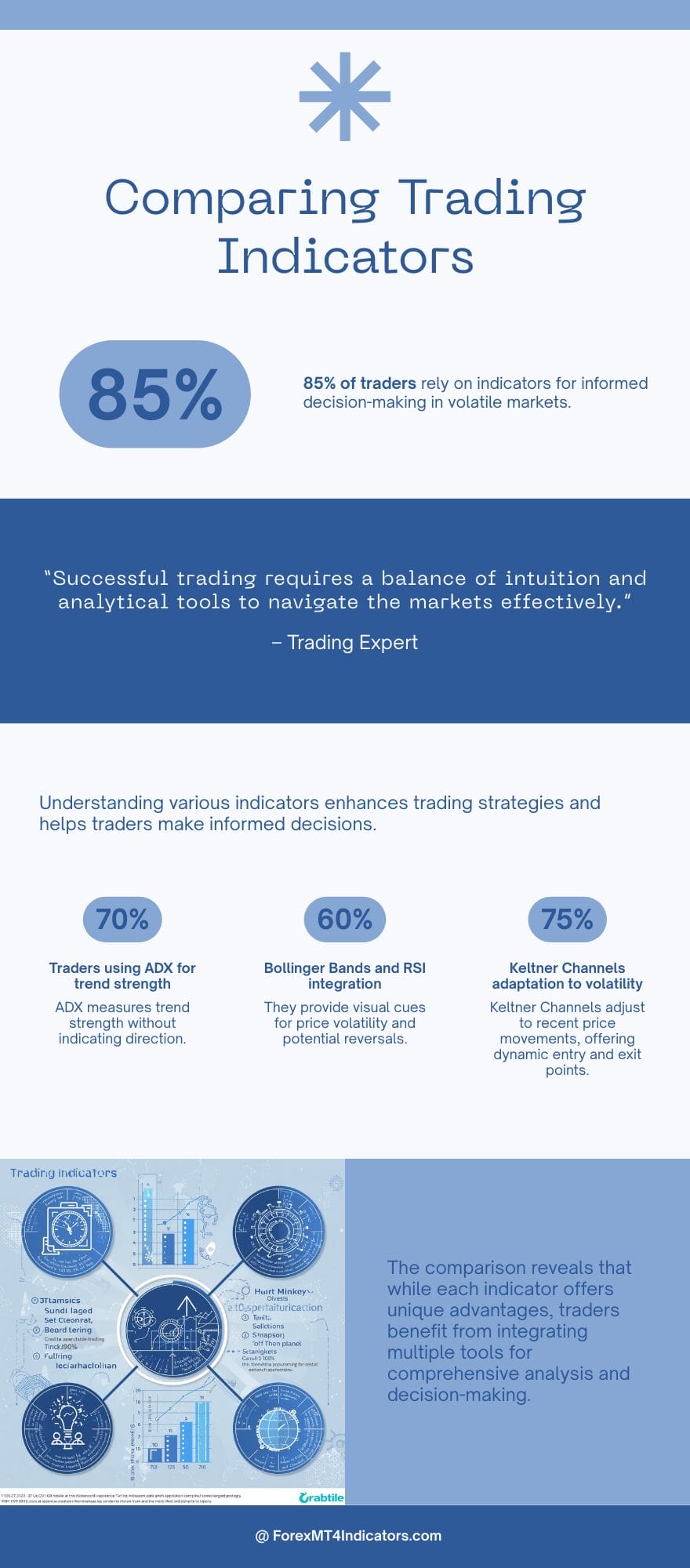
Traders often ask how CRT differs from ADX (Average Directional Index) or MACD. ADX measures trend strength without indicating direction until combined with +DI/-DI lines, requiring multiple indicator readings. CRT consolidates channel position and momentum into a more integrated visual representation, making it easier to scan multiple charts quickly.
Versus Bollinger Bands with RSI, the CRT provides similar information but with the momentum component built in rather than requiring a separate oscillator window. This saves screen space and reduces analysis paralysis from conflicting indicator readings. That said, Bollinger Bands offer more customization through standard deviation adjustments, which some traders prefer.
Keltner Channels use ATR (Average True Range) for boundary calculation, making them more responsive to volatility changes than many CRT versions that rely on simple high-low ranges. Each approach has merit. The best choice depends on whether you prioritize volatility adaptation or prefer the simplicity of range-based calculations.
Some professional traders don’t use indicators at all, relying entirely on price action and market structure. They argue that all indicators lag and create dependency that prevents traders from developing true chart reading skills. There’s validity to this perspective. The CRT works best as a confirmation tool alongside solid understanding of support, resistance, and candlestick patterns not as a standalone decision-maker.
Making It Work in Your Trading
Start by backtesting the CRT on your preferred pairs and timeframes before risking real capital. Pull up historical charts and mark where the indicator would have signaled entries. Calculate the win rate and average risk-reward ratio. If it’s not producing at least 50-55% accuracy with 1:1.5+ reward-to-risk, the settings need adjustment or it’s not suited to your trading style.
Combine it with price action confirmation. When the CRT signals a long setup, look for bullish engulfing candles, pin bars off the channel boundary, or break-and-retest patterns that support the indicator reading. Confluence increases probability one data point is a suggestion, three aligned factors create conviction.
Position sizing matters more than most traders realize. Even with positive expectancy systems, poor risk management destroys accounts. Keep individual trade risk at 1-2% of capital regardless of how confident the CRT setup appears. String together three winners at 2% risk and you’re up 6%. Take three losses at 5% risk and you’re down 15%, requiring a 17.6% gain just to break even.
The CRT Indicator won’t transform losing traders into winners overnight. It’s a tool that helps organized, disciplined traders make slightly better decisions more consistently. Combined with proper risk management, realistic expectations, and continuous learning, it can contribute to long-term profitability. But without those foundational elements, no indicator on earth will save you from the market’s harsh lessons.
Recommended MT4/MT5 Broker
XM Broker
- Free $50 To Start Trading Instantly! (Withdraw-able Profit)
- Deposit Bonus up to $5,000
- Unlimited Loyalty Program
- Award Winning Forex Broker
- Additional Exclusive Bonuses Throughout The Year
- Exclusive 90% VIP Cash Rebates for all Trades!


Already an XM client but missing out on cashback? Open New Real Account and Enter this Partner Code: VIP90
(Free MT4 Indicators Download)
Enter Your Email Address below, download link will be sent to you.
Get Download Link


