




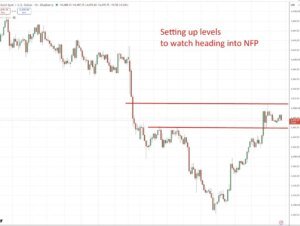



The EUR/USD pair trades on a flat note around 1.1625 during the early Asian session on Friday. Traders prefer to wait on the sidelines ahead of the US key employment report for August, which will be published later on Friday.
Federal Reserve (Fed) Governor Christopher Waller said on Thursday that he is leaning toward keeping interest rates steady at the Fed’s September meeting provided there are no surprises from upcoming inflation data. His remarks seemed to contrast with hawkish statements last week from Chairman Kevin Warsh.
Market-implied chance for a rate hike at the September policy meeting fell following Waller’s comments, with traders now pricing in just a 50.2% probability, down from 63.2% on Wednesday, according to the CME FedWatch tool.
All eyes will be on the US jobs data later in the day for fresh cues on the US interest rate path. Economists expect the US economy to add 56,000 jobs in August, while Unemployment Rate is projected to hold steady at 4.1% during the same period. Any signs of improvement in the US labour market could provide some support to the US Dollar (USD) against the Euro (EUR) in the near term.
Across the pond, the European Central Bank (ECB) is likely to raise interest rates at its September policy meeting for the second and final time in what would be its shortest hiking campaign in 15 years, according to a Reuters poll published on Thursday. Most economists believe energy price rises are not likely to trigger broad inflation pressures.
Euro support underpinned as ECB pricing turns more hawkish
Strategists at Scotiabank note that Eurozone rate expectations have shifted meaningfully in recent sessions, with markets now “extending hawkish pricing beyond the 25bpts of tightening priced for September, with nearly one full additional 25bpt hike priced by year-end.” They add that “yield spreads are offering renewed support” for the Euro, highlighting that their narrow “(2Y Germany-US yield spread) FV estimate is currently at 1.1623,” reinforcing the notion that the currency is trading close to its perceived fair value on rate differentials.
Waller flags data-dependent September call, keeps Fed bias cautiously hawkish
Fed’s Waller delivered a moderately hawkish-but-conditional message, with the FXS Speechtracker score at 6.1/10, slightly below the 6.3/10 historical average, underscoring a marginal softening in tone relative to the established baseline. The key remark that policy will likely be held steady in September if August inflation shows continued progress, but that a “hot” print could trigger a rate hike, clarifies the reaction function and keeps a live tightening risk on the table even as Waller notes “finally seeing some signs of disinflation,” solid GDP growth, and a satisfactory labor market. Emphasis on upside inflation risks, the possibility that only a small acceleration could justify tighter policy, and skepticism about PCE as the best real-time gauge all support a still-hawkish stance, albeit with growing confidence that underlying inflation is improving.
The FXS Fed Sentiment Index fell by 2.06 points to 125.38, signaling a modest pullback in perceived hawkishness versus recent communications captured by the FXS Speechtracker. With the index still well above the neutral 100 mark, the Fed remains firmly in hawkish territory, but Waller’s greater acknowledgment of disinflation and data-contingent approach suggests a gradual shift toward a more balanced, wait-and-see posture.
Technical Analysis: EUR/USD retains a positive outlook above the 100-day SMA
In the daily chart, EUR/USD holds a bullish near-term bias, with spot trading above the 100-day simple moving average (SMA). The Relative Strength Index (RSI) around 57 suggests positive but not extreme momentum, hinting that recent gains could be corrective within a broader capped structure, especially as price remains well under the upper Bollinger band.
On the topside, immediate resistance is seen at the 100-day SMA around 1.1565, with a stronger barrier aligning at the upper Bollinger band near 1.1712, where sellers are likely to reassert control if tested. On the downside, initial support emerges at the Bollinger midline near 1.1610, and a break below there would expose the lower band support around 1.1505, where a deeper pullback could pause.
(The technical analysis of this story was written with the help of an AI tool. Know more.)
Euro FAQs
The Euro is the currency for the 20 European Union countries that belong to the Eurozone. It is the second most heavily traded currency in the world behind the US Dollar. In 2022, it accounted for 31% of all foreign exchange transactions, with an average daily turnover of over $2.2 trillion a day.
EUR/USD is the most heavily traded currency pair in the world, accounting for an estimated 30% off all transactions, followed by EUR/JPY (4%), EUR/GBP (3%) and EUR/AUD (2%).
The European Central Bank (ECB) in Frankfurt, Germany, is the reserve bank for the Eurozone. The ECB sets interest rates and manages monetary policy.
The ECB’s primary mandate is to maintain price stability, which means either controlling inflation or stimulating growth. Its primary tool is the raising or lowering of interest rates. Relatively high interest rates – or the expectation of higher rates – will usually benefit the Euro and vice versa.
The ECB Governing Council makes monetary policy decisions at meetings held eight times a year. Decisions are made by heads of the Eurozone national banks and six permanent members, including the President of the ECB, Christine Lagarde.
Eurozone inflation data, measured by the Harmonized Index of Consumer Prices (HICP), is an important econometric for the Euro. If inflation rises more than expected, especially if above the ECB’s 2% target, it obliges the ECB to raise interest rates to bring it back under control.
Relatively high interest rates compared to its counterparts will usually benefit the Euro, as it makes the region more attractive as a place for global investors to park their money.
Data releases gauge the health of the economy and can impact on the Euro. Indicators such as GDP, Manufacturing and Services PMIs, employment, and consumer sentiment surveys can all influence the direction of the single currency.
A strong economy is good for the Euro. Not only does it attract more foreign investment but it may encourage the ECB to put up interest rates, which will directly strengthen the Euro. Otherwise, if economic data is weak, the Euro is likely to fall.
Economic data for the four largest economies in the euro area (Germany, France, Italy and Spain) are especially significant, as they account for 75% of the Eurozone’s economy.
Another significant data release for the Euro is the Trade Balance. This indicator measures the difference between what a country earns from its exports and what it spends on imports over a given period.
If a country produces highly sought after exports then its currency will gain in value purely from the extra demand created from foreign buyers seeking to purchase these goods. Therefore, a positive net Trade Balance strengthens a currency and vice versa for a negative balance.


