





If you’ve been waiting for the Federal Reserve to finally cut interest rates and give your mortgage or credit card balance some relief, the latest data from the U.S. Bureau of Labor Statistics (BLS) just delivered a cold shower.
Financial markets are buzzing about a “double-whammy” of data released this week.
First, U.S. Import Prices for February surged by 1.3%, more than double what economists expected, and the sharpest jump in nearly four years.
Second, a key measure of domestic inflation—Unit Labor Costs—was revised drastically higher to 4.4% for the final quarter of last year.
What makes this truly alarming for analysts is the timing. This surge happened before the recent military conflict with Iran sent oil prices north of $100.
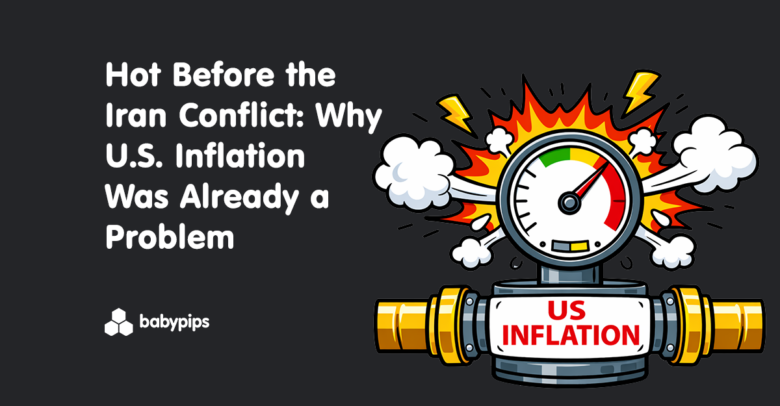
We are looking at a “pre-war” pipeline of inflation that was already clogged, even before the latest global supply shocks hit.
What is “Pipeline Inflation”?
Think of inflation like pressure building in a pipe. It starts upstream with raw materials, imports, and wages, then slowly works its way down to consumers.
Import prices and unit labor costs are considered leading indicators. When they rise, you won’t see it right away in the anticipated Consumer Price Index (CPI) or the PCE index that the Fed watches. There’s usually a lag of weeks or even months as those higher costs move through supply chains and into the prices you actually pay.
That’s what markets mean by “pipeline inflation.” The pressure is already there. It just hasn’t hit the surface yet.
And right now, that pressure is building quickly. This week’s data shows rising import costs and labor pressures, even before the full impact of the Iran-driven energy shock shows up. February alone saw a 24.7% jump in natural gas prices and a 2.5% rise in petroleum products, and oil has pushed higher since.
By the time all these show up in the CPI report, high inflation is already old news.
Why It Matters for the Fed and the Dollar
The Federal Reserve held rates steady at 3.50%–3.75% at its March 18 meeting. The Fed’s own projections now show core PCE inflation at 2.7% for 2026, up from 2.5% in December, and signal just one rate cut remaining this year, down from two that markets were pricing in January.
Here’s the problem pipeline inflation creates for policymakers: pipeline inflation means the Fed is looking at today’s data while tomorrow’s price pressures are still building. Cut too early, and they risk undoing two years of inflation-fighting.
As Fed Chair Powell noted at the March press conference, officials need to see clear progress on goods inflation, including the tariff-driven variety, before easing further.
Promoted: Capitalize on shifting inflation expectations Without Risking Your Own Funds.
With interest rate expectations shifting, market volatility can rise quickly. Why risk your personal capital during extreme volatility?
Most proprietary firms terminate your evaluation account if you execute a trade during a major macroeconomic release, but FundedNext permits news trading across all models. Test your stagflation thesis with up to $300,000 in simulated capital, and take advantage of their Free Trial to experience the platform risk-free.
Explore FundedNext and Start Your Free Trial!
Disclosure: We may earn a commission from our partners if you sign up through our links.
What this means for the US Dollar: Higher-for-longer rate expectations are generally supportive of the dollar. When U.S. rates stay elevated relative to other major economies, capital tends to flow into dollar-denominated assets, lifting the currency. The flip side is that if inflation gets bad enough to suggest stagflation (a.k.a. slowing growth plus rising prices) the dollar’s appeal can get complicated.
What this means for Treasury yields: Rising inflation expectations push yields higher, as bond investors demand more compensation for the erosion in purchasing power. Higher yields make the dollar more attractive but put pressure on equities and gold.
What this means for gold: Gold is caught in a tug of war. Higher inflation is structurally supportive since gold is a traditional inflation hedge. But higher real yields (interest rates minus inflation) increase the opportunity cost of holding a non-yielding asset like gold.
Key Lessons for Traders
Watch upstream data, not just the headline CPI. Import prices and unit labor costs are leading indicators. By the time CPI shows the pressure, the pipeline has already been flowing for weeks. Traders who track these early signals can position ahead of the crowd.
Rate expectations drive currency pairs. What the Fed does next matters more than what it just did. Sticky inflation is keeping rate cut expectations limited, which supports the dollar. Watch for any shift in that narrative.
Inflation isn’t a single number. Goods, services, energy, and wages all move differently. A drop in energy prices (as happened in early 2025) can mask pressure building elsewhere in the pipeline. Core inflation and nonfuel data usually give a clearer read.
Context is everything. The same import price printed in a different environment — say, with the Fed cutting aggressively and growth slowing — would read very differently for the dollar. Markets price the intersection of growth and inflation, not just one in isolation.
The Bottom Line
This week’s data sent a clear message: inflation isn’t done. Import prices are picking up, labor costs are rising, and the energy shock is still working its way through the system. The Fed, already on hold, has even less room to ease.
For traders, the real question isn’t where inflation is today, but where it’s headed over the next three to six months. That’s what pipeline data helps answer, and right now, it points higher than the headline suggests.
Keep an eye on the next CPI and PCE prints, along with March import price data due April 15. That’s when the pressure in the pipeline starts showing up in the numbers everyone watches.
Promoted: Master Your Execution During Macro Shocks
When leading economic indicators point to a higher-for-longer interest rate environment, does your execution stay clinical or get emotional? TradeZella’s trade replay tool lets you revisit your past trades tick-by-tick. See exactly where your entry slipped or why you hesitated, so you can dominate the next volatility spike with a data-driven playbook.
Start Your Journal with Tradezella and use code “PIPS20” to save 20% on your first purchase!
Disclosure: To help support our free daily content, we may earn a commission from our partners if you sign up through our links, at no extra cost to you.


