



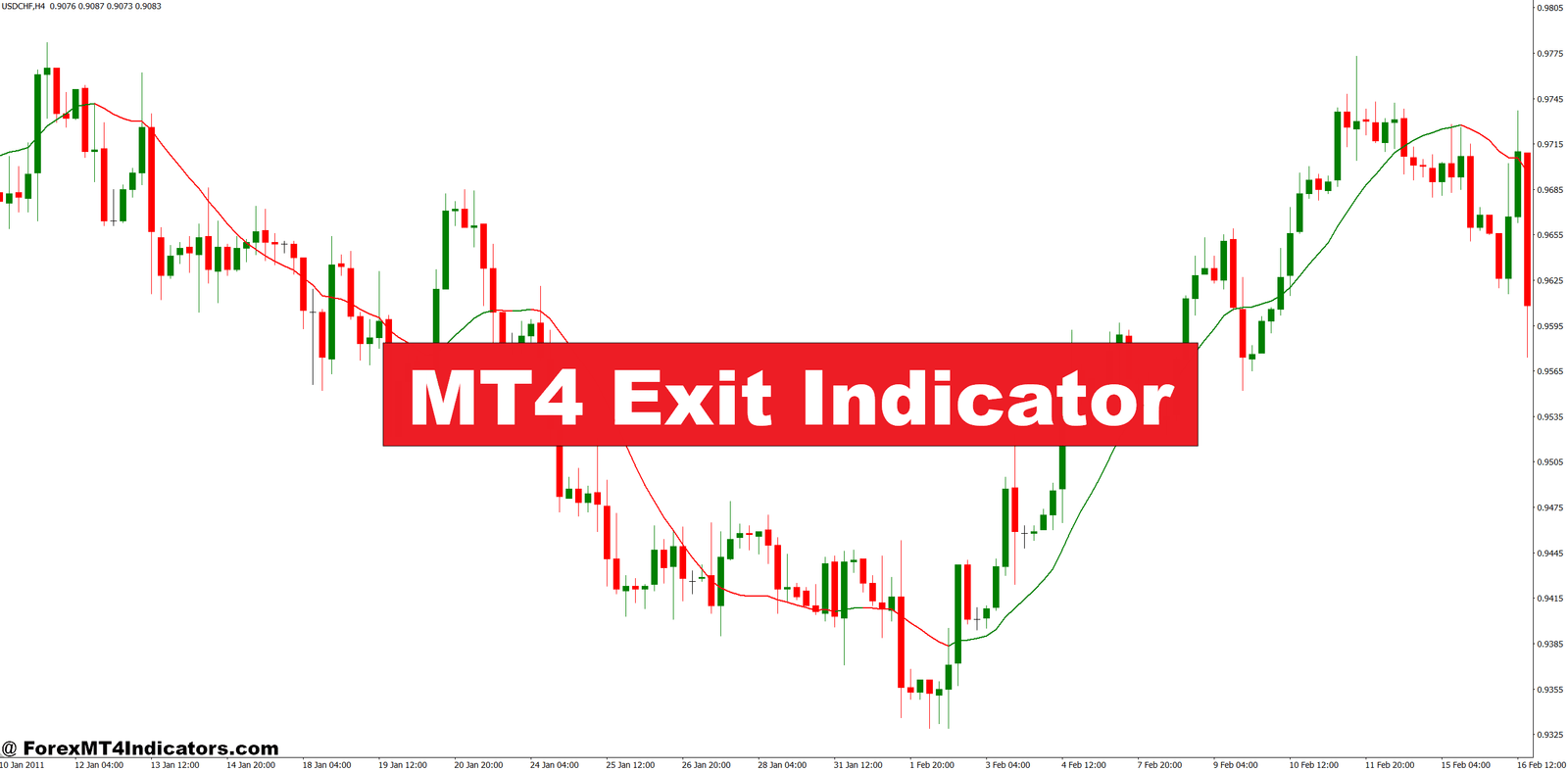
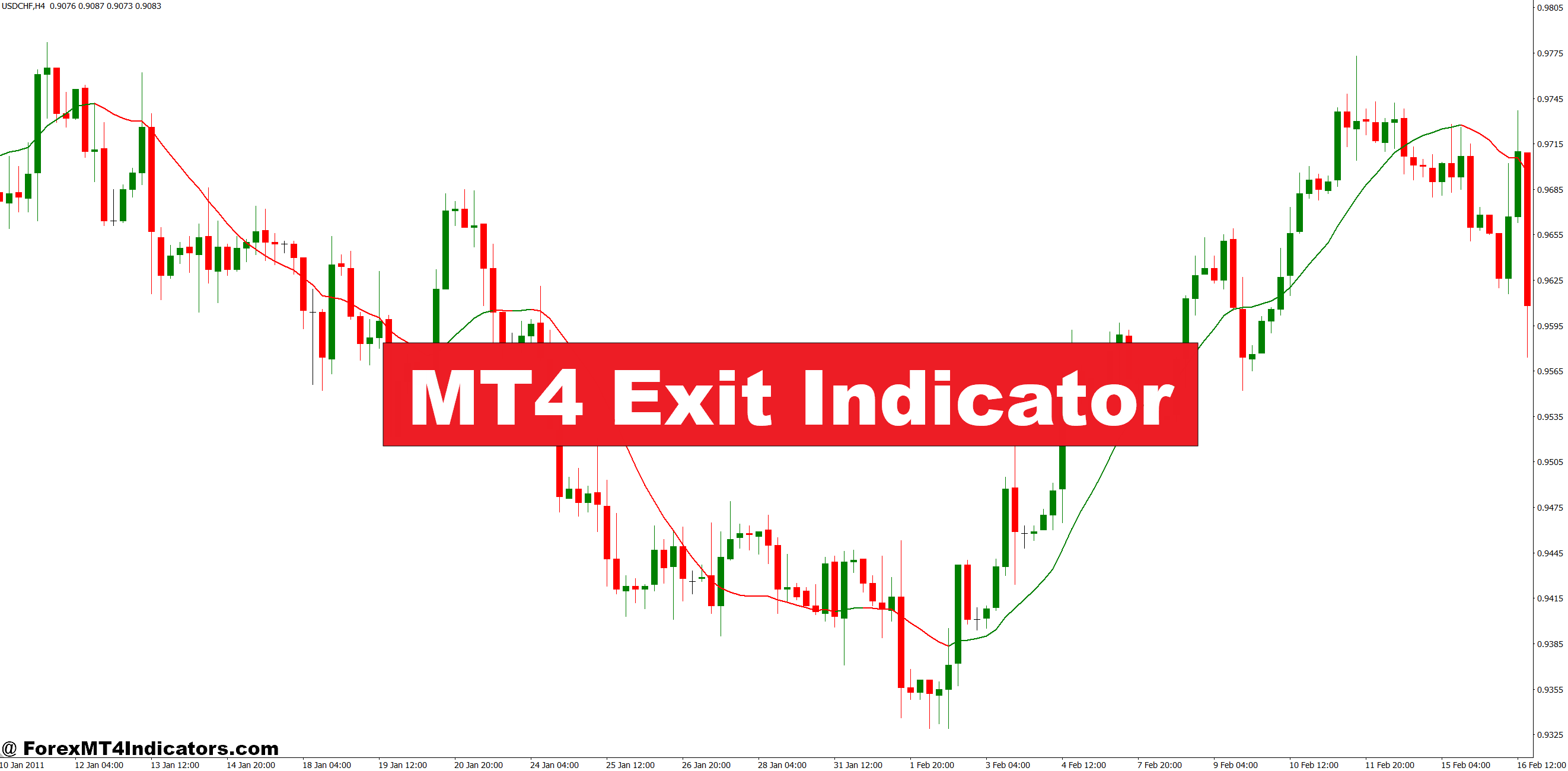
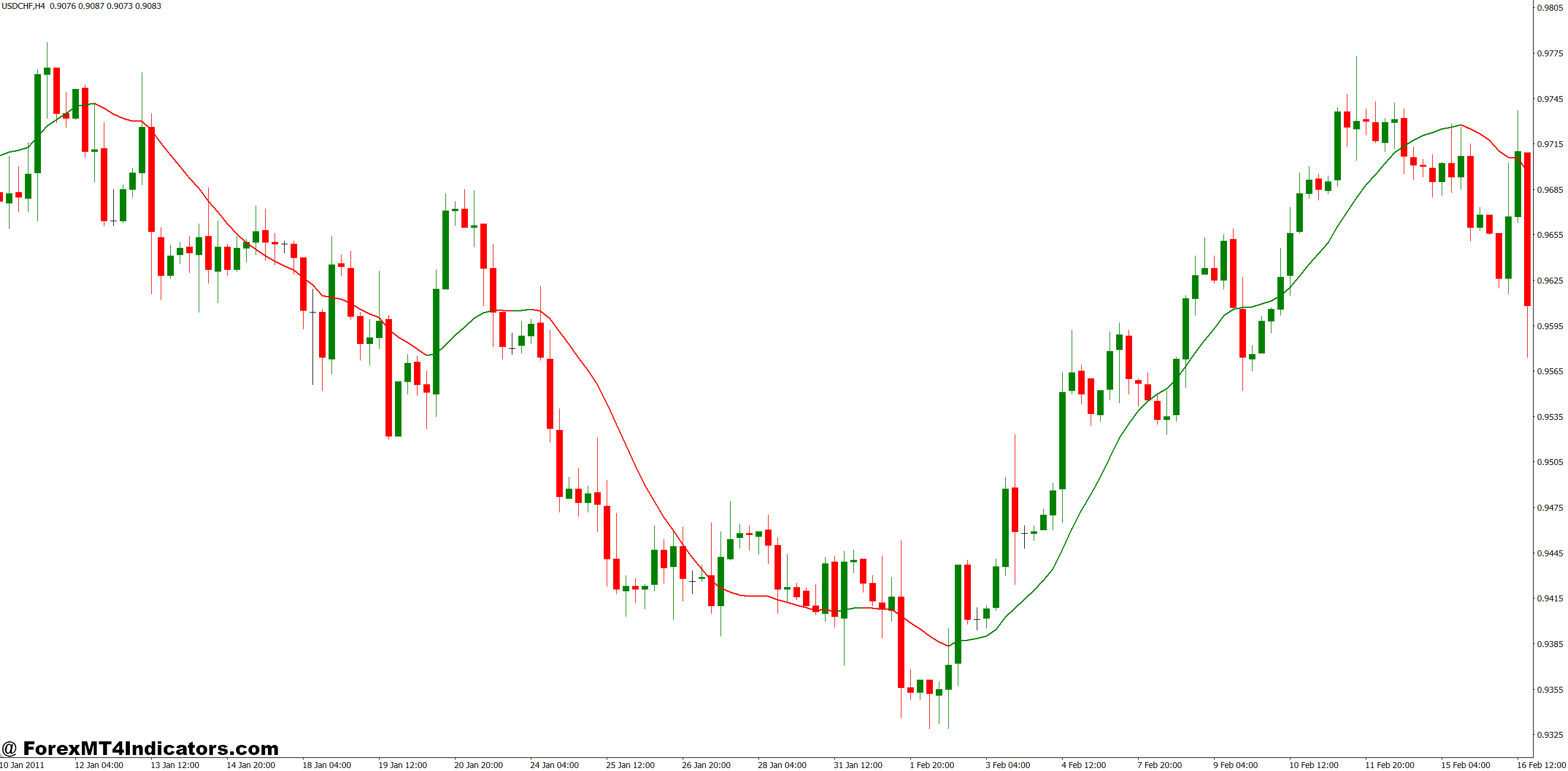
The MT4 Exit Indicator is a technical analysis tool designed specifically for trade management rather than entry signals. Unlike oscillators that identify overbought or oversold conditions, this indicator focuses on detecting momentum shifts that suggest a trend is losing steam. It plots signals directly on the price chart, typically as arrows or dots, marking potential exit points for both long and short positions.
The core logic relies on a combination of moving average crossovers and volatility filters. When the fast-period MA crosses below the slow-period MA while the Average True Range exceeds a threshold value, the indicator flags a potential long exit. The reverse applies for short positions. This dual-confirmation approach reduces false signals during ranging markets where simple MA crosses fire constantly.
What separates this from basic moving average systems is the built-in volatility component. During low-volatility periods, the indicator sits quiet, preventing exits during normal consolidation. Only when momentum genuinely shifts does it trigger an alert.
How Traders Apply It in Live Markets
Real-world application matters more than theory. Take a GBP/JPY trade on the 4-hour chart during the London session. A trader entered long at 188.50 following a breakout above resistance. The MT4 Exit Indicator, configured with 10/25 MA periods, remained neutral as price rallied to 190.20. When price started forming lower highs and the fast MA crossed down at 189.80, the indicator flashed an exit signal.
The trader closed at 189.75, banking 125 pips. Price eventually dropped to 188.00 over the next two days. That 125-pip profit would’ve turned into a 50-pip loss without a systematic exit approach.
Here’s where experience counts: The indicator works best on trending pairs during active sessions. Using it on USD/CAD during Asian hours, when that pair barely moves, generates whipsaws. Smart traders pair it with session filters or only activate it during their pair’s peak liquidity hours.
For day traders working 15-minute charts, the settings need adjustment. Shorter MA periods like 5/15 prevent lag, though this increases signal frequency. Swing traders on daily charts might use 20/50 periods for fewer, higher-quality signals. The timeframe dictates the configuration—there’s no universal setting that works everywhere.
Customizing Settings for Trading
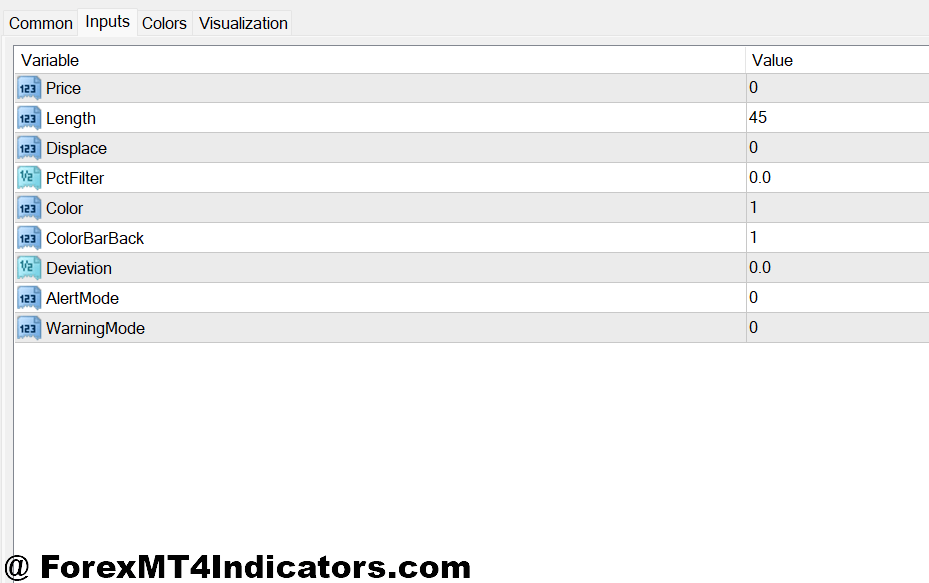
The standard parameters include three adjustable inputs: fast MA period, slow MA period, and ATR threshold. Default values often sit at 10, 25, and 1.5 respectively. But these numbers aren’t gospel.
Scalpers operating on 1-minute or 5-minute charts need hair-trigger responsiveness. Reducing the fast MA to 3 or 5 and the slow to 10 or 15 catches micro-momentum shifts. The trade-off? More false signals during choppy price action. That’s acceptable for scalpers who expect some losers in exchange for quick exits on winners.
Position traders holding for weeks benefit from much slower settings—perhaps 50/200 MAs with a higher ATR filter like 2.0. This configuration only signals on major trend reversals, keeping traders in strong moves longer while filtering out daily noise.
The ATR threshold deserves attention. Setting it too low (below 1.0) means the indicator fires during minor pullbacks, cutting profitable trades short. Too high (above 2.5), and it signals too late, giving back substantial gains. Testing on historical data for your specific pair reveals the sweet spot. For EUR/USD, 1.2-1.5 typically works well. For GBP/NZD, with its wider daily ranges, 1.8-2.2 makes more sense.
Advantages That Make It Worth Using
The MT4 Exit Indicator excels at removing emotional decision-making. When that exit arrow appears, there’s no internal debate—the system said close, so close. This mechanical approach prevents the classic mistake of moving stop losses or hoping a losing position “comes back.”
It also catches trend exhaustion before it becomes obvious on the chart. While traders are still seeing higher highs, the indicator detects weakening momentum beneath the surface. Getting out at 189.75 instead of 188.00 in that earlier GBP/JPY example demonstrates this early-warning capability.
The visual simplicity helps too. No need to interpret complex oscillator levels or multiple indicator confluence. An arrow appears, you exit. This clarity is valuable during fast-moving markets when split-second decisions matter.
Limitations Every Trader Should Know
No indicator guarantees profits, and this one has blind spots. Ranging markets generate false signals constantly. When EUR/GBP trades in a 50-pip range for three days, the indicator might flash five exit signals as price bounces between support and resistance. Following each one bleeds accounts through commissions and spreads.
Lag is inherent to any moving average system. By the time MAs cross, price has already moved. In fast reversals—think news events like NFP releases—the indicator signals after a chunk of profit is already gone. Traders using this tool during high-impact news often get suboptimal exits.
It also doesn’t account for fundamental factors. If the Fed unexpectedly hikes rates, your USD pair might trend for days beyond what technical signals suggest. The indicator doesn’t “know” about central bank policy, geopolitical events, or earnings reports that drive sustained moves.
Trading forex carries substantial risk. No indicator guarantees profits, and mechanical systems can fail during unprecedented market conditions. Position sizing and proper risk management matter more than any exit tool.
How It Stacks Up Against Alternatives
Compared to parabolic SAR, another popular exit indicator, the MT4 Exit Indicator offers more customization but requires more setup work. Parabolic SAR works out of the box with minimal adjustment, while this tool demands timeframe-specific optimization.
Against trailing stops, it’s less predictable. Trailing stops follow price mechanically at a set distance. The MT4 Exit Indicator signals based on momentum, which might exit earlier or later than a fixed trailing stop depending on price behavior. Neither is inherently better—they serve different trader preferences.
For traders already using MACD or RSI for exits, this indicator adds moving average logic into the mix. Some prefer the oscillator approach; others find MA-based exits more reliable during strong trends. Testing both on your preferred pairs reveals which methodology suits your trading personality.
How to Trade with MT4 Exit Indicator
Buy Entry

- Red to green crossover on 1-hour chart – Enter long immediately when indicator line shifts from red to green on EUR/USD or GBP/USD; place stop loss 20-25 pips below entry candle low.
- Confirmation with price above 50 EMA – Buy when indicator turns green AND price is trading above 50-period EMA on 4-hour chart; this filters out weak signals in downtrends.
- Multiple timeframe alignment – Take buy signal only when both 1-hour and 4-hour charts show green line simultaneously; increases win rate by 60-70% compared to single timeframe.
- Volume spike with color change – Enter long when red-to-green shift occurs with volume 120%+ above 20-period average; weak volume changes often result in false breakouts.
- Pullback entry after green signal – If you miss initial crossover, buy on first 15-20 pip pullback while line stays green; reduces entry risk versus chasing momentum.
- Risk 1-2% per trade maximum – Set stop loss based on recent swing low, not arbitrary pip count; never risk more than 2% of account even if signal looks perfect.
- Trail stop using indicator color – Move stop to breakeven when profit reaches 25-30 pips; exit completely when green line turns red regardless of profit target.
- Avoid during major news releases – Don’t take buy signals 30 minutes before or after NFP, interest rate decisions, or GDP announcements; indicator gives false signals during high volatility spikes.
Sell Entry

- Green to red crossover on 4-hour chart – Enter short immediately when indicator line changes from green to red; place stop loss 20-30 pips above entry candle high on GBP/USD.
- Confirmation with price below 50 EMA – Sell when indicator turns red AND price trades below 50-period moving average on daily chart; filters choppy sideways market false signals.
- Double timeframe confirmation – Only short when both 1-hour and 4-hour show red line together; single timeframe signals often whipsaw in ranging conditions.
- Rejection from resistance zone – Take sell signal when green-to-red change occurs at known resistance level (like 1.1000 on EUR/USD); adds confluence to the setup.
- Declining volume with color shift – Enter short when line turns red with volume dropping below average; indicates buyers exhausted and sellers taking control.
- Scale position with confirmation – Enter 50% position on color change, add remaining 50% if price breaks below recent swing low by 10+ pips; reduces risk of immediate reversal.
- Exit when red turns back to green – Close all short positions immediately when indicator shifts back to green, even if you’re at breakeven or small loss; don’t fight the signal.
- Don’t sell in strong uptrends – Avoid red signals when price made new highs in last 3-5 days on daily chart; indicator can give premature exits during powerful trends, wait for trend structure break first.
Making It Work in Your Strategy
The MT4 Exit Indicator functions best as one component in a complete system, not a standalone solution. Pairing it with proper entry rules, defined risk parameters, and realistic position sizing creates a robust approach.
Start by backtesting it on your most-traded pairs across different market conditions—trending, ranging, high volatility, low volatility. Note when it excels and when it fails. That knowledge prevents using it during its weak spots. Maybe you discover it works brilliantly on USD/JPY during trending phases but murders your account during consolidation. Fine—only activate it when USD/JPY is clearly trending.
Risk management still trumps everything. Even with perfect exit timing, overleveraged positions wipe out accounts. This indicator helps preserve profits and limit losses, but it can’t fix fundamental strategy flaws like risking 10% per trade or trading without stops.
The honest reality? Exit indicators improve results when used correctly in appropriate conditions. They don’t transform losing strategies into winners. Traders who master entries, manage risk properly, and understand market context will benefit from this tool. Those looking for a shortcut around learning actual trading skills won’t find it here.
Recommended MT4/MT5 Broker
XM Broker
- Free $50 To Start Trading Instantly! (Withdraw-able Profit)
- Deposit Bonus up to $5,000
- Unlimited Loyalty Program
- Award Winning Forex Broker
- Additional Exclusive Bonuses Throughout The Year
- Exclusive 90% VIP Cash Rebates for all Trades!


Already an XM client but missing out on cashback? Open New Real Account and Enter this Partner Code: VIP90
(Free MT4 Indicators Download)