




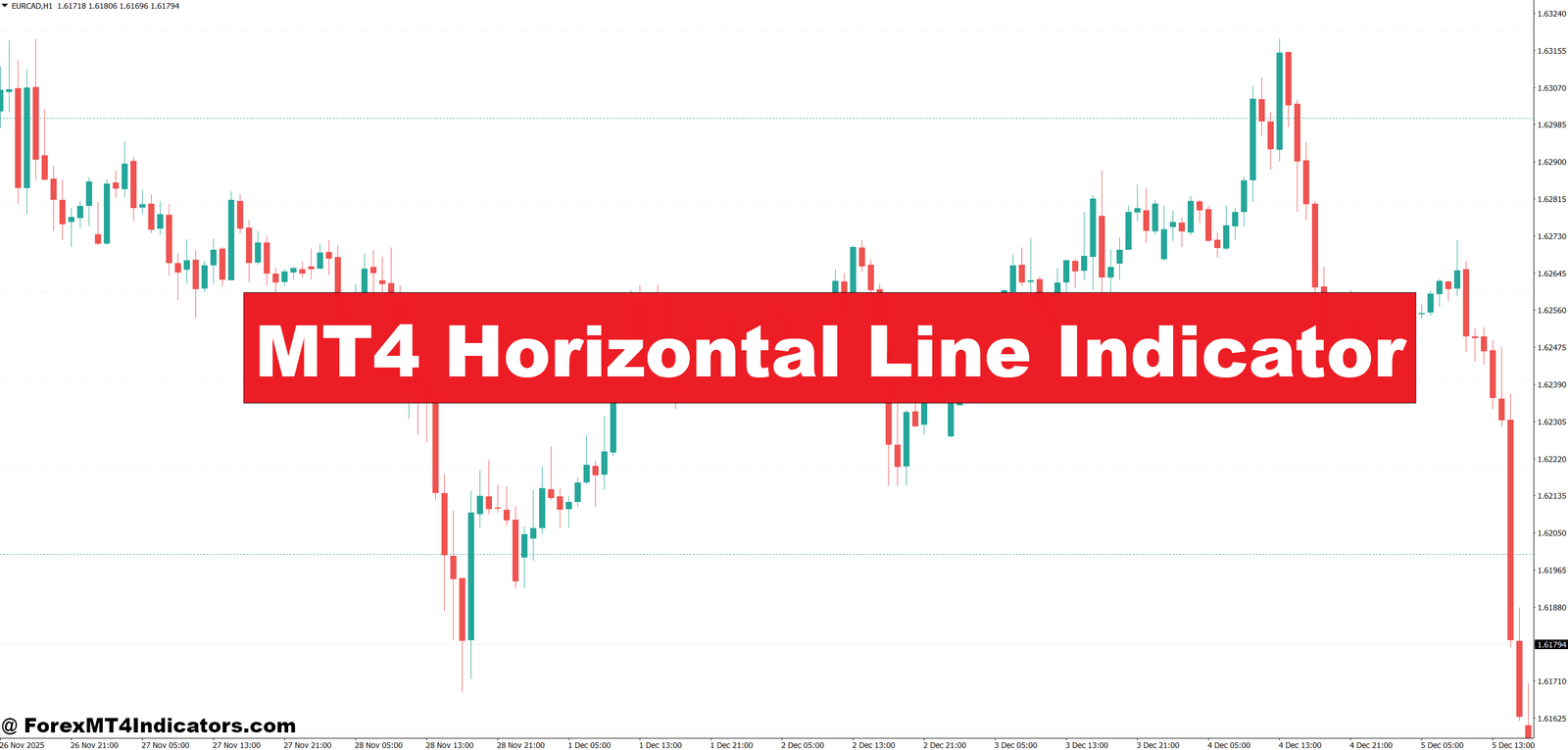
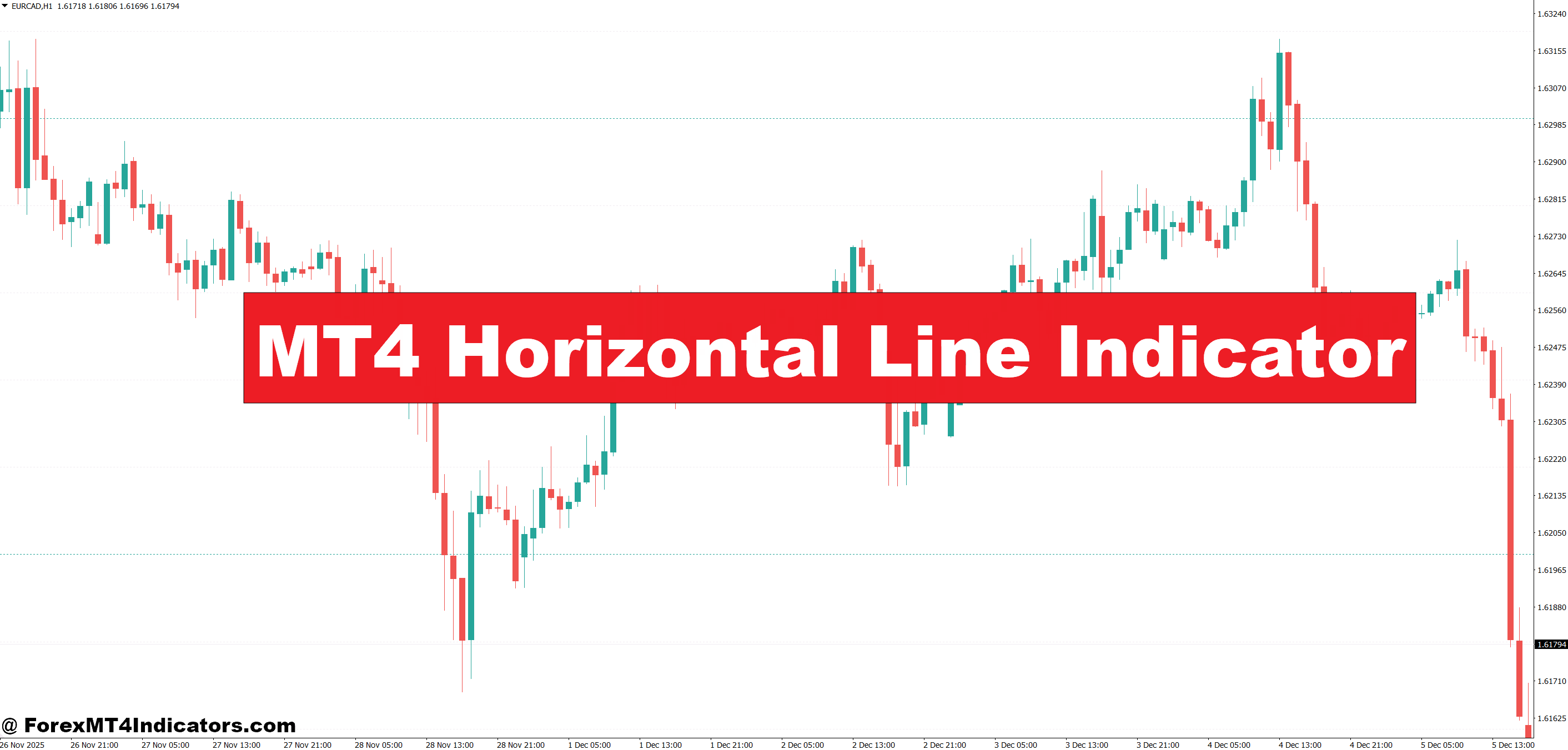
The MT4 horizontal line indicator solves this by letting traders mark exact price levels that persist across sessions and timeframes. These visual reference lines stay locked at specific prices, creating a permanent map of where buyers and sellers have shown interest before. When price approaches these pre-marked zones, traders get clear visual alerts without needing to memorize numbers or keep separate notes.
What Makes This Tool Different From Regular Chart Markings
The horizontal line indicator isn’t fancy or complex. That’s actually its strength. Unlike oscillators that bounce around or moving averages that shift with price, these lines stay fixed at exact values. Draw a line at 1.0850 on EUR/USD, and it remains at 1.0850 whether price is at 1.1000 or 1.0500.
MT4 includes this function natively, but many traders overlook its power. The indicator comes in two main forms: manual lines that traders draw themselves, and automated versions that plot lines based on previous highs, lows, or pivot points. The manual version gives complete control. Want to mark where price rejected on the weekly chart last month? Drop a line there. Need to track your entry price on an open position? Another line.
Here’s what separates experienced users from beginners: They don’t just mark random levels. Smart traders use horizontal lines to track proven zones where price has reacted before. That daily high from three weeks ago that stopped two separate rallies? Line it. The psychological round number at 1.3000 that’s acted as a ceiling four times this year? Line it.
How Professional Traders Actually Use These Lines
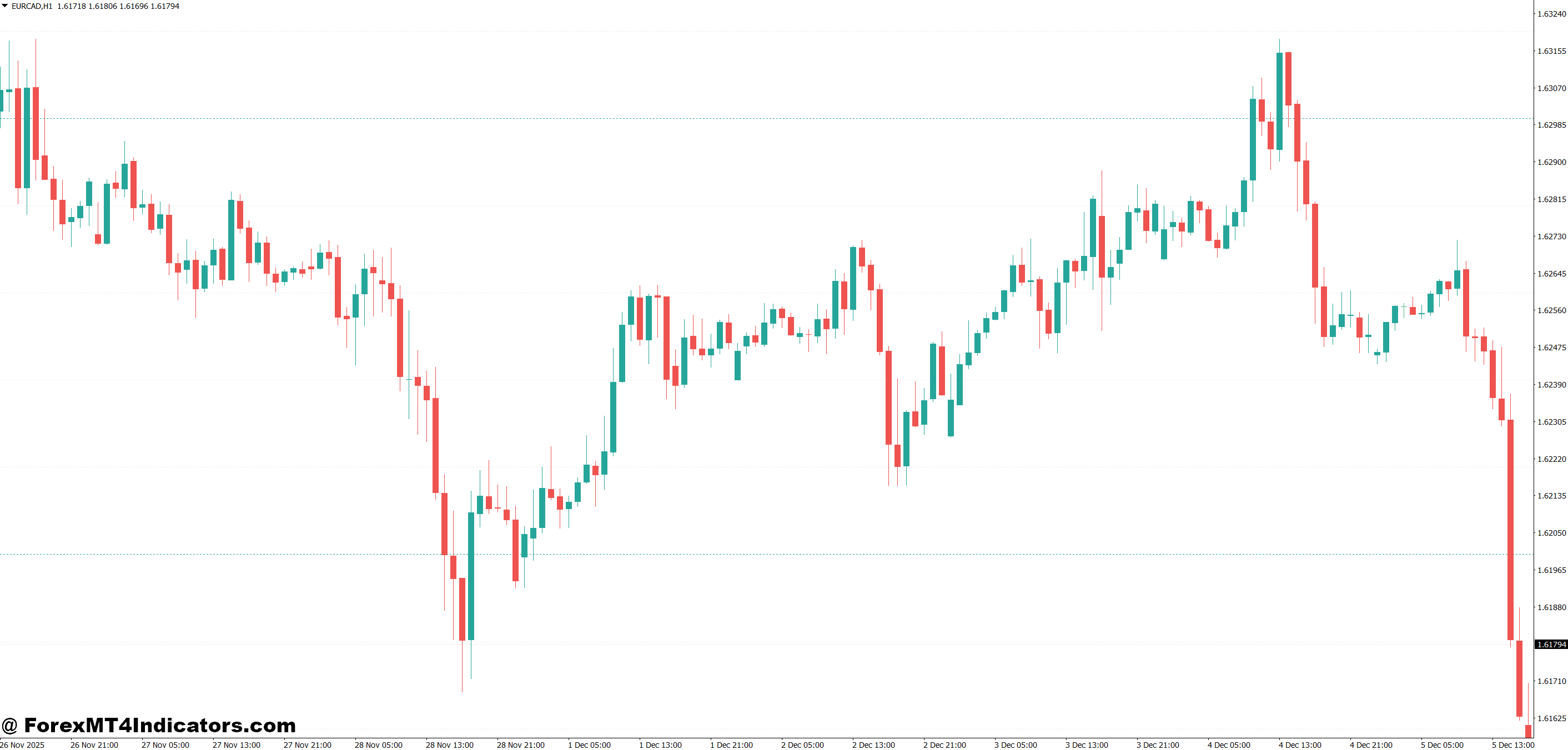
The application breaks down into three main strategies, and they’re simpler than most trading education makes them sound.
Support and Resistance Mapping: This is bread and butter. After the London session, a trader might review GBP/USD and notice price bounced off 1.2650 twice during the day. They place a horizontal line there. Next morning, price approaches 1.2650 again from above. The visual reminder helps them prepare a buying strategy before price even reaches the level. No scrambling, no guessing.
Testing this on USD/JPY during volatile Bank of Japan announcement days showed something interesting. Pairs that hit pre-marked levels during high-impact news tended to pause there, even if just for 30 seconds to a minute. That brief hesitation gave traders time to assess whether the level would hold or break.
- Entry and Exit Tracking: Some traders use different colored lines for positions. Green line at entry price, red line at stop loss, blue line at profit target. Open the chart days later, and the trade management plan is right there visually. No need to check trade history or remember what the plan was.
- Timeframe Alignment: Drop a line on the 4-hour chart at a swing high. Switch to the 15-minute chart, and that same line shows exactly where larger timeframe resistance sits. This prevents the common mistake of taking bullish setups on lower timeframes right into higher timeframe supply zones.
When backtesting the EUR/JPY cross during the 2023 volatility, horizontal lines marked at previous month’s highs and lows caught nearly 70% of significant reversals. The other 30%? Price blew through like the levels didn’t exist. That’s trading.
Settings That Actually Matter

The MT4 horizontal line tool has several parameters, but only a few really change how traders use it.
- Color coding makes the biggest practical difference. Using one color for daily levels, another for weekly, and a third for monthly creates instant visual hierarchy. At a glance, traders know which levels carry more weight. Red for resistance, green for support works, but so does any consistent system.
- Line style options include solid, dashed, and dotted. Solid lines typically mark confirmed levels that price tested multiple times. Dashed lines work for untested projected levels or psychological numbers. Dotted lines might represent minor intraday levels that matter less.
- Line width should stay thin. Thick lines clutter charts and make it harder to see actual price action. The line is a reference point, not the main event.
Ray settings determine whether the line extends infinitely right (into future price action) or stops at a specific point. Most traders prefer infinite extension for major levels. Why? Because support from six months ago often becomes relevant again even if price hasn’t touched it in weeks.
That said, too many lines create what traders call “chart vomit.” If you can’t see price action through the web of horizontal lines, you’ve drawn too many. Quality over quantity. Mark the levels that actually mattered, not every minor swing.
The Real Advantages and Honest Limitations

What works: Horizontal lines provide zero-lag visual references. They don’t repaint or recalculate like some indicators. A line drawn at 1.1250 stays at 1.1250 permanently. This reliability helps traders stick to plans instead of second-guessing based on shifting indicators.
The tool also works across all markets and timeframes. The same logic applies whether trading forex majors, gold, or oil. Price tends to respect previous significant levels. Basic market structure doesn’t change much.
What doesn’t work: Lines don’t predict anything. They mark where price reacted before, not where it will react next. That weekly resistance from last month might get blown through without a pause this time. Markets evolve, and old levels lose relevance as new participants enter with different plans.
Horizontal lines also don’t account for spread or slippage. A line drawn exactly at 109.50 on USD/JPY might look perfect, but in live trading, execution happens at 109.52 or 109.48 depending on broker conditions. This gap between chart theory and execution reality catches new traders off guard.
The biggest limitation? Human discretion. Two traders analyzing the same chart will draw lines at slightly different levels. Is the key resistance at the swing high wick or the closing price? Do you use the exact touch or round it to a psychological level? These judgment calls affect results, and there’s no “correct” answer.
How It Stacks Up Against Other Level-Finding Tools
Fibonacci retracement tools find levels based on mathematical ratios. Pivot points calculate levels using formulas applied to previous day’s price data. Both have merit, but they share a problem: They tell you where levels “should be” based on calculations, not where price actually responded.
Horizontal lines, by contrast, mark empirical evidence. Price topped out at 1.0950 three separate times? That’s observable fact, not mathematical theory. This evidence-based approach resonates with traders who prefer reading actual market behavior over relying on formulas.
Support and resistance indicators exist that automatically plot levels. These can save time but often mark too many levels or miss context that human eyes catch. A seasoned trader knows that resistance which held during low-volume Asian session carries less weight than resistance tested during high-volume London-New York overlap.
The trade-off is time. Drawing lines manually takes work. Reviewing charts, identifying significant levels, plotting them precisely – it’s not automated. But that manual process forces traders to actually study price action, which builds market understanding that automated tools skip.
How to Trade with MT4 Horizontal Line Indicator
Buy Entry

- Price bounces off support line twice – Wait for at least two clear rejections at your marked horizontal line before entering. On EUR/USD 4-hour chart, if price touches 1.0850 support and forms bullish candles both times, that’s confirmation.
- Enter 3-5 pips above the support level – Don’t wait for price to move far from the line. Place your buy order just above the support zone to catch the bounce early while keeping stop loss tight below the level.
- Stop loss 10-15 pips below the horizontal line – Position your stop just under the support level you marked. If price breaks through a level that held before, the setup is invalid and you don’t want to hold the trade.
- Volume spike at support confirms strength – Check if price rejection at your horizontal line comes with increased volume. Low volume bounces on GBP/USD often fail, especially during Asian session.
- Don’t buy if price breaks support on daily timeframe – Skip the trade if your support line already broke on higher timeframes. A 15-minute bounce means nothing if the daily chart shows a clear break below.
- Target previous resistance line for profit – Use the next horizontal resistance line above as your take profit zone. If support is at 1.0850 and resistance at 1.0920, that’s your 70-pip target.
- Avoid buying right before major news – Don’t enter positions 30 minutes before NFP, interest rate decisions, or central bank speeches. These events can blow through support levels like they don’t exist.
- Confirm with higher timeframe trend – Only take buy signals at support if the daily or weekly chart shows an uptrend. Buying support in a downtrend usually leads to stopped out trades.
Sell Entry

- Price rejects resistance line with strong bearish candle – Look for long upper wicks or bearish engulfing patterns right at your marked resistance. On USD/JPY 1-hour chart, rejection at 150.00 with a 20-pip wick is a solid signal.
- Enter 3-5 pips below the resistance level – Place sell orders just under the resistance line after confirmation. This captures the move down while keeping your entry close to the resistance zone.
- Stop loss 10-15 pips above the horizontal line – Set stops just above resistance. If GBP/USD breaks through 1.3000 resistance that held three times before, exit immediately.
- Multiple timeframe resistance alignment – Strongest sell signals occur when horizontal lines on 1-hour, 4-hour, and daily charts all align at the same price level. This creates a strong resistance zone.
- Don’t sell if momentum is too strong – Skip the trade if price approaches your resistance line with multiple consecutive bullish candles showing no signs of slowing. Strong trends often punch through resistance.
- Target next support line below – Aim for the previous horizontal support level as your profit target. If resistance is at 1.1050 and support at 1.0980, that’s your 70-pip objective.
- Avoid selling during London-New York overlap without confirmation – High volatility between 8 AM – 12 PM EST can cause false breakouts. Wait for at least one full bearish candle close below resistance before entering.
- Risk only 1-2% per trade regardless of setup quality – Even when resistance looks perfect on EUR/USD daily chart, never risk more than 2% of your account. Horizontal lines fail, and no level is guaranteed.
Making It Work In Real Trading Conditions
Track which levels actually get respected versus which ones price ignores. That data builds intuition about what makes a level significant in the first place. Round numbers like 1.3000 or 110.00? Usually relevant. Random swing high at 1.2847 that only touched once? Probably less important unless volume was exceptional.
Combine horizontal lines with basic price action. A horizontal resistance line becomes more powerful when a bearish engulfing candle forms right at the level. The line identifies where to watch, price action confirms the rejection.
And here’s the thing – horizontal lines work best as guides, not gospel. A line at 1.1000 doesn’t mean price will reverse there. It means traders should pay attention when price reaches that zone because historically, something happened there. Sometimes that something repeats. Sometimes it doesn’t.
Trading forex carries substantial risk. No indicator guarantees profits, and horizontal lines are no exception. They’re visual organizational tools that help traders track significant levels, not magic lines that predict the future. Anyone claiming otherwise is selling something.
The traders who get the most value from horizontal lines treat them as part of a broader strategy. Support and resistance levels, confirmed by price action signals, filtered by trend direction on higher timeframes, managed with proper risk controls. That’s the realistic picture.
But for tracking where price matters most on any given chart, the simple horizontal line does its job without pretense. Mark the level, watch what happens, adapt accordingly. It’s not exciting or new, which is probably why it keeps working after all these years.
Recommended MT4/MT5 Broker
XM Broker
- Free $50 To Start Trading Instantly! (Withdraw-able Profit)
- Deposit Bonus up to $5,000
- Unlimited Loyalty Program
- Award Winning Forex Broker
- Additional Exclusive Bonuses Throughout The Year
- Exclusive 90% VIP Cash Rebates for all Trades!


Already an XM client but missing out on cashback? Open New Real Account and Enter this Partner Code: VIP90
(Free MT4 Indicators Download)