


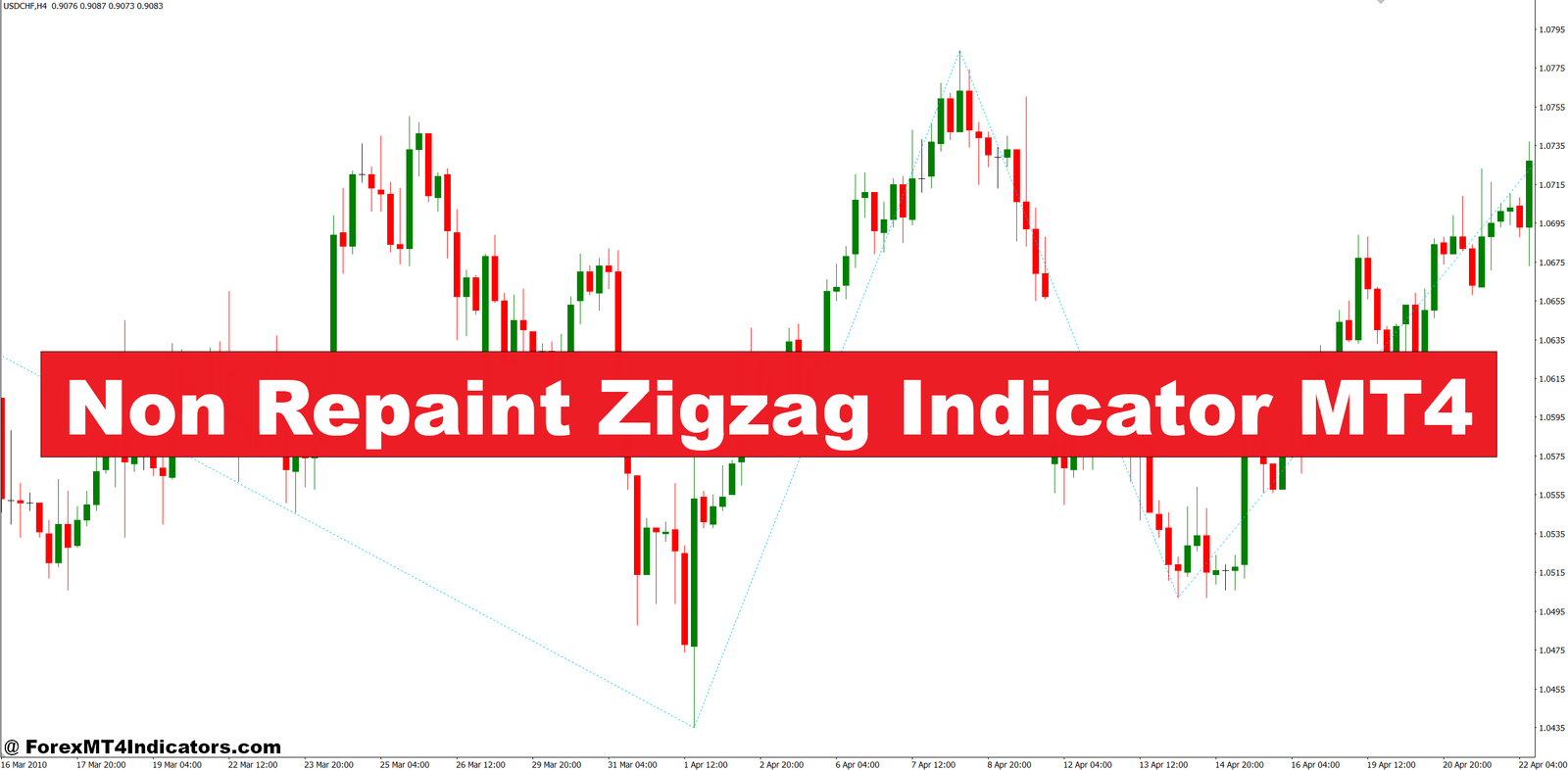
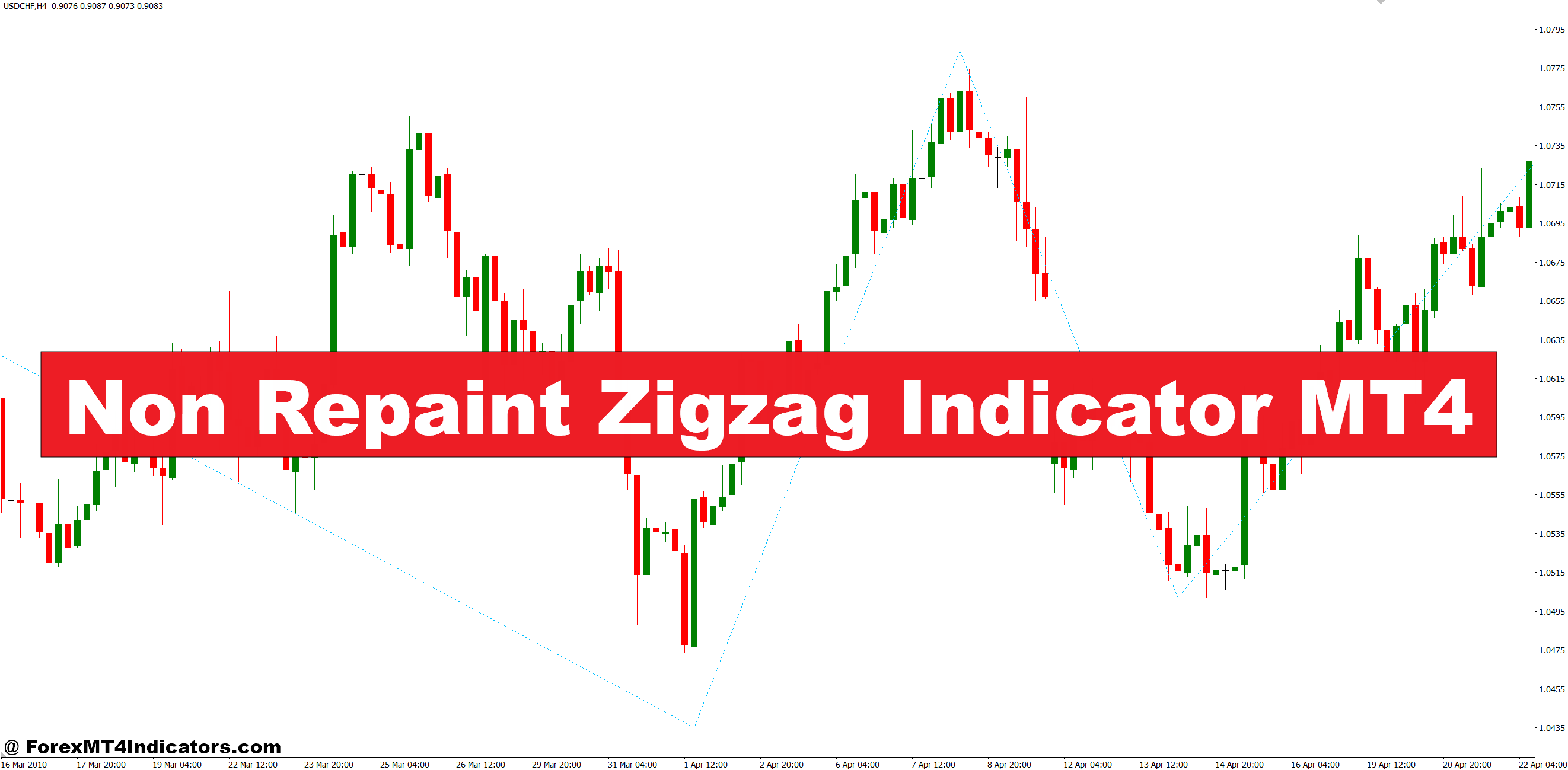
The standard zigzag indicator built into MetaTrader 4 connects significant price highs and lows with straight lines, filtering out smaller moves below a set percentage threshold. It’s useful for visualizing market structure at a glance. But here’s the catch — MT4’s default zigzag repaints heavily. The most recent leg is always provisional, updating with every new tick until a reversal of sufficient size confirms the prior swing.
A non repaint zigzag indicator MT4 tool works differently. It waits for confirmation before plotting a swing point. Instead of drawing a tentative line that adjusts in real time, it only marks a high or low after price has moved far enough in the opposite direction to validate that the turning point is legitimate.
The confirmation logic varies between versions, but most use one of two approaches. Some require price to move a fixed number of pips away from the potential swing point. Others wait for a set number of bars to close beyond the extreme before locking it in. Either way, the trade-off is the same: signals arrive a bit later than a repainting version, but they don’t vanish once they appear.
This matters more than most traders realize. Without repaint protection, any strategy built on zigzag swing points is essentially built on data that changes retroactively. That makes reliable backtesting nearly impossible.
How the Confirmation Logic Works in Practice
Say a trader is watching EUR/USD on the 1-hour chart with a non repaint zigzag set to a 20-pip minimum swing and a 3-bar confirmation delay. Price drops to 1.0842, then starts climbing. The indicator won’t mark 1.0842 as a swing low until three consecutive hourly candles close above that level. If price dips back below 1.0842 during those three bars, the potential swing low gets discarded — no false signal ever hits the chart.
Compare that to the default MT4 zigzag. It would mark 1.0842 immediately, draw a line to it, and then quietly erase it if price kept falling. On a historical chart, everything looks clean. In real time, it’s a mess.
Practical Trading Setups Using This Tool
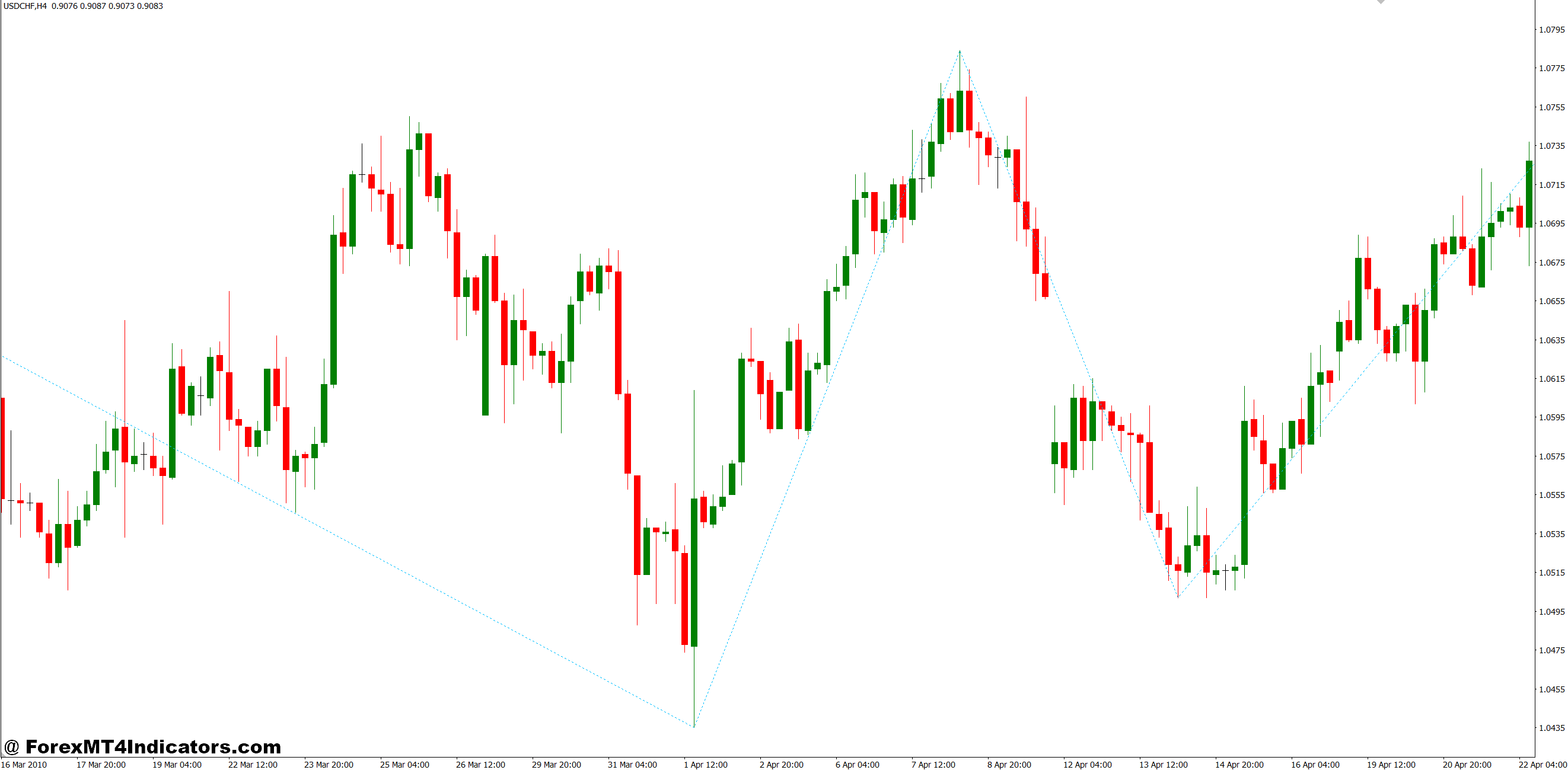
The non repaint zigzag shines brightest as a structure-mapping tool rather than a standalone signal generator. Experienced traders typically layer it with other forms of analysis.
Swing trading with support and resistance. When the indicator locks in a swing low near a known daily support zone, that confluence adds weight to a long setup. For instance, if USD/CAD prints a confirmed zigzag low at 1.3580 — right where a weekly demand zone sits — a trader has a much stronger case for entering long than if they were relying on the zigzag alone.
Measuring retracement depth. By connecting confirmed swing highs and lows, traders can apply Fibonacci retracement levels between them with confidence. Since the anchor points won’t shift, the Fib levels stay fixed too. This is particularly useful on the 4-hour and daily timeframes for pairs like AUD/USD, where clean swings tend to respect the 61.8% retracement level during trending conditions.
Identifying trend direction. A sequence of higher confirmed swing lows and higher swing highs defines an uptrend. Because these points are locked in, the trend assessment doesn’t flip-flop the way it might with a repainting version. Traders who journal their setups find this consistency invaluable when reviewing past trades.
Non Repaint Zigzag Indicator MT4 Settings and Customization

Most non repaint zigzag indicators for MT4 offer a handful of adjustable parameters. Getting them right depends on the trading style and timeframe.
The depth parameter controls the minimum number of bars between swing points. A depth of 12 on a 15-minute chart works well for intraday scalping on major pairs like EUR/USD or GBP/JPY. Bump that up to 20 or higher for the 4-hour chart if the goal is catching larger swings over several days.
The deviation setting determines how far price must move (usually in pips or as a percentage) to qualify as a new swing. Setting this too low on a choppy pair like GBP/NZD leads to too many minor swings cluttering the chart. A deviation of 30-40 pips on the 1-hour chart tends to filter the noise without missing significant turning points.
The backstep value sets the minimum number of bars between two adjacent swing points. Keeping this at 3-5 prevents the indicator from marking multiple swings in tight consolidation zones.
One tip from live testing: during high-impact news events like Non-Farm Payrolls or rate decisions, wider settings prevent the indicator from picking up the volatile whipsaw candles that often reverse within minutes. Tightening settings back up after volatility settles helps capture the new trend that frequently emerges post-news.
Honest Strengths and Limitations
- What it does well. The biggest advantage is trust. When a swing point appears, it stays. This makes trade journaling accurate, backtesting reliable, and real-time decision-making clearer. For traders who build mechanical strategies around swing structure, that reliability is essential.
- Where it falls short. The confirmation delay means this tool will always be slower than a repainting zigzag. The most recent swing point might take several bars to confirm, so traders looking for the absolute earliest entry won’t get it here. And like any zigzag indicator, it tells traders where price has been — not where it’s going next. It identifies structure, not direction.
Compared to tools like the fractal indicator or Donchian channel breakouts, the non repaint zigzag offers cleaner visual mapping of swings. But fractals can sometimes confirm swing points faster since they only need two bars on each side. The right choice depends on whether a trader values speed or certainty more.
Trading forex carries substantial risk. No indicator guarantees profits, and past swing patterns don’t predict future price movement. Always use proper position sizing and risk management regardless of how clean the signals look.
How to Trade with Non Repaint Zigzag Indicator MT4
Buy Entry

- Wait for a confirmed swing low – Only enter long after the zigzag locks in a low point with at least 3 bars closing above it; jumping early defeats the non-repaint advantage.
- Check for higher lows in sequence – Two or more rising zigzag lows on the 1-hour or 4-hour chart confirm an uptrend is active, giving your long trade structural backing.
- Align with a support zone – A zigzag low printing within 10-15 pips of a known daily support level on EUR/USD or GBP/USD adds strong confluence to the buy setup.
- Use Fibonacci for entry timing – Draw the retracement from the last confirmed swing low to swing high; look to buy near the 50% or 61.8% pullback level on pairs like AUD/USD during clean trends.
- Set stops below the confirmed swing low – Place your stop loss 8-12 pips beneath the locked-in zigzag low to give the trade room without risking excessive capital.
- Target the previous swing high – Use the most recent confirmed zigzag high as your minimum take-profit level; this gives a clear, structure-based exit rather than a guesswork target.
- Avoid buying during choppy consolidation – If the zigzag is printing tight, alternating highs and lows with less than 20 pips between them on the 1-hour chart, stay out — there’s no real trend to trade.
- Skip setups around major news releases – Don’t open buy positions within 30 minutes of NFP, CPI, or rate decisions; whipsaw spikes can trigger your stop before the real move begins.
Sell Entry

- Enter short after a confirmed swing high – The zigzag must lock in the high with 3+ bars closing below it before you consider selling; unconfirmed peaks are unreliable.
- Look for lower highs forming – Two consecutive declining zigzag highs on the 4-hour or daily chart signal a downtrend, making short entries far more probable to succeed.
- Sell near confirmed resistance – When a zigzag high forms within 10-15 pips of a weekly resistance zone on GBP/USD or EUR/JPY, that overlap strengthens the short setup considerably.
- Apply Fibonacci from high to low – Measure the retracement from the last confirmed swing high down to swing low; sell rejections near the 50%-61.8% zone where price often stalls and reverses.
- Place stops above the zigzag swing high – Set your stop loss 8-12 pips above the confirmed high; keeping it tight but beyond the structure reduces risk exposure on each trade.
- Aim for the prior swing low as your target – The last locked-in zigzag low gives you a realistic profit target based on actual market structure, not arbitrary pip counts.
- Don’t sell into strong bullish momentum – If the zigzag just printed a swing low followed by 4-5 aggressive bullish candles on EUR/USD, wait for the momentum to exhaust before looking for shorts.
- Reduce position size on counter-trend trades – Selling against a higher-timeframe uptrend carries extra risk; cut your standard lot size by 40-50% and tighten your profit target to the nearest swing level.
Final Thoughts
A non repaint zigzag indicator MT4 tool solves one specific but critical problem: it keeps confirmed swing points locked on the chart. That makes it a dependable foundation for structure-based strategies, Fibonacci analysis, and trend identification. It won’t predict reversals or generate buy-and-sell alerts on its own, and the confirmation delay means entries come slightly late. But for traders who’ve been burned by repainting signals that looked perfect in hindsight and failed in real time, that trade-off is worth making. The best next step is testing it on a demo account across several timeframes — start with the 1-hour chart on EUR/USD, adjust the depth and deviation settings, and see how the confirmed swings line up with actual market structure before risking any live capital.
Recommended MT4/MT5 Broker
XM Broker
- Free $50 To Start Trading Instantly! (Withdraw-able Profit)
- Deposit Bonus up to $5,000
- Unlimited Loyalty Program
- Award Winning Forex Broker
- Additional Exclusive Bonuses Throughout The Year
- Exclusive 90% VIP Cash Rebates for all Trades!


Already an XM client but missing out on cashback? Open New Real Account and Enter this Partner Code: VIP90
(Free MT4 Indicators Download)