




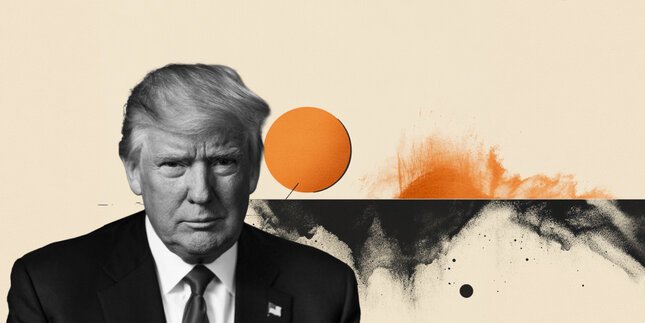
In an interview with NBC News on Saturday, US President Donald Trump commented on the military strikes on the Kharg Island and whether he was prepared to make a deal with Iran while pressing allies once again to help secure the Strait of Hormuz.
Key quotes
I’m not ready to make a deal with Iran because the terms are not good enough yet.
We’ve totally decimated it. Except, as you know, I didn’t do anything having to do with the energy lines, because having to rebuild that would take years.
Strikes on Kharg Island totally demolished most of the island, but we may hit it a few more times just for fun.
On whether the US Navy would be escorting ships, I don’t want to tell you anything about that.
We’re going to be sweeping the Strait very strongly.
And we believe we’ll be joined by other countries who are somewhat impeded, and in some cases impeded from getting the oil.
It is not clear whether Iran has dropped mines into the Strait of Hormuz.
News of Iran’s Supreme Leader dead a rumor.
When talking about Iran’s decision to target them, Trump said it was the biggest surprise I had of this whole thing.
Meanwhile, in a post on Truth Social late Saturday, Trump renewed his call for other nations to help secure the Strait.
“The United States of America has beaten and completely decimated Iran, both Militarily, Economically, and in every other way, but the Countries of the World that receive Oil through the Hormuz Strait must take care of that passage, and we will help – A LOT.”
Earlier in the day, Trump posted: “Many Countries, especially those who are affected by Iran’s attempted closure of the Hormuz Strait, will be sending War Ships, in conjunction with the United States of America, to keep the Strait open and safe. We have already destroyed 100% of Iran’s Military capability, but it’s easy for them to send a drone or two, drop a mine, or deliver a close range missile somewhere along, or in, this Waterway, no matter how badly defeated they are. Hopefully China, France, Japan, South Korea, the UK, and others, that are affected by this artificial constraint, will send Ships to the area so that the Hormuz Strait will no longer be a threat by a Nation that has been totally decapitated. In the meantime, the United States will be bombing the hell out of the shoreline, and continually shooting Iranian Boats and Ships out of the water. One way or the other, we will soon get the Hormuz Strait OPEN, SAFE, and FREE! President DONALD J. TRUMP.”.
Meanwhile, the Trump administration rejected efforts by Middle Eastern allies to start diplomatic negotiations aimed at ending the Iran war, Reuters reported on Saturday, citing three sources familiar with the efforts.
Two senior Iranian sources told Reuters that Iran had also turned down talk of a ceasefire until US and Israeli strikes end.
Risk sentiment FAQs
In the world of financial jargon the two widely used terms “risk-on” and “risk off” refer to the level of risk that investors are willing to stomach during the period referenced. In a “risk-on” market, investors are optimistic about the future and more willing to buy risky assets. In a “risk-off” market investors start to ‘play it safe’ because they are worried about the future, and therefore buy less risky assets that are more certain of bringing a return, even if it is relatively modest.
Typically, during periods of “risk-on”, stock markets will rise, most commodities – except Gold – will also gain in value, since they benefit from a positive growth outlook. The currencies of nations that are heavy commodity exporters strengthen because of increased demand, and Cryptocurrencies rise. In a “risk-off” market, Bonds go up – especially major government Bonds – Gold shines, and safe-haven currencies such as the Japanese Yen, Swiss Franc and US Dollar all benefit.
The Australian Dollar (AUD), the Canadian Dollar (CAD), the New Zealand Dollar (NZD) and minor FX like the Ruble (RUB) and the South African Rand (ZAR), all tend to rise in markets that are “risk-on”. This is because the economies of these currencies are heavily reliant on commodity exports for growth, and commodities tend to rise in price during risk-on periods. This is because investors foresee greater demand for raw materials in the future due to heightened economic activity.
The major currencies that tend to rise during periods of “risk-off” are the US Dollar (USD), the Japanese Yen (JPY) and the Swiss Franc (CHF). The US Dollar, because it is the world’s reserve currency, and because in times of crisis investors buy US government debt, which is seen as safe because the largest economy in the world is unlikely to default. The Yen, from increased demand for Japanese government bonds, because a high proportion are held by domestic investors who are unlikely to dump them – even in a crisis. The Swiss Franc, because strict Swiss banking laws offer investors enhanced capital protection.


