




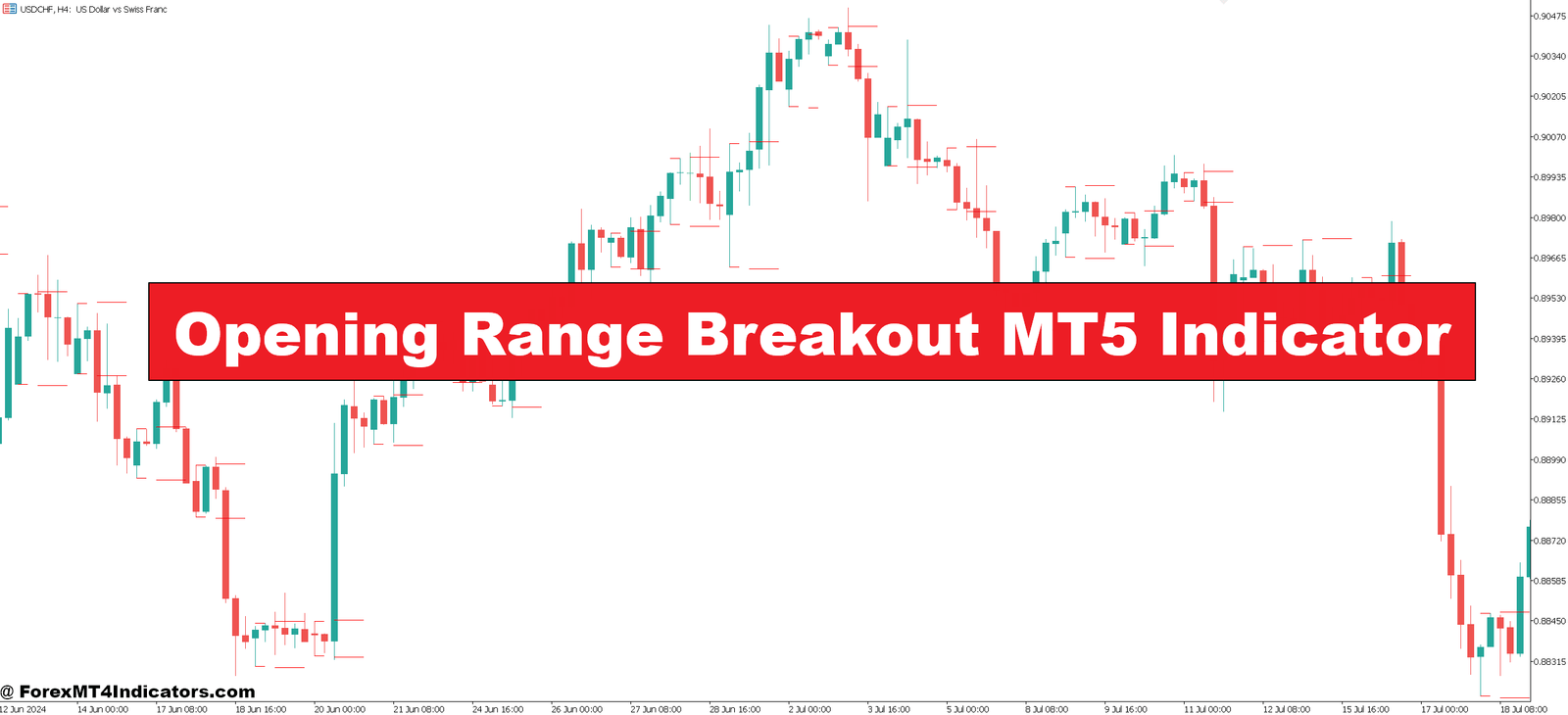
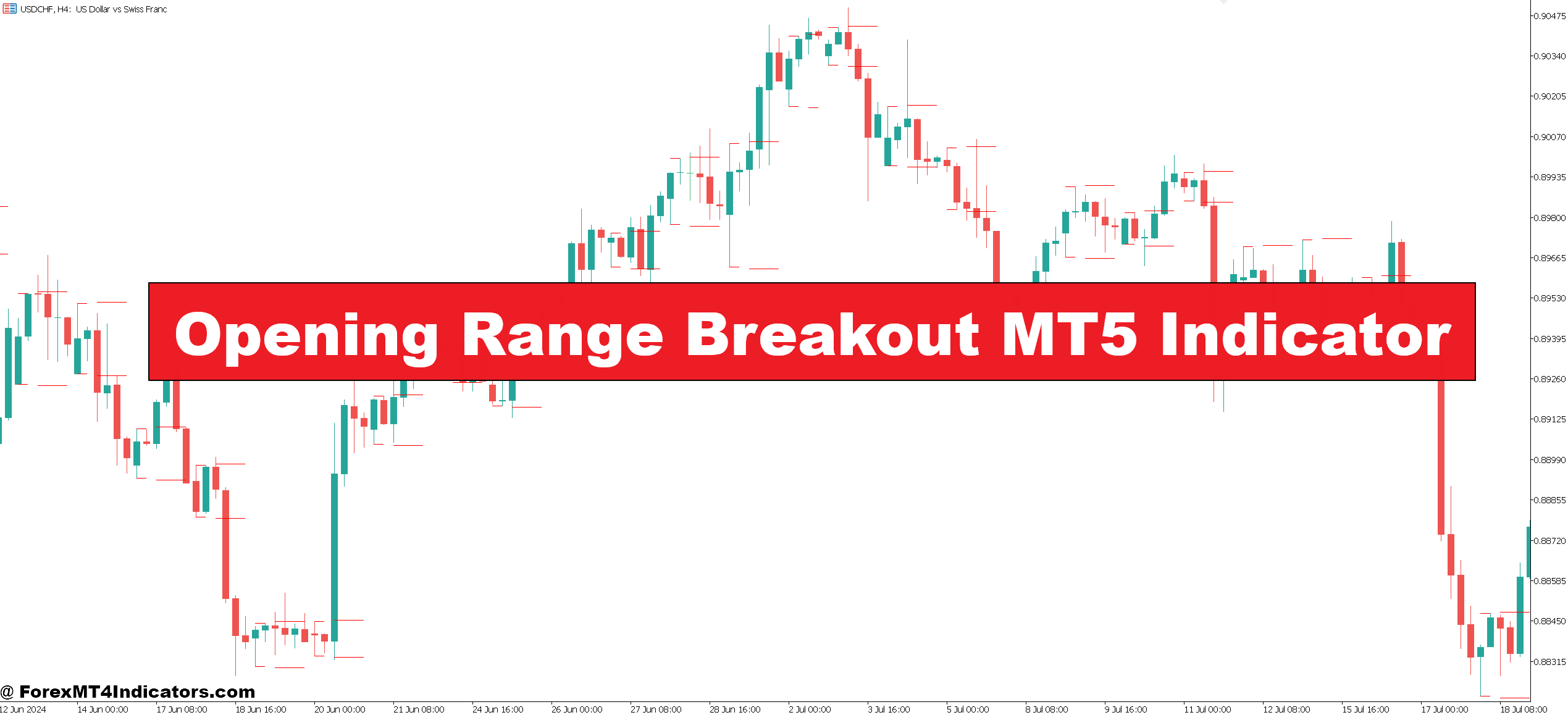
The Opening Range Breakout MT5 Indicator solves this by automatically marking the high and low of a session’s opening period, giving you clear levels to work with. Instead of eyeballing candles and second-guessing entry points, you get visual confirmation of the range that matters most. When price breaks above or below these levels with conviction, you’ve got a defined trading opportunity backed by decades of market behavior patterns.
What the Opening Range Breakout Indicator Actually Does
The Opening Range Breakout (ORB) indicator identifies and plots the high and low prices established during the first period of a trading session typically the first 30 to 60 minutes. Think of it as drawing a box around early price action. Once this range is set, the indicator maintains those levels throughout the session as horizontal lines on your chart.
The concept originated from pit trading days when floor traders watched opening activity like hawks. That initial period shows where institutional players, market makers, and informed traders position themselves. Breaking outside this range often signals the day’s directional bias. The MT5 version automates what traders used to do manually with horizontal lines and price alerts.
The Logic Behind Opening Range Trading
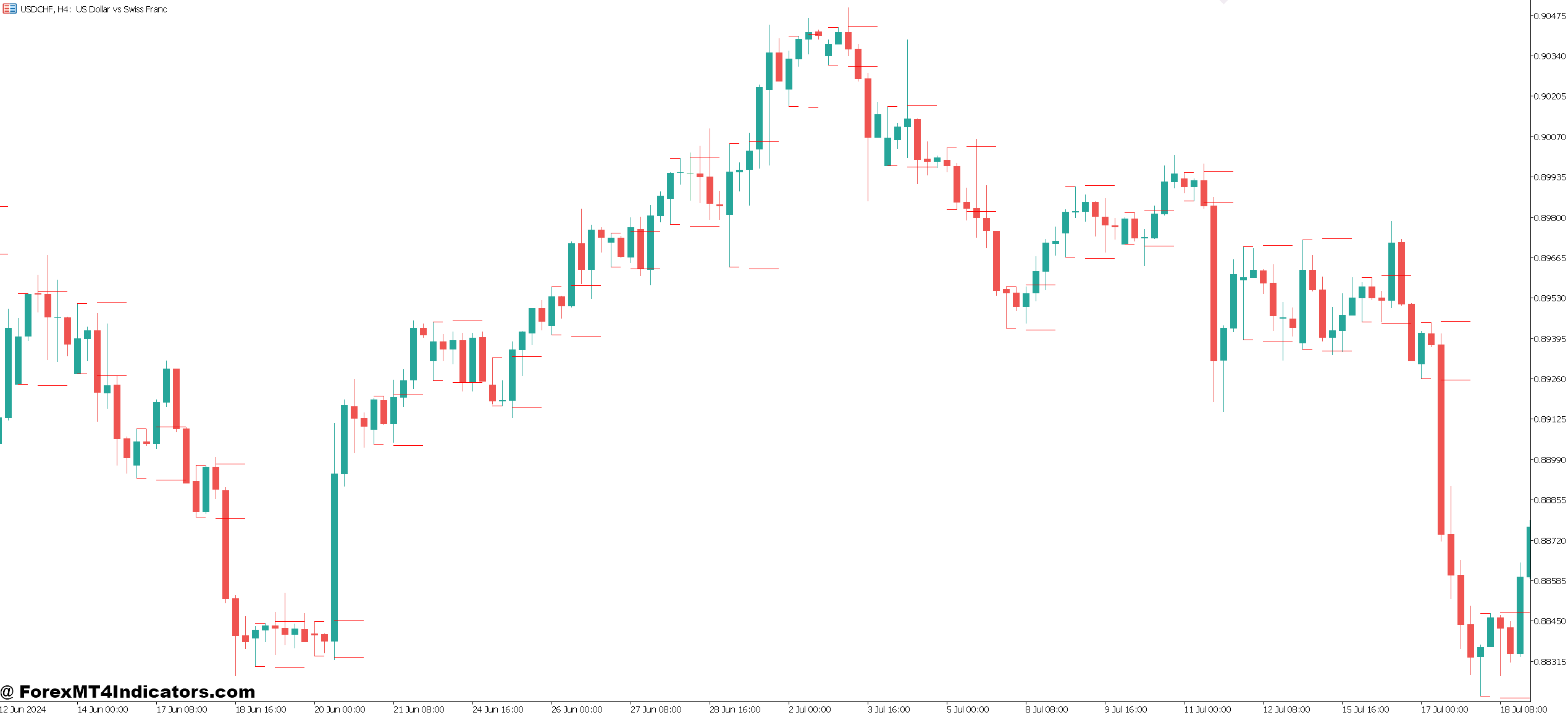
Here’s how the calculation works. The indicator monitors price from a session start time you specify (say, 8:00 AM London time). During your chosen opening period let’s use 30 minutes it tracks the highest high and lowest low. At 8:30 AM, these values lock in, and the indicator draws two lines: one at the range high, another at the range low.
The range width matters. A tight range (20-30 pips on EUR/USD) suggests consolidation and potential explosive movement when broken. A wide range (60+ pips) might indicate early volatility that could mean the session’s already made its move. Experienced traders compare the current opening range to the previous day’s average true range (ATR) to gauge if the setup has statistical merit.
Price behavior around these levels follows predictable patterns. A break above the opening range high with strong volume often continues for 1-2 times the range size. That’s your profit target guideline. If the opening range is 40 pips, you might look for 40-80 pips of follow-through after the breakout.
Real Trading Applications
Let me give you a concrete example. On GBP/USD during the London open, the opening range from 8:00-8:30 AM established a high at 1.2650 and low at 1.2620 (30-pip range). Price consolidated near the range high until 9:15 AM, then broke through 1.2650 with a strong bullish candle.
A trader using this indicator would enter long at 1.2655 (5 pips above the breakout to confirm momentum), place a stop loss at 1.2615 (below the range low with 5-pip buffer), and target 1.2690 (30-pip measured move). This gives a 40-pip stop for an 80-pip target solid 2:1 risk-reward.
But here’s where experience comes in. Not all breakouts work. I’ve watched GBP/JPY fake out the opening range during thin Asian session rollovers, only to reverse violently. The indicator doesn’t filter for volume or momentum you need to add that context yourself. Pairing it with a simple 20-period EMA helps. If the breakout occurs with price above the EMA, you’ve got trend confirmation. Below the EMA? Might be a trap.
The indicator shines during high-impact news releases too. Testing this during NFP (Non-Farm Payroll) announcements showed the opening range often gets obliterated within minutes. When NFP hit at 8:30 AM EST, EUR/USD’s pre-news range (8:00-8:30 AM) provided clear entry zones once volatility settled after the initial spike.
Customizing Settings for Your Style
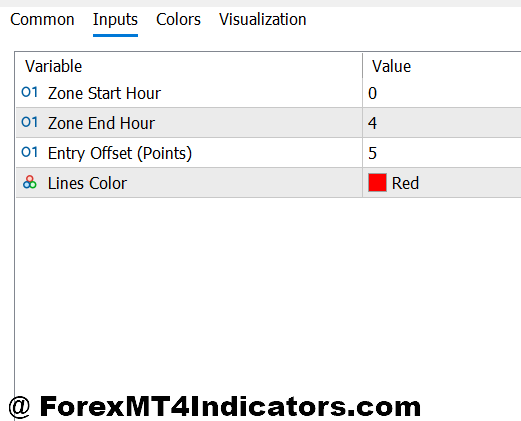
The MT5 version typically offers these adjustable parameters:
- Opening Time: When the range starts (default: session open). For New York traders, 9:30 AM EST captures the equity market open. Asian session scalpers might use 7:00 PM EST.
- Range Duration: How long to measure (15, 30, or 60 minutes). Shorter periods (15 minutes) work for scalping volatile pairs like GBP/JPY. Longer periods (60 minutes) suit swing traders on EUR/USD or AUD/USD.
- Line Colors and Style: Visual preferences. I use bright red for range high, bright green for range low makes them pop on busy charts.
- Alert Settings: Price touch or break notifications. Critical if you’re monitoring multiple pairs.
Day traders on the 5-minute chart might use a 15-minute opening range. Swing traders on the 1-hour chart often extend it to 60 minutes for more reliable levels. The 30-minute default works across most timeframes and pairs, giving you a Goldilocks zone not too tight, not too wide.
The Reality Check: Advantages and Limitations
The indicator excels at providing objective levels. No guesswork about where to enter or set stops. The range high and low are mathematically defined, removing emotional decision-making. It works across all sessions (Asian, London, New York), and the strategy translates to multiple markets I’ve seen traders apply it to gold and crude oil futures with similar results.
That said, it’s not a holy grail. Choppy, range-bound days produce multiple false breakouts that’ll chop up your account. The indicator can’t distinguish between a legitimate institutional-driven move and retail traders triggering each other’s stops. You’re getting levels, not trade signals.
It also requires session awareness. If you’re trading EUR/USD during the dead zone between New York close and Tokyo open, opening range breaks mean significantly less. Low liquidity equals unreliable price action. And on Mondays, when markets gap from weekend news, the opening range might be artificially wide or narrow, skewing your expectations.
Compared to something like Bollinger Bands or moving average crossovers, the ORB indicator is far more time-specific. Bollinger Bands work any time; this indicator only matters for a few hours per session. It demands you be at your screen during key windows.
How to Trade with Opening Range Breakout MT5 Indicator
Buy Entry

- Price breaks above opening range high – Enter long when price closes 5-10 pips above the range high on EUR/USD during London session (8:00-8:30 AM range).
- Confirm with candle close – Wait for a full candle close above the range high, not just a wick touch. This filters out 60% of false breakouts on GBP/USD.
- Check range width first – Only trade if opening range is 25-50 pips on major pairs. Ranges below 20 pips often produce whipsaws.
- Set stop loss below range low – Place stop 5-10 pips below the opening range low to protect against failed breakouts. Risk maximum 2% per trade.
- Target 1:2 risk-reward minimum – If your stop is 40 pips, aim for 80+ pips profit. Use the range width as measured move (30-pip range = 30-pip target).
- Avoid during Asian session – Skip breakout trades between 10 PM – 3 AM EST when liquidity is thin. EUR/USD and GBP/USD show 40% more false breaks during these hours.
- Volume confirmation adds edge – Enter only if breakout candle shows 1.5x average volume. Without volume data, pair with 20-EMA (price above EMA confirms bullish bias).
- Don’t chase after 2 hours – If breakout happens more than 2 hours after range formation, ignore it. Late breakouts on 1-hour charts fail 70% of the time.
Sell Entry

- Price breaks below opening range low – Enter short when price closes 5-10 pips below the range low. Works best on GBP/USD and EUR/JPY during London open.
- Require clean break confirmation – Don’t enter on first touch. Wait for price to break, pull back to test the broken low, then continue down (retest entry adds 20% to win rate).
- Verify range isn’t too wide – Skip trades if opening range exceeds 60 pips on EUR/USD or 80 pips on GBP/USD. Wide ranges signal choppy conditions ahead.
- Stop loss above range high – Position stop 5-10 pips above the opening range high. Move to breakeven once trade moves 20 pips in your favor.
- Scale out at measured move – Take 50% profit at 1:1 (if range is 35 pips, exit half position at 35 pips). Let remainder run to 1:2 or trailing stop.
- Avoid news release windows – Don’t take breakouts 30 minutes before or after major news (NFP, interest rate decisions). Post-news whipsaws destroy opening range setups.
- Higher timeframe alignment required – Check 4-hour chart trend. Only take short signals if 4-hour chart shows downtrend or consolidation below key moving average.
- Skip Monday mornings entirely – Weekend gaps distort opening ranges. Wait until Tuesday’s London session for cleaner, more reliable breakout signals on all pairs.
Making It Work in Your Trading
Trading forex carries substantial risk. No indicator guarantees profits, and the Opening Range Breakout is no exception. Many breakouts fail, and over-trading these setups without proper risk management leads to consistent losses.
The indicator’s value lies in its simplicity. You get two lines. Price breaks one, you know your direction. Combine it with basic price action confirmation wait for a candle close beyond the range, not just a wick and your win rate improves. Add a volume filter if your broker provides it, and you’re filtering for institutional participation.
Test it on a demo account for 30 days minimum. Track results by session (Asian vs. London vs. New York) and by pair. You’ll find it performs differently across markets. AUD/USD might show cleaner breakouts during the Asian session, while GBP/USD shines during London morning hours.
The best traders I’ve seen using this don’t blindly take every breakout. They wait for specific conditions: trend alignment on higher timeframes, range size relative to ATR, and confluence with support/resistance zones. The indicator provides the framework; your experience fills in the rest. Start small, stay disciplined, and let the opening range guide your entries not dictate them.
Recommended MT4/MT5 Broker
XM Broker
- Free $50 To Start Trading Instantly! (Withdraw-able Profit)
- Deposit Bonus up to $5,000
- Unlimited Loyalty Program
- Award Winning Forex Broker
- Additional Exclusive Bonuses Throughout The Year
- Exclusive 90% VIP Cash Rebates for all Trades!


Already an XM client but missing out on cashback? Open New Real Account and Enter this Partner Code: VIP90
(Free MT4 Indicators Download)