







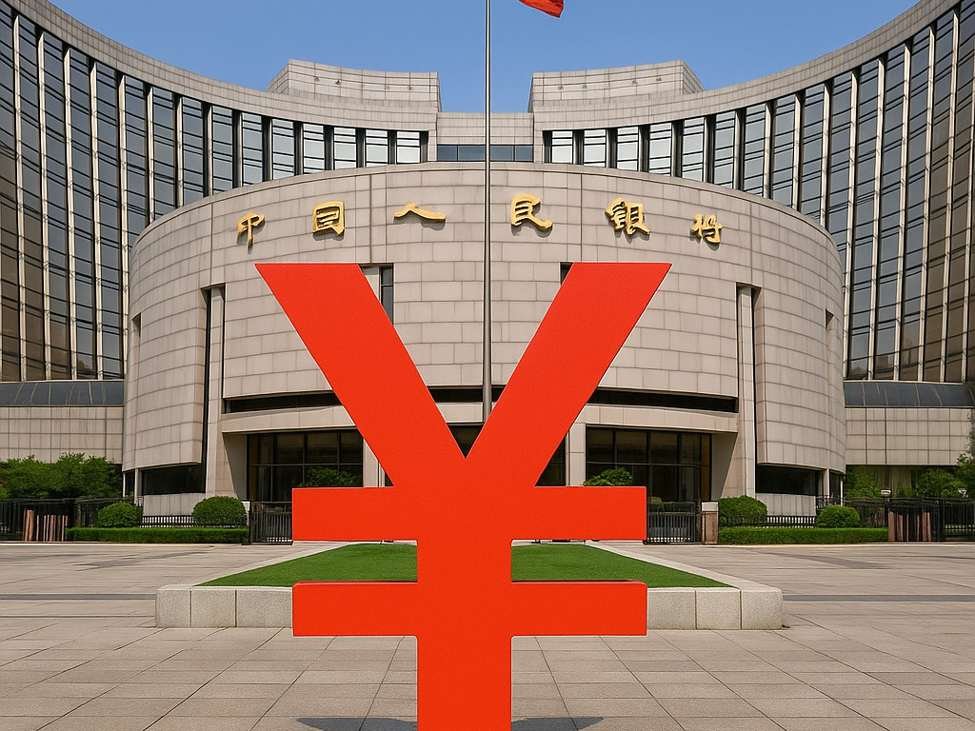
PBoC extends liquidity support with 13th straight MLF net injection
Summary:
- PBoC to inject CNY 500bn via 1-year MLF, vs CNY 450bn maturing
- Results in CNY 50bn net liquidity injection
- Marks 13th straight month of net injections
- Conducted via variable-rate, multiple-price auction
- Signals continued policy support for liquidity and credit
- Reinforces accommodative but measured easing stance
China’s central bank is set to extend its run of liquidity support, announcing a CNY 500 billion one-year medium-term lending facility (MLF) operation aimed at maintaining stable funding conditions in the banking system.
The People’s Bank of China (PBoC) said the operation will take place on Wednesday and will be conducted via a variable-rate tender with a fixed quantity, using a multiple-price auction format. The structure gives policymakers flexibility in managing funding costs while ensuring a set amount of liquidity is injected.
With CNY 450 billion in MLF funds maturing this month, the operation results in a net injection of CNY 50 billion. This marks the 13th consecutive month in which the PBoC has added net liquidity through the facility, highlighting a sustained effort to support credit conditions.
The MLF, introduced in 2014, is a key policy tool that allows commercial and policy banks to borrow from the central bank using collateral, effectively anchoring medium-term funding costs and guiding broader lending rates in the economy.
Implications
The continued net injection signals that policymakers remain focused on ensuring ample liquidity rather than tightening conditions, even as headline growth data has shown pockets of resilience. It suggests underlying concerns about demand, credit transmission, or external risks are still present.
Rather than deploying aggressive rate cuts, the PBoC continues to rely on targeted liquidity tools like the MLF to fine-tune financial conditions. This reflects a preference for measured, controlled easing while avoiding excessive pressure on the currency or financial stability risks.
For markets, the move is modestly supportive for domestic liquidity and risk sentiment, particularly equities and credit. However, the relatively small net injection means the signal is more about policy stance than scale.
For the yuan, the impact is likely limited, as the operation does not represent a significant shift in interest rate policy. Instead, it reinforces the view that China is maintaining an accommodative bias while calibrating support carefully amid a complex global backdrop.


