







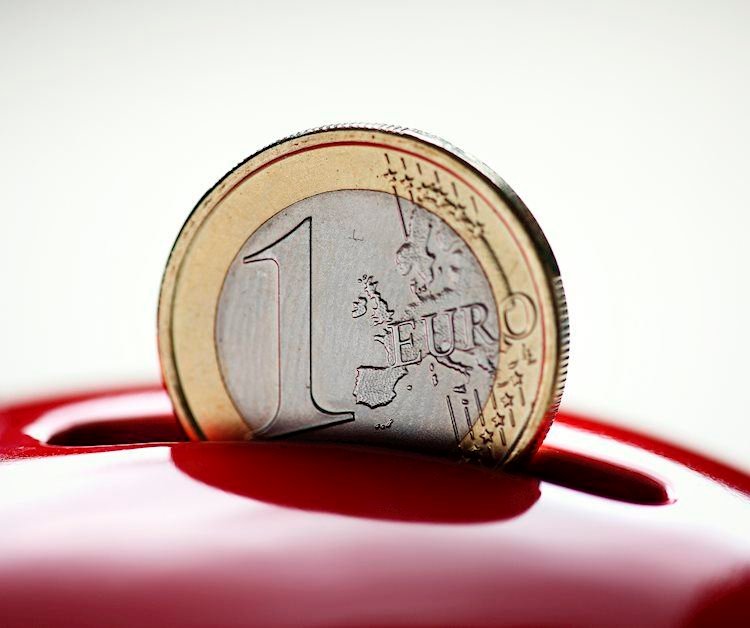
- Euro nos faces some selling bias below 1.0900 vs. the US Dollar.
- Stocks in Europe tarde in a moxed fashion on Tuesday.
- EUR/USD finds a comfort zone around the 1.0900 so far this week.
- Trade balance figures in Germany surprised to the downside in May.
- US markets are closed due to the Independence Day holiday.
The Euro (EUR) is currently showing signs of being slightly undervalued after a session earlier this week that did not yield any clear results. Despite this, the EUR/USD pair has not been able to break through the critical level of 1.0900 this week, due to the general lack of direction in risk appetite trends.
Meanwhile, the US Dollar (USD) is experiencing small gains, hovering around the 103.00 mark when measured by the USD Index (DXY), in a market environment characterized by low trading activity and volatility.
As far as monetary policy is concerned, there is no significant news, and investor expectations remain steady regarding an expected 0.25% interest rate hike by both the European Central Bank (ECB) and the Federal Reserve at their upcoming meetings later this month.
The central banks’ efforts to combat inflation and normalize their monetary policies continue to be a topic of ongoing debate, amid growing speculation about an economic slowdown on both sides of the Atlantic.
On the domestic front, Germany’s trade surplus decreased to €14.4B in May, with exports declining by 0.1% MoM and imports increasing by 1.7% MoM. Meanwhile, Spain’s unemployment rate decreased by 50.3K individuals in the past month.
On Tuesday, there is no significant news from the US, but the release of the FOMC Minutes on Wednesday is expected to attract considerable attention.
Daily digest market movers: Euro keeps the range bound theme intact so far
- The EUR fails to gather convincing upside traction so far on Tuesday.
- The inactivity in the US markets should keep trading conditions depressed.
- Australia’s RBA kept the OCR unchanged at 4.10%.
- ECB’s Joachim Nagel reiterates that a September hike hinges on new data.
- Investors continue to price in a Fed, ECB hike in July.
- FOMC Minutes and Nonfarm Payrolls are next of note in the docket.
Technical Analysis: Euro needs to clear the June high to allow for extra gains
EUR/USD appears under pressure and risks a potential deeper pullback in case the bears retail control. That said, the loss of the weekly low at 1.0835 (June 30) could open the door to a test of the interim 100-day SMA at 1.0821. The breakdown of the latter should meet the next contention area not before the May low of 1.0635 (May 31) ahead of the March low of 1.0516 (March 15) and the 2023 low of 1.0481 (January 6).
If bulls regains the upper hand, the next hurdle is then expected at the June peak of 1.1012 (June 22) prior to the 2023 high of 1.1095 (April 26), which is closely followed by the round level of 1.1100. North from here emerges the weekly top of 1.1184 (March 31, 2022), which is supported by the 200-week SMA at 1.1180, just before another round level at 1.1200.
The constructive view of EUR/USD appears unchanged as long as the pair trades above the crucial 200-day SMA, today at 1.0602.
German economy FAQs
The German economy has a significant impact on the Euro due to its status as the largest economy within the Eurozone. Germany’s economic performance, its GDP, employment, and inflation, can greatly influence the overall stability and confidence in the Euro. As Germany’s economy strengthens, it can bolster the Euro’s value, while the opposite is true if it weakens. Overall, the German economy plays a crucial role in shaping the Euro’s strength and perception in global markets.
Germany is the largest economy in the Eurozone and therefore an influential actor in the region. During the Eurozone sovereign debt crisis in 2009-12, Germany was pivotal in setting up various stability funds to bail out debtor countries. It took a leadership role in the implementation of the ‘Fiscal Compact’ following the crisis – a set of more stringent rules to manage member states’ finances and punish ‘debt sinners’. Germany spearheaded a culture of ‘Financial Stability’ and the German economic model has been widely used as a blueprint for economic growth by fellow Eurozone members.
Bunds are bonds issued by the German government. Like all bonds they pay holders a regular interest payment, or coupon, followed by the full value of the loan, or principal, at maturity. Because Germany has the largest economy in the Eurozone, Bunds are used as a benchmark for other European government bonds. Long-term Bunds are viewed as a solid, risk-free investment as they are backed by the full faith and credit of the German nation. For this reason they are treated as a safe-haven by investors – gaining in value in times of crisis, whilst falling during periods of prosperity.
German Bund Yields measure the annual return an investor can expect from holding German government bonds, or Bunds. Like other bonds, Bunds pay holders interest at regular intervals, called the ‘coupon’, followed by the full value of the bond at maturity. Whilst the coupon is fixed, the Yield varies as it takes into account changes in the bond’s price, and it is therefore considered a more accurate reflection of return. A decline in the bund’s price raises the coupon as a percentage of the loan, resulting in a higher Yield and vice versa for a rise. This explains why Bund Yields move inversely to prices.
The Bundesbank is the central bank of Germany. It plays a key role in implementing monetary policy within Germany, and central banks in the region more broadly. Its goal is price stability, or keeping inflation low and predictable. It is responsible for ensuring the smooth operation of payment systems in Germany and participates in the oversight of financial institutions. The Bundesbank has a reputation for being conservative, prioritizing the fight against inflation over economic growth. It has been influential in the setup and policy of the European Central Bank (ECB).


