






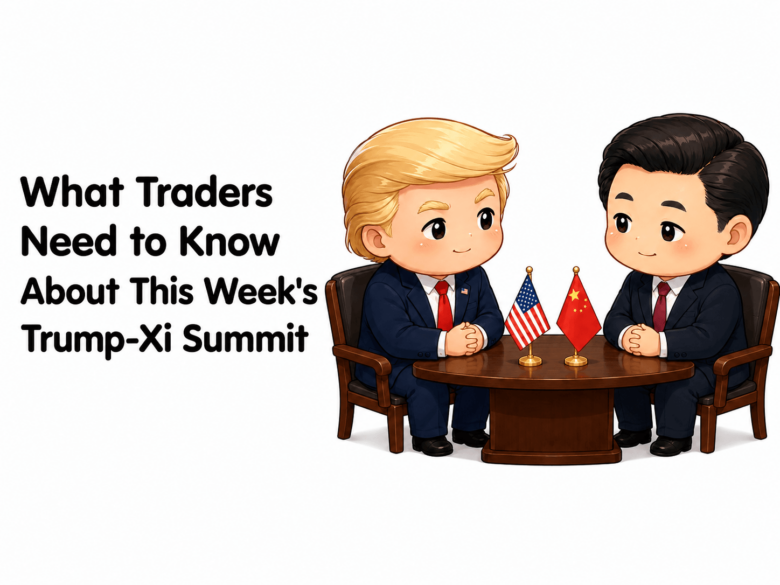
If markets have one appointment circled in red this week, it’s Beijing. President Trump is paying a state visit to China from May 13 to 15 — the first visit to China by an American president in almost nine years.
For traders, a diplomatic handshake can still pack plenty of market punch. Currency, commodity, and stock moves could shift in real time, so this headline is worth keeping on the radar.
So let’s break down what’s actually happening, what’s at stake, and what to watch when the readout lands.
How We Got Here
The last time Trump and Xi met face-to-face was in South Korea last fall, when they agreed to a one-year trade truce. Both sides lowered their sky-high tariffs, while Beijing promised to keep rare earth exports flowing in exchange for a pause on U.S. tech export controls.
Rare earths are the minerals tucked inside pretty much everything that matters these days, from EV batteries and smartphones to fighter jets. China controls the supply. The U.S. needs access. That mutual dependency is why both sides showed up then, and why they’re back at the table now.
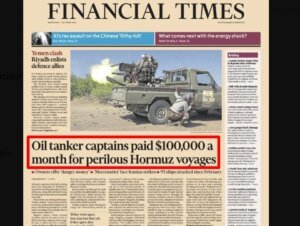
Then came the Strait of Hormuz mess. A fragile U.S.-Iran ceasefire, along with a dual blockade of the Strait, has pushed energy prices higher and added another drag on global growth. That turns this summit into something more urgent than a routine trade check-in, with the world’s most important bilateral relationship getting tested on several fronts at once.
What’s on the Agenda?
Trade and tariffs are the headliners, but the agenda runs much deeper than that. Here are the four big items to keep in mind:
Trade and tariffs
Tariffs are basically taxes on imported goods. They’re meant to protect local industries, but they can also raise costs for consumers.
Trump and Xi are likely to announce Chinese purchases of American products like Boeing planes and agricultural goods, and they may also roll out a bilateral “Board of Trade” to look at limited tariff tweaks in less sensitive sectors. Think headline-friendly announcements, not some grand rewrite of the trade relationship.
Chips and the tech cold war
Silicon chips are the oil of the 21st century, powering everything from smartphones to AI systems. The problem is that neither side has figured out how to fully live without the other.
China still needs U.S. chips and advanced tech, while the U.S. needs Chinese rare earth exports. Xi will likely push for looser U.S. export controls, while Trump will want the rare earth truce extended. Both sides need something, which is exactly why they’re still talking.
Iran and the Strait of Hormuz
This is the wildcard with the most immediate market punch. Any U.S.-China cooperation on reopening the Strait of Hormuz could offer quick relief for the energy crunch.
Beijing has been quietly positioning itself as a helpful broker, with Iran’s foreign minister recently visiting China and Beijing signaling that it has already weighed in with Tehran on the Strait. The big question is whether any of that turns into something concrete, and markets are holding their breath.
Taiwan
This is the geopolitical red line that never really leaves the room. Taiwan is finalizing a $25 billion arms deal with the U.S., and Xi is likely to push back hard, possibly looking for assurances that Washington will limit future arms sales.
Markets can handle bad news better than uncertainty, and any vague or messy language from Trump on Taiwan could inject plenty of that into Asian markets.
Promoted: When market headlines move fast, your account security needs to move faster.
This week’s Trump Xi summit could bring sudden swings across currencies, commodities, and tech stocks. That means traders may be logging into broker accounts, prop firm dashboards, charting tools, email, and news platforms more often than usual.
LastPass helps keep those accounts protected by creating and storing strong, encrypted passwords, so one weak login does not become the reason your trading week gets messy.
Try LastPass for Free Today!
Disclosure: We may earn a commission from our partners if you sign up through our links, at no extra cost to you.
Three Ways This Market Drama Could Unfold
Analysts broadly see the summit playing out in one of three ways. It’s worth knowing what each one could mean for your positions before the readout lands:
- The De-escalation (best case). Both sides extend the trade truce, signal cooperation on the Strait, and leave Beijing on good terms. Risk appetite surges, the yuan strengthens, the dollar softens, and Asian equities rally.
- The Status Quo (most likely). A polite summit, a joint statement calling the talks “productive,” and few concrete policy changes. Markets typically respond with a small dip and then flatline — no resolution to the underlying tensions, but no immediate blowup either.
- The Walk-out (worst case). A breakdown or combative post-summit statement triggers a classic flight to safety — dollar bid, gold higher, tech stocks under pressure, and oil volatile on renewed Hormuz concerns.
Three Things to Watch in Real Time
When the readout drops Thursday, here’s where to look first:
- USD/CNY. Bank of America found the yuan appreciated an average of 30 basis points in the 10 days following past Trump-Xi summits, and 64 basis points over the subsequent 30 days. Yuan strength is your clearest signal that markets are buying what the summit is selling.
- Agricultural futures. Chinese commitments to buy U.S. soybeans and corn are typically the first tangible goodwill gesture, and they move ag markets fast. A deal here is Beijing’s way of saying the mood in the room was good.
- The Nasdaq 100. This index is loaded with tech companies tied to global supply chains — semiconductors, AI hardware, cloud infrastructure. It’s the single best real-time thermometer for where U.S.-China sentiment is actually landing.
The Bottom Line
This summit is better understood through what both sides are trying to avoid: a breakdown in the relationship. Both need stability, and neither side wants another escalation. That is not exactly a rock-solid foundation, but it is still something.
And in a market already drowning in geopolitical noise, sometimes avoiding a fresh crisis counts as a win.
So when Beijing delivers its verdict, do not just scan the headlines and call it a day.
Watch the yuan, the Nasdaq, and oil. Markets will tell you what the politicians will not, and they will usually do it a whole lot faster.
The Trump-Xi summit is a reminder that geopolitical events and trade policy can move currencies, commodities, and equities fast, and not always in the direction you’d expect. Premium members can read our lesson:
Geopolitical Risk, Trade Policy, and Safe Haven Flows Reading this helps you understand how geopolitical events drive currency moves, which safe havens to watch when tensions rise, and why trade policy shifts can redirect capital flows across the entire market.
And if you’re not a Premium subscriber yet, now’s a good time to sign up.
With Babypips Premium, you get full access to School of Pipsology lessons that help you understand not just what the charts are showing during high-stakes geopolitical events, but the trade policy dynamics and safe haven flows driving the moves.


